


Georgiana Toma: From Cytoreduction to Vascular Protection in Essential Thrombocythemia
Georgiana Toma, Hematology resident at the University Emergency Hospital of Bucharest, shared a post on LinkedIn:
“To my colleagues in internal medicine and neurology
We have all managed patients with ‘controlled’ platelet counts who still suffer from devastating recurrent strokes or systemic thrombotic events.
The results of the SURPASS-ET study (published in The Lancet Haematology, 2026) change the conversation from simple cytoreduction to vascular protection and disease modification.
Ropeginterferon alfa-2b
For our patients resistant to hydroxyurea, the comparison between Ropeginterferon alfa-2b and Anagrelide reveals a massive shift in the safety-efficacy balance:
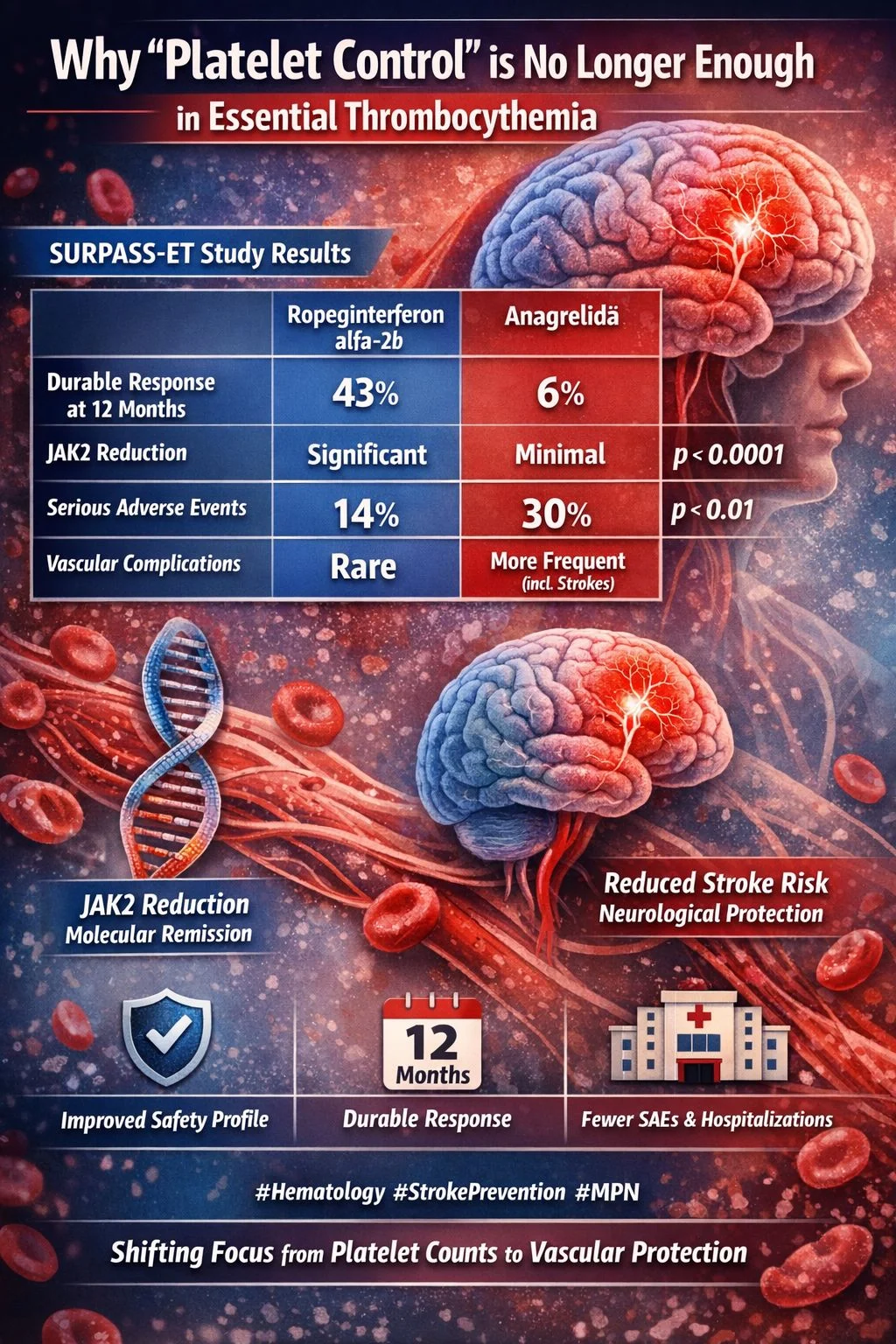
- Vascular Risk: Complications (including cerebral infarction) were significantly lower with Ropeginterferon compared to Anagrelide.
- Safety Profile: Half the rate of Serious Adverse Events (14 percent versus 30 percent).
- Durable Response: A staggering 43 percent durable response at 12 months versus only 6 percent for anagrelide (p less than 0.0001).
Why this matters for your practice:
- Ropeginterferon significantly reduces the JAK2 (V617F) allelic burden. This suggests we can actually prevent the long-term transformation into Myelofibrosis or Acute Leukemia—something traditional therapies struggled to achieve.
- Neurological Protection: For Neurologists, this offers a potent tool to reduce the risk of cerebral infarction and hemorrhage in high-risk MPN patients.
- Fewer Side Effects: Better tolerability means higher compliance and fewer hospitalizations for drug-related complications.
The Bottom Line
We are moving toward a new standard where molecular remission is the goal.
By targeting the underlying biology of Myeloproliferative Neoplasms, we aren’t just treating a lab value; we are protecting our patients’ vascular future.”
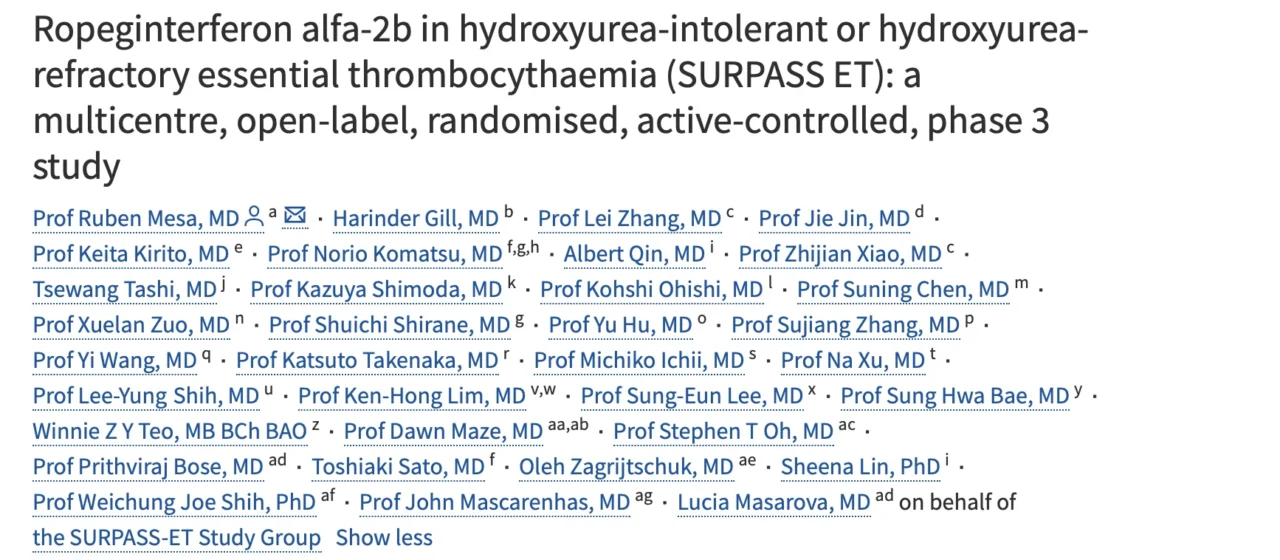
Title: Ropeginterferon alfa-2b in hydroxyurea-intolerant or hydroxyurea-refractory essential thrombocythaemia (SURPASS ET): a multicentre, open-label, randomised, active-controlled, phase 3 study
Authors: Ruben Mesa, Harinder Gill, Lei Zhang, Jie Jin, Keita Kirito, Norio Komatsu, Albert Qin, Zhijian Xiao, Tsewang Tashi, Kazuya Shimoda, Kohshi Ohishi, Suning Chen, Xuelan Zuo, Shuichi Shirane, Yu Hu, Sujiang Zhang, Yi Wang, Katsuto Takenaka, Michiko Ichii, Na Xu, Lee-Yung Shih, Ken-Hong Lim, Sung-Eun Lee, Sung Hwa Bae, Winnie Z Y Teo, Dawn Maze, Stephen T Oh, Prithviraj Bose, Toshiaki Sato, Zagrijtschuk, Sheena Lin, Weichung Joe Shih, John Mascarenhas, Lucia Masarova
Read the Full Article on The Lancet Haematology
Stay updated on all scientific advances with Hemostasis Today.
-
Sep 21, 2026, 20:56George Touma: ApoB Should Be Central to All Lipid Guidlines
-
Sep 21, 2026, 20:55Christopher Robinson: Obstetric Risks Are Seen at the Extremes of Birthweight
-
Sep 21, 2026, 20:54Emicizumab for Refractory GI Bleeding in Myeloma-Associated Acquired VWD – JTH
-
Sep 21, 2026, 20:52Ross Baker: ASH 2026 Guidelines on Iron Deficiency in HMB and Bleeding Disorders
-
Sep 21, 2026, 20:50Rainer Kaiser: Genes and Signalling Pathways Implicated in Procoagulant Platelet Generation
-
Sep 21, 2026, 20:49Natalia Dovlatova: Celebrating Stan Heptinstall and His Legacy in Platelet Science
-
Sep 21, 2026, 20:48Norm Roulet: The Interaction of Pb and SARS-CoV-2 and Its Impact on the Cardiovascular System
-
Sep 21, 2026, 20:45Felix Scholkmann: The Spleen Plays a Key Role in Regulating Platelet Activity
-
Sep 21, 2026, 20:43Claire Pomeroy: Celebrating the 2026 Lasker Awards and Why Medical Research Matters