


Gloria Duah: Why Clinical Information Matters When Requesting Blood
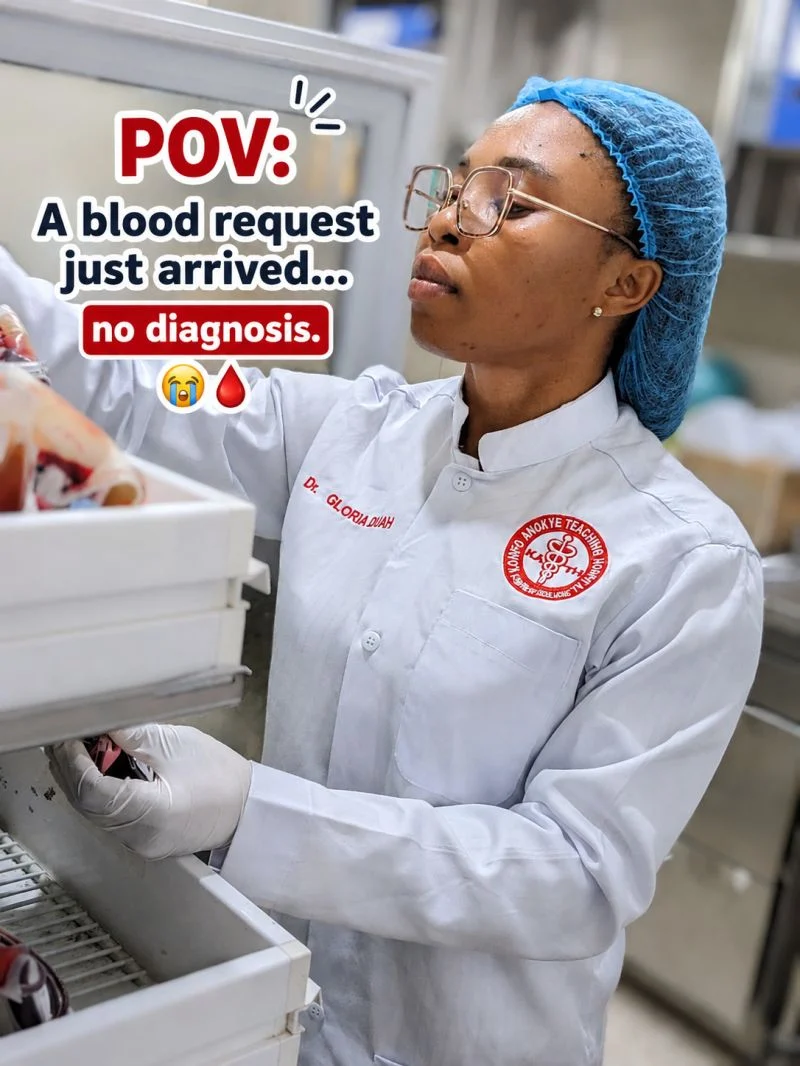
Gloria Duah, Doctor of Medical Laboratory Science at Komfo Anokye Teaching Hospital, shared a post on LinkedIn:
“The Blood Bank receives a request and asks: ‘So… what are we treating?’
A blood request form is not simply about the patient’s blood group and the number of units required.
The clinical indication matters.
Providing relevant clinical information helps the transfusion team understand the reason for transfusion, assess the request appropriately, and support the selection of the most suitable blood component for the patient.
Unfortunately, requests sometimes arrive with limited clinical information, leaving the laboratory team asking important questions about the patient’s condition and the purpose of the transfusion.
A simple reminder: when requesting blood, tell us what is happening with the patient.
Good communication between the clinical and laboratory teams is an important part of safe and appropriate transfusion practice.
Blood is a limited and precious resource.
Let’s use it wisely.”
Stay updated with Hemostasis Today.
-
Sep 30, 2026, 22:28Recent Mechanical Risk Factors and Young-Onset Cryptogenic Ischemic Stroke – American Heart Association International
-
Sep 30, 2026, 22:22Expert Consensus on Inferior Vena Cava Thrombosis – Thrombosis and Haemostasis Journal
-
Sep 30, 2026, 22:21Markus Abeln: How Platelets, Coagulation, Glycosylation, and Complement Regulate Placental Blood Flow
-
Sep 30, 2026, 22:19Fatma Al Arbawi: Studying Blood Clot Mechanics to Understand Aspirin Resistance and Thrombosis
-
Sep 30, 2026, 22:17Sudhir Kumar: Stroke is a Medical Emergency – and Every Minute Matters
-
Sep 30, 2026, 22:15Luisa Medeiros Visentini: Our Research on Cognitive Impairment After CVT Cited in the International Journal of Stroke
-
Sep 30, 2026, 21:50Jagat Narula: Connecting Cardiovascular Health and Sickle Cell Disease on World Heart Day 2026
-
Sep 30, 2026, 21:38John Kastelein: Exploring the Biology of Cardiovascular Disease at BioCentury Grand Rounds Europe
-
Sep 30, 2026, 21:36Mark Murphy: Irish Heart Foundation Meets With Senator Teresa Costello on World Heart Day