


Ifeanyichukwu Ifechidere: Factor V Leiden Requires Context Beyond the Genetic Result
Ifeanyichukwu Ifechidere, Specialist Biomedical Scientist at Sheffield Teaching Hospitals NHS Foundation Trust, shared a post on LinkedIn:
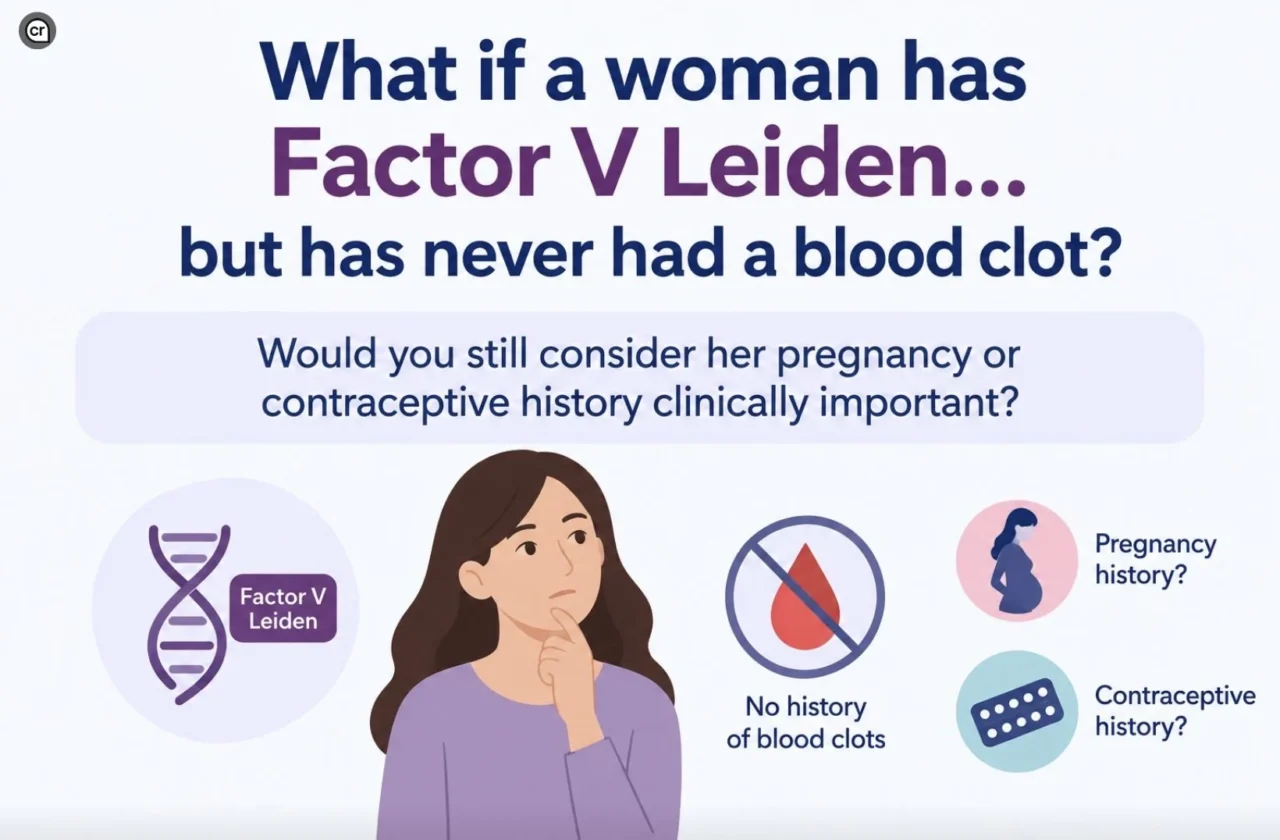
“What if a woman has Factor V Leiden… but has never had a blood clot?
Would you still consider her pregnancy or contraceptive history clinically important?
Absolutely.
And this is where inherited thrombophilia gets interesting.
Factor V Leiden is the most common inherited thrombophilia in many European populations.
It results from a genetic variant that makes factor V relatively resistant to activated protein C (APC), reducing this natural anticoagulant pathway and increasing the tendency towards venous thrombosis.
But here’s the important part:
Having Factor V Leiden does NOT mean someone will definitely develop a blood clot.
Risk is influenced by several factors, including whether the person is heterozygous or homozygous and the presence of additional acquired risk factors.
Why does this matter in women of child-bearing age?
Because some physiological and clinical situations can increase thrombotic risk.
Think about:
- Pregnancy and the postpartum period
- Oestrogen-containing contraception
- Hormone replacement therapy
- Prolonged immobility/travel
- Surgery or hospitalisation
- Previous venous thromboembolism (VTE)
- A strong family history of VTE
The combination of an inherited predisposition plus an acquired risk factor can be more important than the genetic finding alone.
So should every woman be tested?
No.
This is an important laboratory lesson.
Finding Factor V Leiden can have implications for counselling and thrombosis-risk assessment, but routine thrombophilia testing of everyone is not generally recommended.
Testing should be guided by the clinical context and relevant guidelines—particularly when the result is likely to influence management.
And remember:
A thrombophilia result should never be interpreted in isolation.
The laboratory provides the genetic or functional finding.
The clinician considers that result alongside the patient’s personal history, family history, pregnancy status, medications and other VTE risk factors.
That is where laboratory medicine becomes much more than simply producing a number or a genotype.
Take-home message:
Factor V Leiden means an increased tendency toward thrombosis, not a guaranteed clot.
Understanding who to test, when to test and how to interpret the result is just as important as understanding the mutation itself.
Question for the laboratory and clinical community:
Would you test a woman with a strong family history of VTE before prescribing an oestrogen-containing contraceptive—or would you approach it differently?
Share your thoughts.
And if you want more practical, educational content on haemostasis, coagulation and laboratory medicine, follow me.”
Stay updated with Hemostasis Today.
-
Sep 23, 2026, 12:04Leo Nicolai: Activated Platelets Get Trapped in the Spleen During Thrombosis
-
Sep 23, 2026, 12:01Francisco Chacón-Lozsán: Rethinking PE Risk in 2026
-
Sep 23, 2026, 11:35Martina Wolff: How Platelet Membrane Protrusions Shape Hemostasis and Thrombosis
-
Sep 23, 2026, 11:28Alejandro González Veliz: Ultrashort DAPT After PCI May Reduce Bleeding Without Increasing Overall Ischemic Events
-
Sep 23, 2026, 11:17High DOAC Adherence After Stroke – International Journal of Stroke
-
Sep 23, 2026, 11:08John Cush: Do JAK Inhibitors Increase VTE Risk After Joint Replacement?
-
Sep 23, 2026, 11:05Fonkou Steve: Blood Choice Requires Access to Safe Transfusion Options
-
Sep 23, 2026, 11:00Linda Rockwood: Cultural and Ethical Change in Transfusion Medicine
-
Sep 23, 2026, 10:30Michael Angers: Advancing Transfusion Safety Through Smarter Laboratory Workflows