

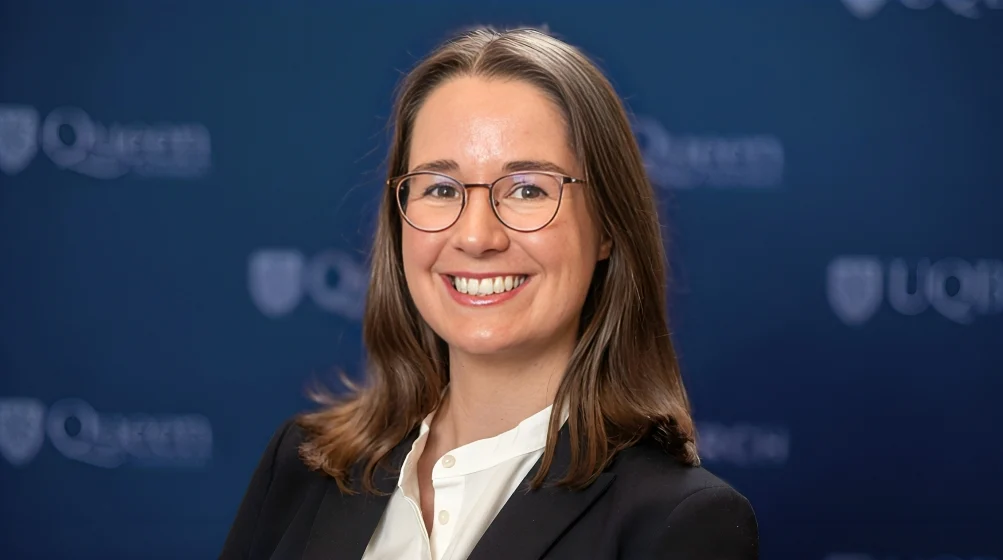
Isabelle Grenier-Pleau: Targeting Von Willebrand Disease to Transform Women’s Health
Isabelle Grenier-Pleau, Partnerships Development Coordinator at Queen’s Partnerships and Innovation, shared a post on LinkedIn:
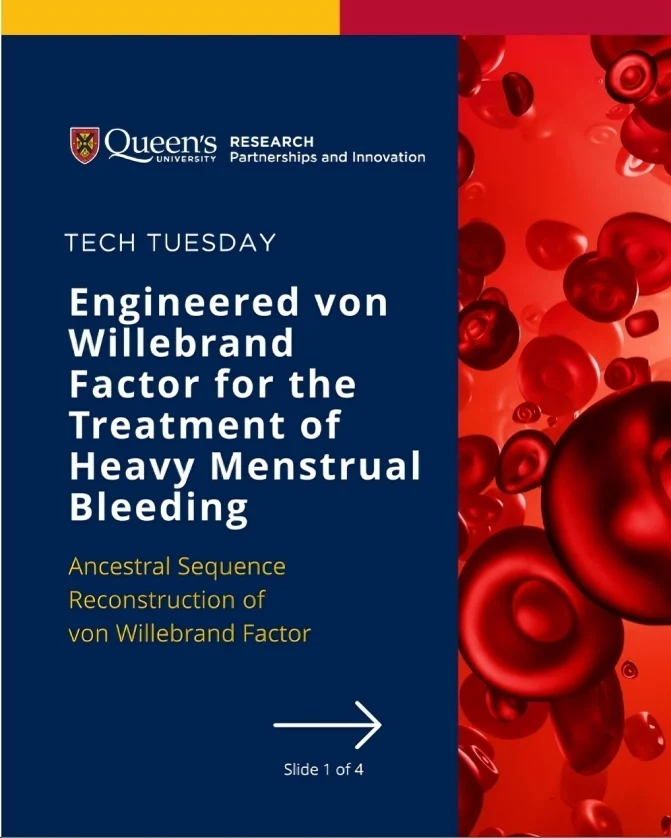
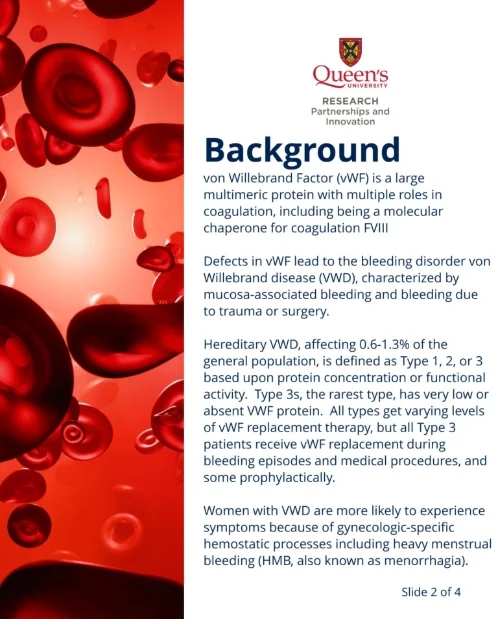
“Did you know that Von Willebrand Disease (VWD) is the most common inherited bleeding disorder and it hits women especially hard through heavy menstrual bleeding (HMB).
Women with HMB are at increased risk for anaemia, pain during menstruation, hospitalizations, blood transfusions, limitations in daily activities, time lost from work or school, and a reduced quality of life. They are also three times as likely to have a hysterectomy.
It’s Time Women’s Health Is Top Priority.
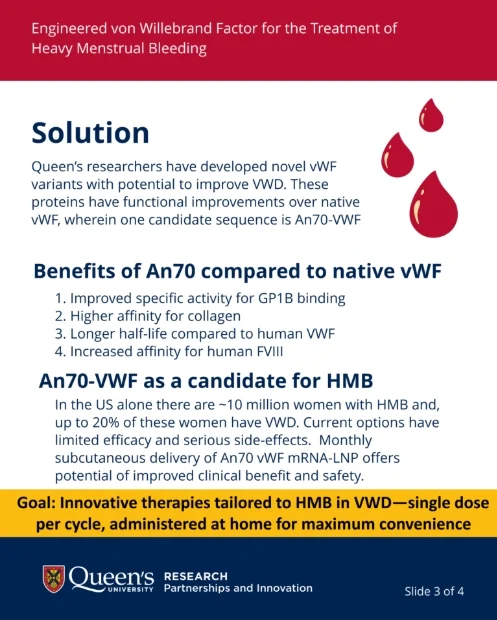
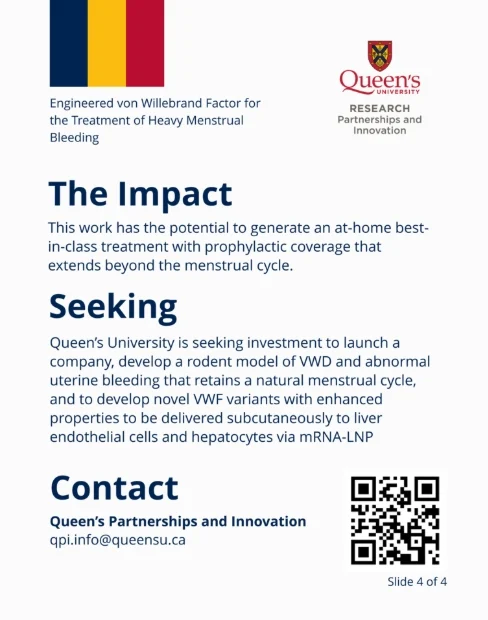
Using ancestral sequence reconstruction, Queen’s University researchers Philip Zakas and David Lillicrap, in partnership with researchers from Emory University and Georgia Tech Research, have engineered novel recombinant vWF variants.
The impact of this work would be the development of an at-home best-in-class treatment with prophylactic coverage that extends beyond the menstrual cycle.
Contact me or Queen’s Partnerships and Innovation to learn more about the opportunity.”
Stay updated with Hemostasis Today.
-
Sep 23, 2026, 07:07Wolfgang Miesbach: Mechanisms of Liver Injury After Hemophilia A Gene Therapy
-
Sep 23, 2026, 06:24Nicolas Gendron: Everolimus and Venous Thromboembolic Risk in Kidney Transplantation
-
Sep 23, 2026, 06:07Hoori Shahwar: Cerebral Venous Sinus Thrombosis Diagnosis and Management
-
Sep 23, 2026, 06:06Advancing Hemophilia Care and Patient Advocacy in Bangladesh – World Federation of Hemophilia
-
Sep 23, 2026, 05:54Bringing the Global Thrombosis and Haemostasis Community Together in 2027 – ISTH
-
Sep 23, 2026, 04:34David Akande: When Sickle Cell Crises Have No Clear Trigger
-
Sep 23, 2026, 04:13Jean Connors: Safety of Heparin Re-Exposure in Patients with Remote HIT
-
Sep 23, 2026, 04:09Beth Psaila: Applications Now Open for the Gordon Research Conference on Megakaryocytes and Platelets
-
Sep 23, 2026, 03:27Abbie Newton: How Better Data Can Reduce Platelet Wastage