


Kalyan Roy: Polycythaemia Rubra Vera – More Than Just Elevated Hemoglobin
Kalyan Roy, Transfusion Medicine Specialist at Square Hospitals LTD, shared a post on LinkedIn:
“Polycythaemia Rubra Vera (PV): More Than Just Elevated Hemoglobin
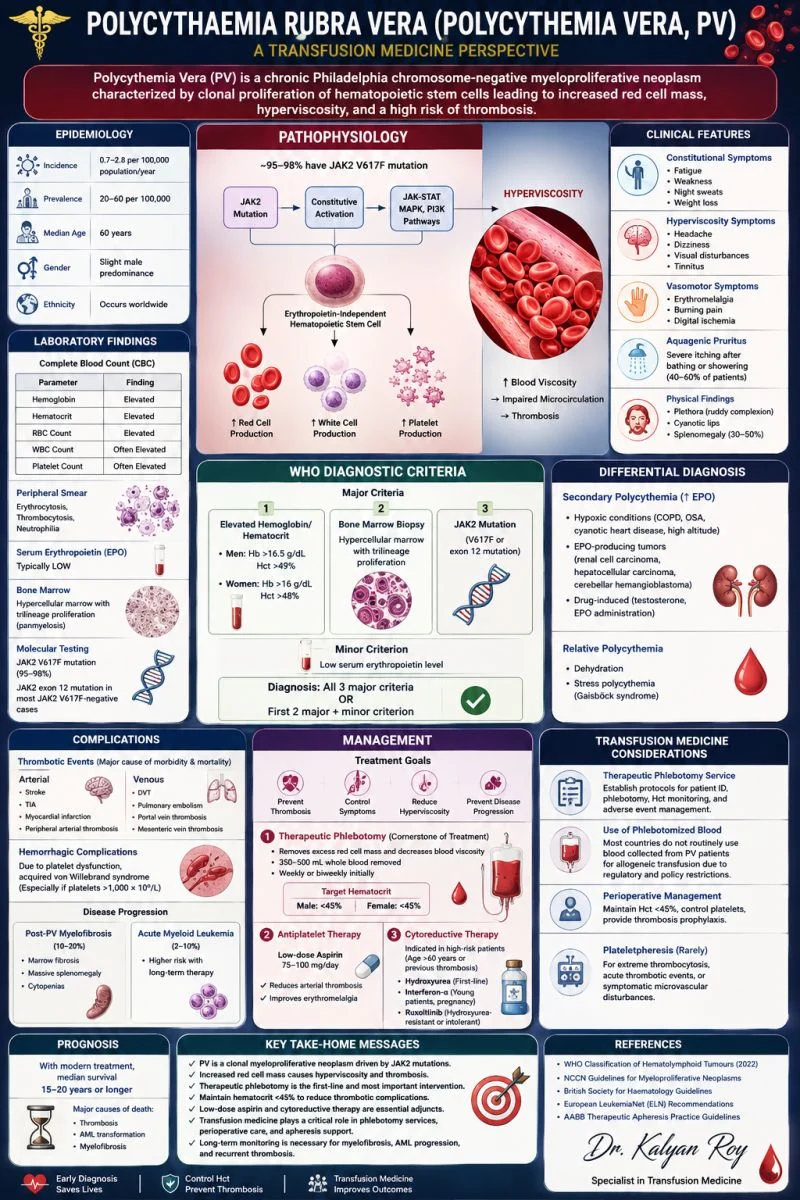
Polycythaemia Vera (PV) is a chronic JAK2 mutation–driven myeloproliferative neoplasm characterized by uncontrolled red blood cell production, often accompanied by leukocytosis and thrombocytosis. The resulting hyperviscosity syndrome significantly increases the risk of arterial and venous thrombosis, making early diagnosis and appropriate management essential.
Key Clinical Highlights
- JAK2 V617F mutation present in ~95–98% of cases
- Elevated hemoglobin, hematocrit, and red cell mass
- Common symptoms: headache, dizziness, visual disturbances, aquagenic pruritus, and erythromelalgi
- Increased risk of stroke, myocardial infarction, DVT, pulmonary embolism, and splanchnic vein thrombosi
- Low serum erythropoietin (EPO) is a characteristic laboratory finding
WHO Diagnostic Corner
Elevated Hb/Hct
Hypercellular bone marrow with trilineage proliferation
Presence of JAK2 mutation
Low serum EPO supports the diagnosis
Transfusion Medicine Perspective
Therapeutic Phlebotomy remains the cornerstone of treatment and the most important intervention performed by Transfusion Medicine services.
Treatment Goals:
- Maintain hematocrit <45%
- Reduce blood viscosity
- Prevent thrombotic complications
- Control symptoms and disease progression
Take-Home Message
Early recognition and optimal hematocrit control significantly reduce morbidity and mortality in PV. Therapeutic phlebotomy, antiplatelet therapy, and risk-adapted cytoreductive treatment remain the foundation of modern management.”
Find more posts featuring Kalyan Roy on Hemostasis Today.
-
Sep 20, 2026, 03:58Salih Ehsan: The Complexities of HbF and HbA2
-
Sep 20, 2026, 03:22The Voices of People Living With Bleeding Disorders – EHC
-
Sep 20, 2026, 01:18Sebastian Mafeld: Has 2026 Changed How We Treat Pulmonary Embolism?
-
Sep 20, 2026, 01:16Pall T. Onundarson: DOACs – Monitoring, Tailoring Dose and Identifying Problems
-
Sep 20, 2026, 01:15Thierry Fumeaux: From Efficacy to Effectiveness – The Value of Real-World Evidence
-
Sep 20, 2026, 01:14Said El Shamieh: VEGFA Genetic Variants and Bleeding Risk During Warfarin Therapy
-
Sep 20, 2026, 01:04Omar Danoun: Levetiracetam May Increase Thromboembolic Risk With DOACs
-
Sep 20, 2026, 01:02Mohamed Abo-Aly: Which Antiseizure Medication is Safest for Patients on DOACs?
-
Sep 20, 2026, 00:58Hamza Rafiq: How Does a Deep Vein Thrombosis Become a PE?