


Kalyan Roy: The Oxygen Delivery Paradox in Polycythaemia Vera
Kalyan Roy, Transfusion Medicine Specialist at Square Hospitals LTD, shared a post on LinkedIn:
“The Oxygen Delivery Paradox in Polycythaemia Vera (PV)
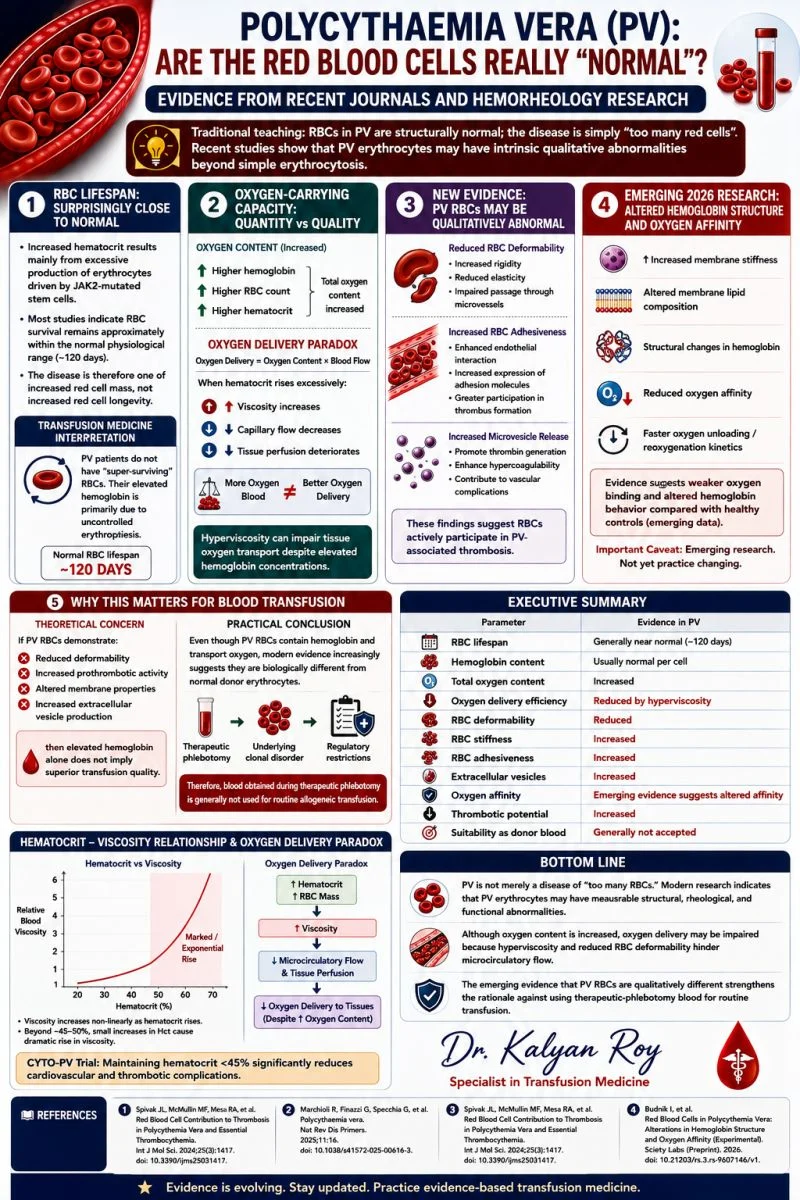
At first glance, a higher hematocrit appears beneficial because it increases red blood cell mass and total oxygen content. However, the physiology is more complex.
What Happens When Hematocrit Rises?
- Increased hematocrit or increased red blood cell mass
- Leads to Increased Blood Viscosity
- Which leads to Reduced microcirculatory blood flow
- Which results in Reduced tissue perfusion and oxygen delivery
- Leading to Increased endothelial activation
- Which increases The risk of arterial and venous thrombosis
Key Message
More RBCs mean More Oxygen Content
But not necessarily better oxygen delivery
As blood becomes more viscous, capillary flow and tissue perfusion decline. The result is a paradox where oxygen content rises while oxygen delivery to tissues may actually fall.
Clinical Relevance in PV
- Hyperviscosity is a major driver of symptoms and thrombosis.
- Maintaining hematocrit lower than 45% improves microcirculatory flow and reduces thrombotic complications.
- The goal of treatment is not simply to lower hematocrit, but to optimize tissue oxygen delivery and vascular health.
In Polycythaemia Vera, the problem is often not oxygen carrying capacity – it is impaired oxygen delivery due to hyperviscosity.”
Find more posts featuring Kalyan Roy on Hemostasis Today.
-
Sep 15, 2026, 23:35Katya McCarthy: From Lab Specialist to Patient – Facing Polycythemia and Venous Thrombosis
-
Sep 15, 2026, 23:19Narat Srivali: Chronic Preoperative Corticosteroid Use Associated with 51% Higher Postoperative VTE Risk
-
Sep 15, 2026, 23:13Grace M Thomas: Join 3rd edition of the Neutrophil Club of SFI Webinar Series on Thromboinflammation
-
Sep 15, 2026, 23:05Noha K Hashmi: Honoured to Present 2 Case-Based Posters at the 5th MENA Conference for Rare Diseases 2026
-
Sep 15, 2026, 22:56Susan Slingluff Hartmann: How NBDF and the BDRC Are Putting Lived Experience at the Heart of Studies
-
Sep 15, 2026, 22:50Shehab Mohamed: New GCC Consensus Recommendations for the Diagnosis and Management of HLH
-
Sep 15, 2026, 22:42100 Years of von Willebrand Disease: What Has a Century of Progress Taught Us? – EAHAD
-
Sep 15, 2026, 22:38Cedric Hermans: How Iis TFPI Inhibition Changing Haemophilia Care?
-
Sep 15, 2026, 17:33Reza Shojaei: Blood and Plasma Donors Are Not a Production Metric