

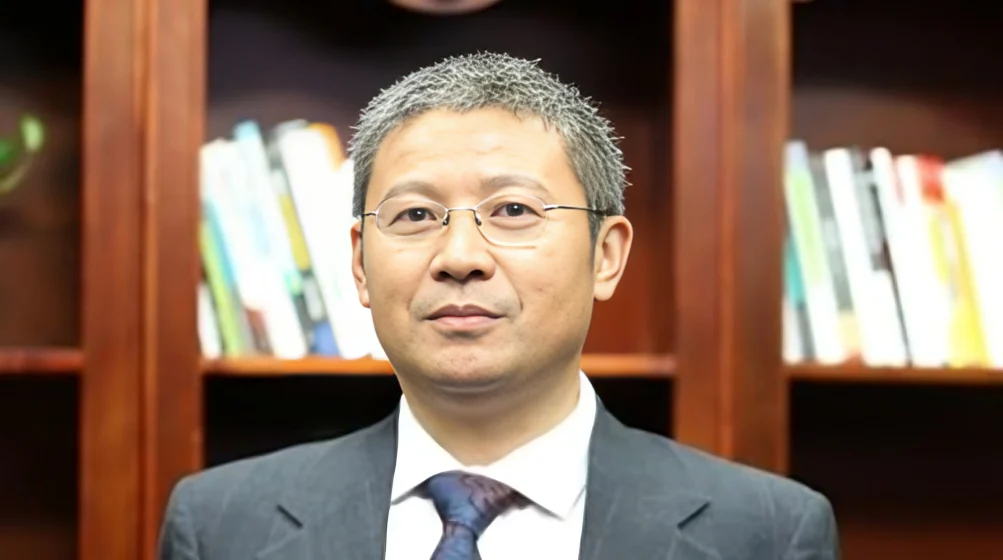
Ken Kuang: Why Your Calves Are Called Your “Second Heart”?
Ken Kuang, President of Torrey Hills Technologies, LLC, Partner of StockFan App, Advisor at Unpress AI, shared a post on LinkedIn:
“Why Your Calves Are Called Your ‘Second Heart’
Did you know that your legs play a critical role in keeping your cardiovascular system functioning?
While your cardiac muscle gets all the credit for circulating blood throughout your body, your calf muscles (specifically the gastrocnemius and soleus) act as a secondary hydraulic pump that works tirelessly against gravity.
Here is the fascinatng bio-mechanics behind your body’s “skeletal muscle pump” and why keeping your calves strong is vital for long-term health:
1. The Gravity Problem
- Every time your heart pumps, oxygen-rich blood travels down to your lower limbs through your arteries.
- However, returning that deoxygenated blood back up to the heart requires fighting nearly 4 feet of gravity.
- Venous blood pressure in your feet alone is not strong enough to make the full trip back up on its own.
2. The Muscle Pump in Action
- Deep inside your calves are large veins with one-way venous valves.
- When you contract your calf muscles—by walking, running, or pushing off your toes—the muscle squeezes these deep veins shut.
- This compression forces blood upward toward the heart. When the muscle relaxes, the one-way valves snap shut to prevent blood from pooling back down into your ankles and feet.
3. What Happens When We Stay Still?
- The Risk: Prolonged sitting or standing turns off this pump. Blood can pool in the lower extremities, leading to swelling (edema), varicose veins, chronic venous insufficiency, or in severe cases, Deep Vein Thrombosis (DVT).
- The ‘Soleus Effect’: Research highlights that the soleus muscle—the deep calf muscle underneath the gastrocnemius—is uniquely built with slow-twitch fibers designed to keep pumping blood for hours without fatiguing, provided we give it movement.
4. Practical Takeaways for Professionals
In desk-bound corporate environments, keeping your “second heart” active is key to boosting vascular health and maintaining focus:
Take Frequent Walk Breaks: Even a 2-minute walk every hour activates the calf pump and clears accumulated fluid.
Try Desk Calf Raises / Seated Soleus Pushes: Simply lifting your heels off the ground while seated at your desk engages the soleus muscle and keeps blood moving.
Prioritize Ankle Mobility: Flexible ankles allow for a full range of motion during your stride, ensuring maximum compression of the deep veins with every step.”
Proceed to the video attached to the post.
Stay updated with Hemostasis Today.
-
Nov 9, 2026, 17:07Mert Dumantepe: Key Insights From The 8th Abu Dhabi International Vascular Conference
-
Nov 9, 2026, 16:57Amrita Sarkar: Exciting Advances in Hematology and Vascular Research at 54th Annual Philadelphia Workshop
-
Nov 9, 2026, 16:47Joey Boxer Samuels: Prolonged Sitting and Vein Thrombosis
-
Nov 9, 2026, 13:48PF4-ELISA–Negative HIT: Are We Missing a New Class of Anti-PF4 Immunothrombotic Disease?
-
Nov 9, 2026, 13:07Nandini Sadasivam: Gene Therapy for Sickle Cell Disease and Thalassaemia
-
Nov 9, 2026, 13:04Raising Awareness of Bleeding Disorders in Women and Girls – EHC
-
Nov 9, 2026, 12:59Rahul Bohra: Exploring the Complex Mechanisms of Sickle Cell Disease
-
Nov 9, 2026, 12:53Three Years of Movement and Thrombosis Awareness in the Czech Republic – World Thrombosis day
-
Nov 9, 2026, 12:51Octavio Marques Pontes-Neto: Intensive Blood-Pressure Control Reduces Cardiovascular Events After Ischemic Stroke