


Lola Sepot-Boucherit: Reimagining the Future of Rare Bleeding Disorders at ISTH 2026
Lola Sepot-Boucherit, Director Rare Bleeding Disorders at Novo Nordisk, shared a post on LinkedIn:
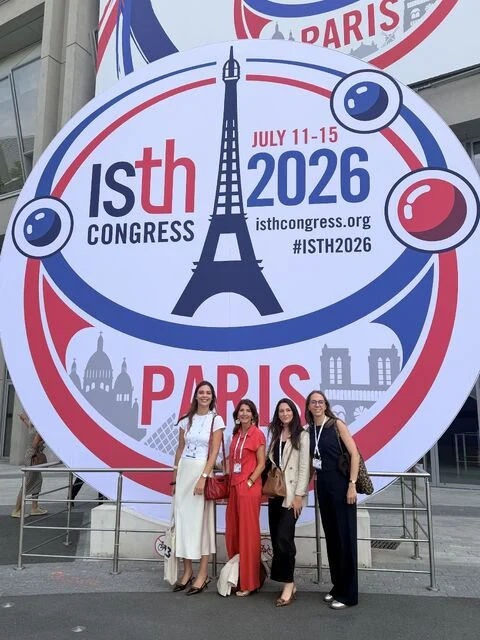
“Under brilliant Parisian sunshine, the City of Light became a catalyst for scientific exchange, collaboration and innovation at ISTH.
It was a privilege to welcome the global haemostasis community to France and to engage with researchers and healthcare professionals from around the world. Throughout the week, the science on display highlighted how rapidly our field is evolving.
For Novo Nordisk, the congress of the International Society on Thrombosis and Haemostasis (ISTH) also reflected the exciting new chapter we are entering in rare diseases.
As we accelerate research and scientific innovation, the engagement of our Executive Management, including Hong Chow, reinforced our long-term commitment and ambition to help reimagine the future of care for people living with rare bleeding disorders.
It was also a real pleasure to welcome so many Novo Nordisk colleagues to Paris, share a little of the French art de vivre, and spend this memorable week alongside our amazing French team.
See you next year in Vancouver!”
Stay Updated with the Latest ISTH 2026 Updates on Hemostasis Today.

-
Oct 16, 2026, 18:12Adil Nawaz: Extended Dual Antiplatelet Therapy After Coronary Stenting
-
Oct 16, 2026, 17:50Elad Asher։ STORM-PE Shows Functional Benefits of Thrombectomy
-
Oct 16, 2026, 17:32Shruthi Narayan: STORM-PE and STRIKE-PE Studies Advance Understanding of Recovery After Pulmonary Embolism
-
Oct 16, 2026, 17:22Wolfgang Miesbach։ What a Near-Perfect FISH Score Fails to See
-
Oct 16, 2026, 17:06Troels Wienecke: Connecting Myeloproliferative Disease and Ischemic Stroke
-
Oct 16, 2026, 17:03Only 5 Days Left to Submit Your Research for EAHAD 2027
-
Oct 16, 2026, 16:48Abdul Rahman: Reticulocyte Count and Bone Marrow Activity
-
Oct 16, 2026, 16:44DOAC Adherence in Stroke Patients With Atrial Fibrillation – International Journal of Stroke
-
Oct 16, 2026, 16:22Shannon Farmer: Driving Patient Blood Management Forward in Australia and New Zealand