


Lovish Garg: Restoring Venous Flow Through Catheter-Directed Thrombus Removal
Lovish Garg, Endovascular and Interventional Radiologist at SPS Hospitals, shared a post on LinkedIn:
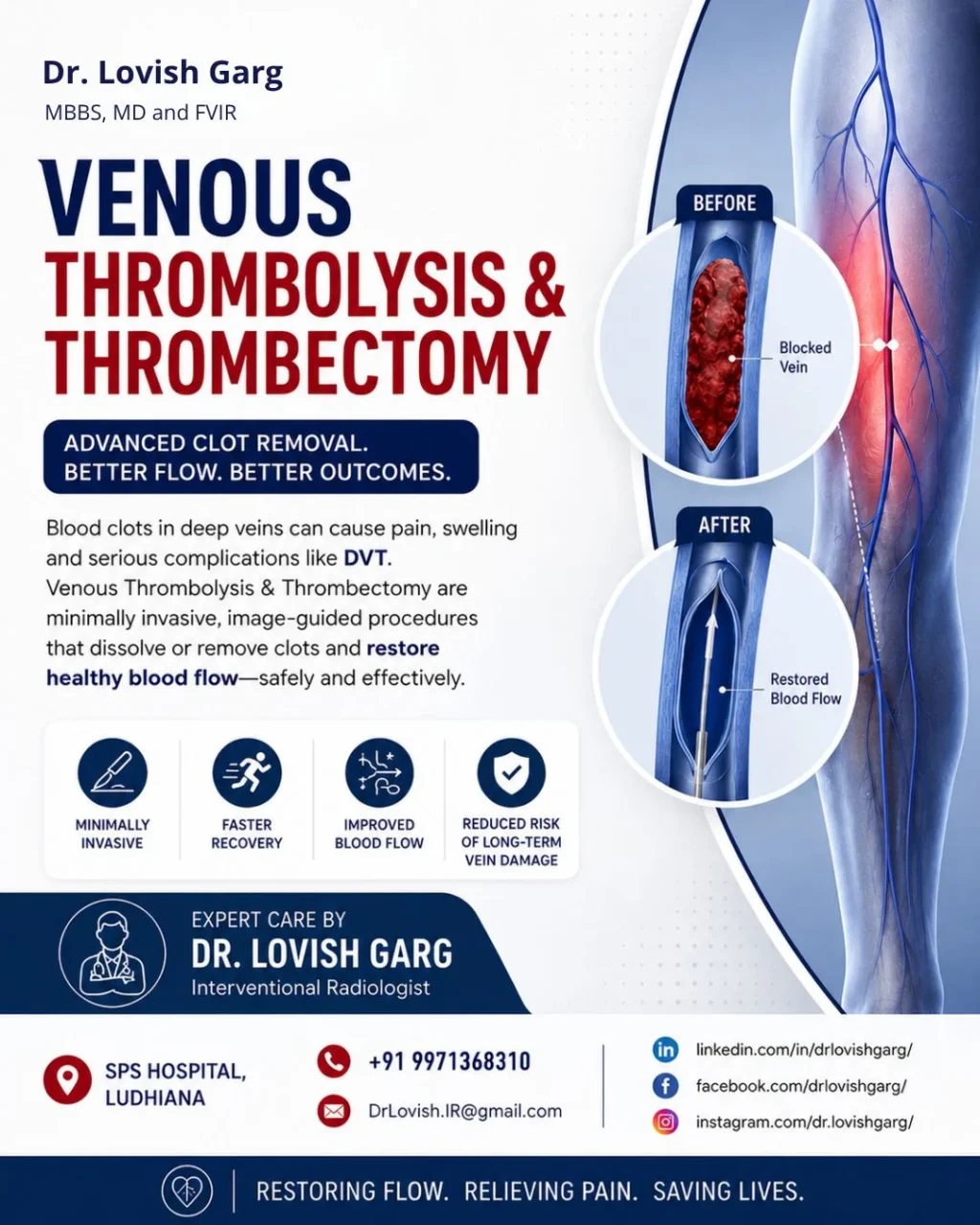
“Venous Thrombolysis and Thrombectomy: Restoring Blood Flow Through Minimally Invasive Treatment.
Deep Vein Thrombosis (DVT) is a serious vascular condition caused by the formation of blood clots within deep veins, most commonly in the legs.
If left untreated, these clots can lead to long-term vein damage, chronic swelling, pain, and potentially life-threatening complications such as Pulmonary Embolism.
Advancements in Interventional Radiology have transformed the management of venous thrombosis through minimally invasive, image-guided procedures such as Venous Thrombolysis and Thrombectomy.
Understanding the Treatment Options:
Venous Thrombolysis
Delivers clot-dissolving medication directly into the thrombus, allowing targeted treatment while minimizing systemic exposure.
Mechanical Thrombectomy
Uses specialized devices to remove the clot and rapidly restore blood circulation.
Pharmacomechanical Thrombectomy
Combines clot-dissolving therapy with mechanical clot extraction for selected patients requiring advanced intervention.
Key Benefits:
- Rapid restoration of blood flow
- Reduction in pain, swelling, and venous congestion
- Preservation of long-term vein function
- Lower risk of Post-Thrombotic Syndrome (PTS)
- Minimally invasive approach with image-guided precision
- Shorter recovery time and hospital stay
Who May Benefit?
- Patients with Deep Vein Thrombosis (DVT)
- Individuals with extensive venous thrombosis
- Patients experiencing significant clot-related symptoms
- Those at risk of long-term venous complications
Early diagnosis and timely intervention remain critical in improving patient outcomes and preventing avoidable complications.
As Interventional Radiologists, our goal is not only to remove the clot but also to preserve vein health, improve quality of life, and reduce the long-term burden of venous disease through evidence-based, minimally invasive care.”
Stay updated with Hemostasis Today.
-
Oct 17, 2026, 17:27John Strouse: Building Standards for Whole-Person Sickle Cell Care Through Collaboration
-
Oct 17, 2026, 17:20Jean-Jacques Kiladjian: Exploring the Future of Polycythemia Vera Treatment at MPN Horizons 2026
-
Oct 17, 2026, 17:10Habib Bennaceur: Strengthening Collaboration in Haemophilia, Sickle Cell Disease and Thalassaemia in India
-
Oct 17, 2026, 16:58Danny Hsu: Building Connections at the AUSNBled Collaborative Dinner in Auckland
-
Oct 17, 2026, 16:48Kalyan Roy: Enhancing Patient Experience Through Learning and Collaboration
-
Oct 17, 2026, 16:43Wilfried Dinh: Antiplatelet Therapy in 2026: Duration is Becoming a Dynamic Decision
-
Oct 17, 2026, 16:37Ian Setchfield: Dr. Evans Presents on Safe Anticoagulation Prescribing at East Kent Hospitals
-
Oct 17, 2026, 16:33Lewis Thomas: Connecting Through Shared Experiences at ASCAT 2026
-
Oct 17, 2026, 16:29Nilesh Jethwa: Yasmin Adverse Event Reports Exceed 23,000 Over Two-Year Period