


Ahmad G. Alzahrani: A New Classification for Acute Pulmonary Embolism
Ahmad G. Alzahrani, Consultant in Internal Medicine, shared a post on LinkedIn։
“For nearly two decades we sorted pulmonary embolism into massive, sub-massive, or low risk.
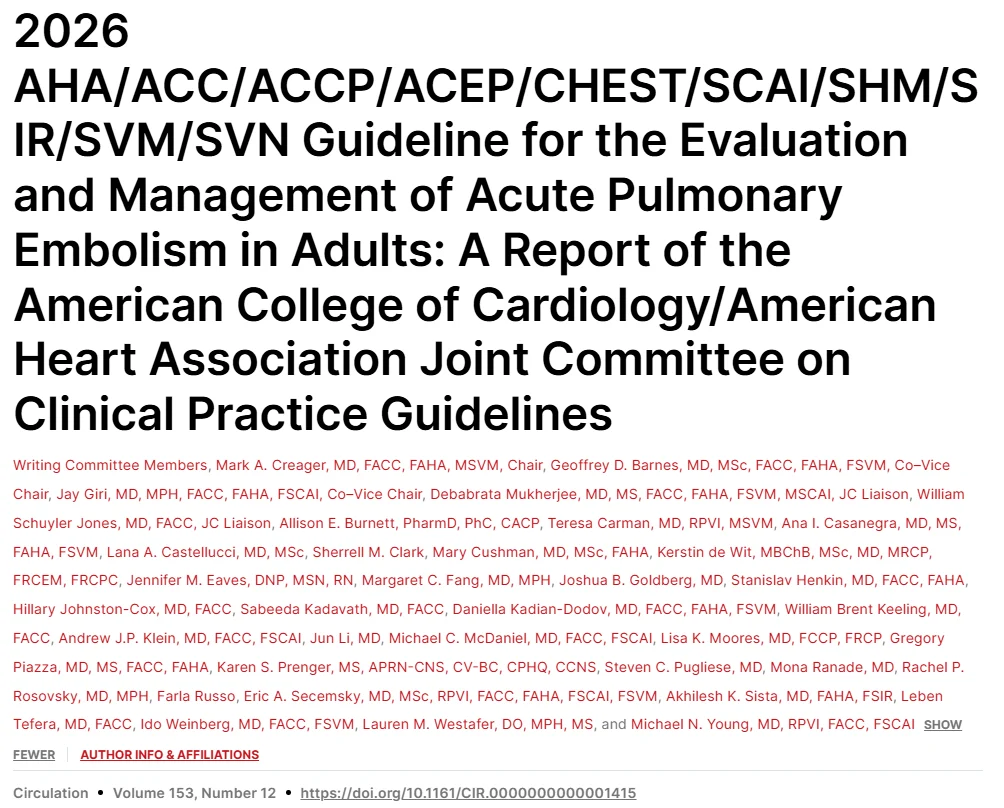
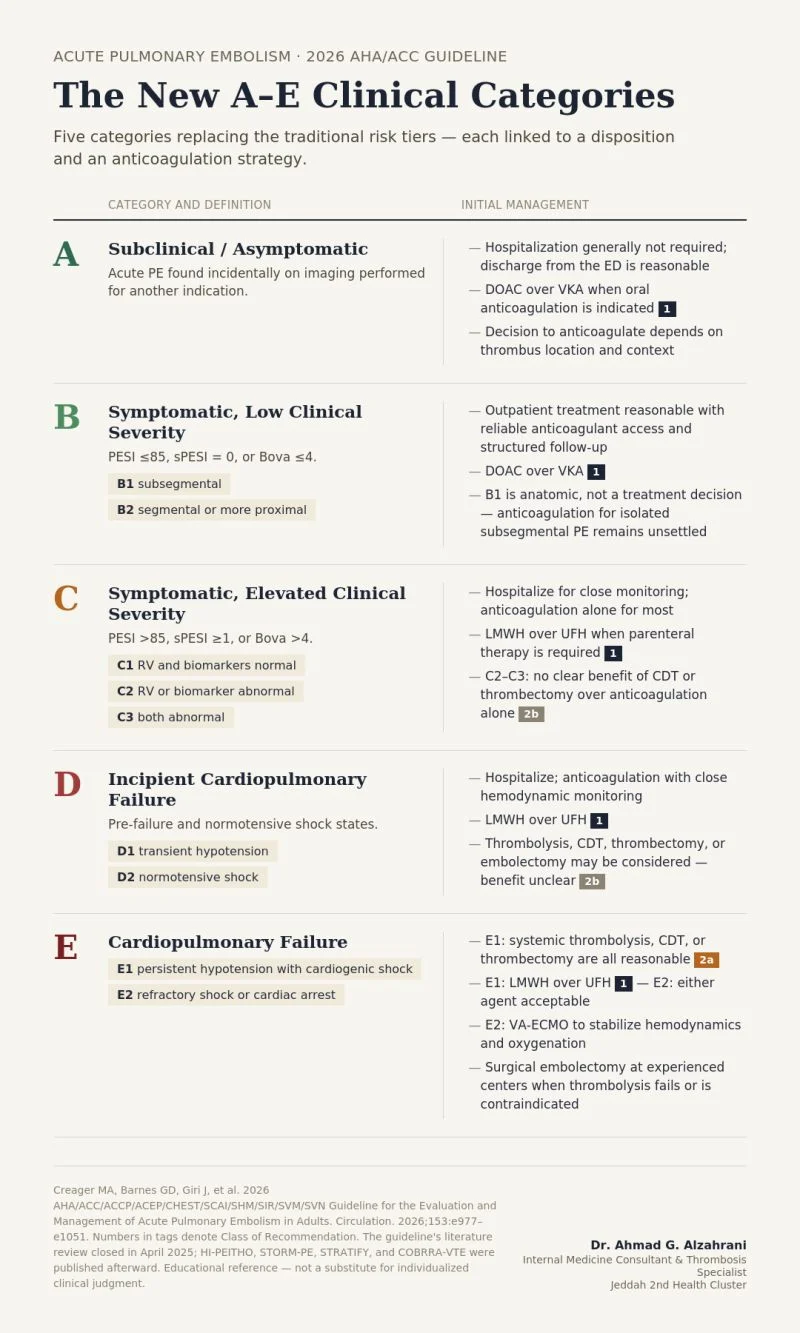
The 2026 AHA/ACC multisociety guideline retires that language for Acute PE Clinical Categories A-E
Why it matters: ‘sub-massive’ grouped together patients with very different presentations, from mildly elevated troponin to worsening hypoxemia and early shock.
Five takeaways:
- Category A gives incidental PE its own identity rather than treating it as a milder form of symptomatic disease.
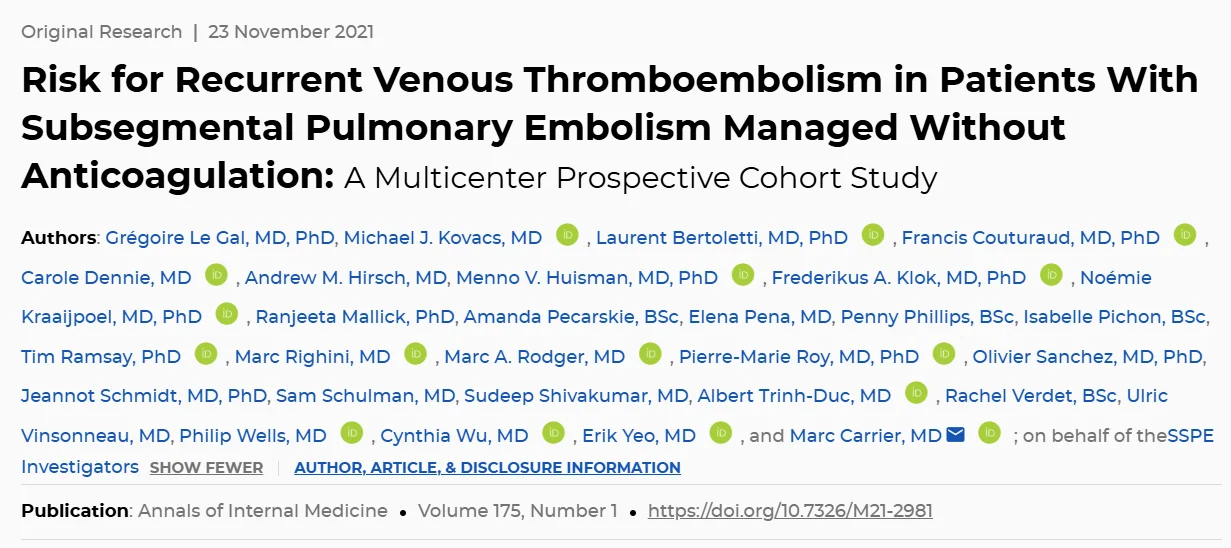
- Category B1 is an anatomic descriptor, not a treatment decision. Management of isolated subsegmental PE remains unsettled; recurrence may be higher than expected without anticoagulation, especially with multiple emboli.
- Category D pulls normotensive shock out of the intermediate tier, where it used to sit unnamed. Rising lactate, acute kidney injury, or falling urine output with a normal blood pressure. This is the population current interventional trials are enrolling.
- In Category E1, systemic thrombolysis, catheter-directed thrombolysis, and mechanical thrombectomy each carry a Class 2a recommendation. Comparative randomized evidence in shock remains limited.
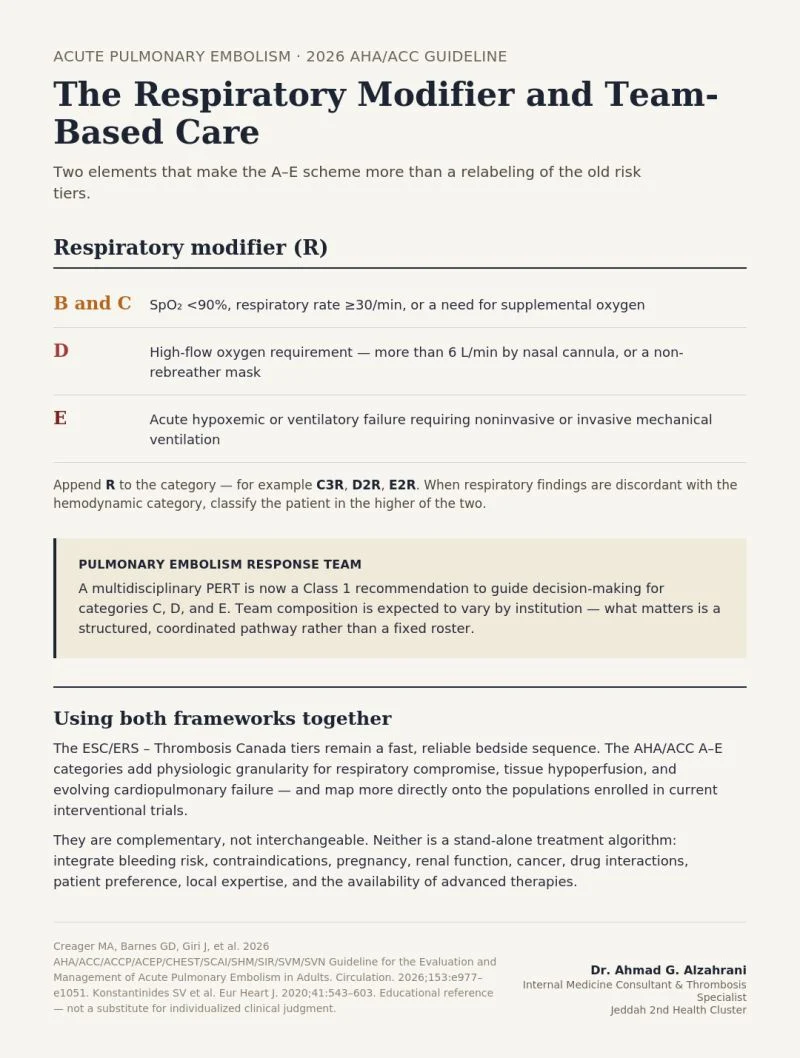
- The Respiratory Modifier, ‘R,’ recognizes oxygenation or ventilatory failure beyond right ventricular dysfunction.
PERT assessment now has a Class 1 recommendation for Categories C-E.
Important caveat: the comprehensive literature search ran from February to October 2024.
HI-PEITHO, STORM-PE, and STRATIFY all reported afterward, in populations overlapping Categories C3-D2, where several advanced-therapy recommendations remain Class 2b.
The categories provide common language but do not eliminate the evidence gap.
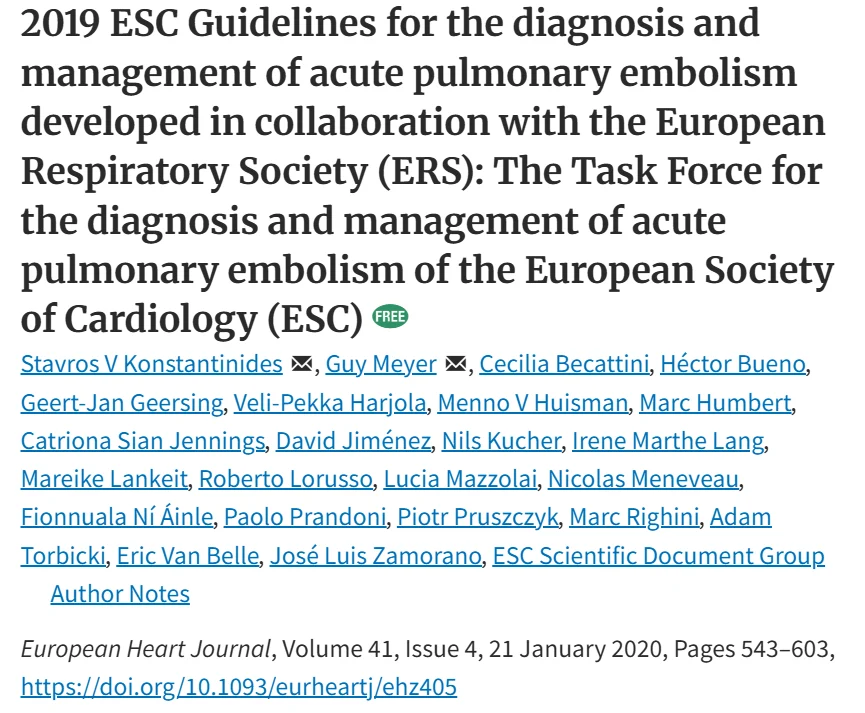
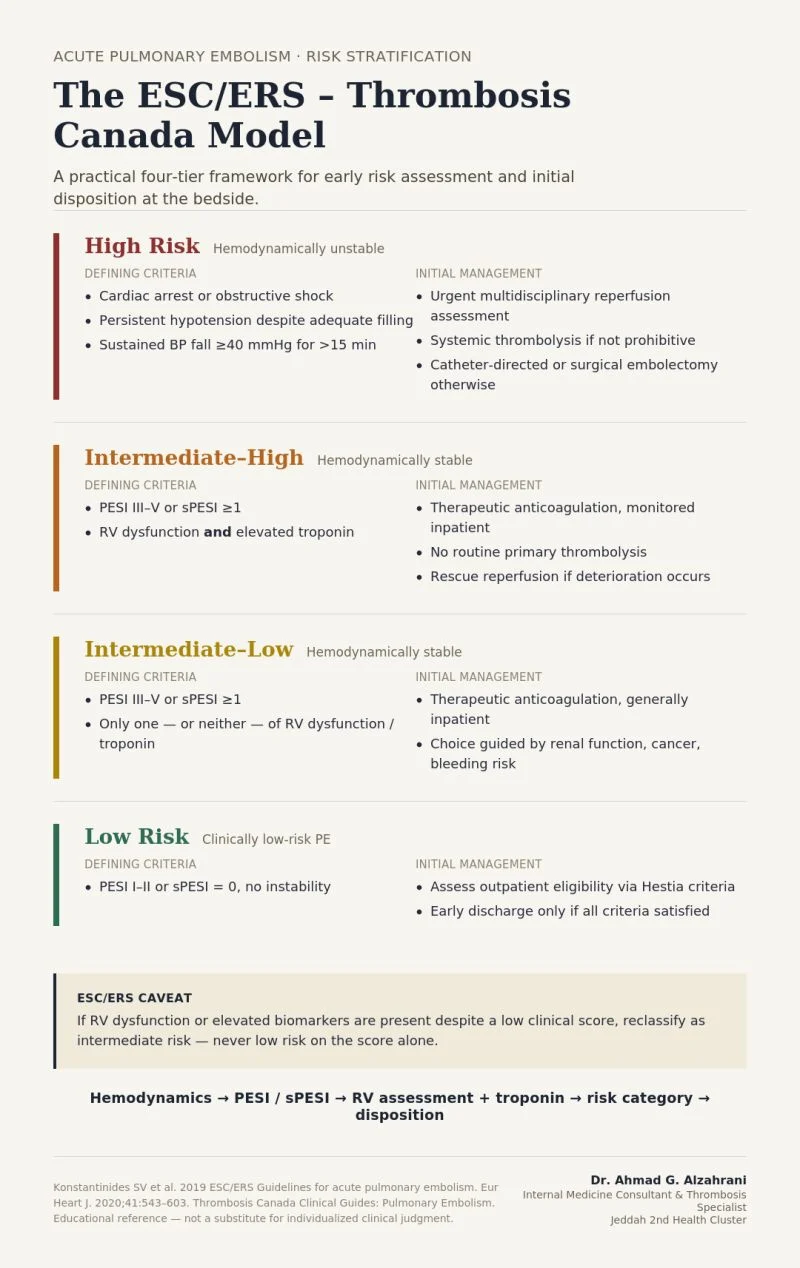
They also do not replace the ESC/ERS and Thrombosis Canada bedside sequence:
Hemodynamics
- PESI or sPESI
- Right ventricular assessment and troponin
- Disposition and management
The frameworks complement each other but are not interchangeable or stand-alone treatment algorithms.
The accompanying guide compares both approaches, including initial management and Class of Recommendation by category.”
Title: Risk for Recurrent Venous Thromboembolism in Patients With Subsegmental Pulmonary Embolism Managed Without Anticoagulation: A Multicenter Prospective Cohort Study
Authors: Grégoire Le Gal, Michael J. Kovacs, Laurent Bertoletti, Francis Couturaud, Carole Dennie, Andrew M. Hirsch, Menno V. Huisman, Frederikus A. Klok, Noémie Kraaijpoel, Ranjeeta Mallick, Amanda Pecarskie, Elena Pena, Penny Phillips, Isabelle Pichon, Tim Ramsay, Marc Righini, Marc A. Rodger, Pierre-Marie Roy, Olivier Sanchez, Jeannot Schmidt, Sam Schulman, Sudeep Shivakumar, Albert Trinh-Duc, Rachel Verdet, Ulric Vinsonneau, Philip Wells, Cynthia Wu, Erik Yeo, Marc Carrier
Title: 2019 ESC Guidelines for the diagnosis and management of acute pulmonary embolism developed in collaboration with the European Respiratory Society (ERS): The Task Force for the diagnosis and management of acute pulmonary embolism of the European Society of Cardiology (ESC)
Authors: Stavros V Konstantinides, Guy Meyer, Cecilia Becattini, Héctor Bueno, Geert-Jan Geersing, Veli-Pekka Harjola, Menno V Huisman, Marc Humbert, Catriona Sian Jennings, David Jiménez, Nils Kucher, Irene Marthe Lang, Mareike Lankeit, Roberto Lorusso, Lucia Mazzolai, Nicolas Meneveau, Fionnuala Ní Áinle, Paolo Prandoni, Piotr Pruszczyk, Marc Righini, Adam Torbicki, Eric Van Belle, José Luis Zamorano
Title: 2026 AHA/ACC/ACCP/ACEP/CHEST/SCAI/SHM/SIR/SVM/SVN Guideline for the Evaluation and Management of Acute Pulmonary Embolism in Adults: A Report of the American College of Cardiology/American Heart Association Joint Committee on Clinical Practice Guidelines
Authors: Mark A. Creager, Geoffrey D. Barnes, Jay Giri, Debabrata Mukherjee, William Schuyler Jones, Allison E. Burnett, Teresa Carman, Ana I. Casanegra, Lana A. Castellucci, Sherrell M. Clark, Mary Cushman, Kerstin de Wit, Jennifer M. Eaves, Margaret C. Fang, Joshua B. Goldberg, Stanislav Henkin, Hillary Johnston-Cox, Sabeeda Kadavath, Daniella Kadian-Dodov, William Brent Keeling, Andrew J.P. Klein, Jun Li, Michael C. McDaniel, Lisa K. Moores, Gregory Piazza, Karen S. Prenger, Steven C. Pugliese, Mona Ranade, Rachel P. Rosovsky, Farla Russo, Eric A. Secemsky, Akhilesh K. Sista, Leben Tefera, Ido Weinberg, Lauren M. Westafer, Michael N. Young
Stay updated with Hemostasis Today.
-
Oct 16, 2026, 18:12Adil Nawaz: Extended Dual Antiplatelet Therapy After Coronary Stenting
-
Oct 16, 2026, 17:50Elad Asher։ STORM-PE Shows Functional Benefits of Thrombectomy
-
Oct 16, 2026, 17:32Shruthi Narayan: STORM-PE and STRIKE-PE Studies Advance Understanding of Recovery After Pulmonary Embolism
-
Oct 16, 2026, 17:22Wolfgang Miesbach։ What a Near-Perfect FISH Score Fails to See
-
Oct 16, 2026, 17:06Troels Wienecke: Connecting Myeloproliferative Disease and Ischemic Stroke
-
Oct 16, 2026, 17:03Only 5 Days Left to Submit Your Research for EAHAD 2027
-
Oct 16, 2026, 16:48Abdul Rahman: Reticulocyte Count and Bone Marrow Activity
-
Oct 16, 2026, 16:44DOAC Adherence in Stroke Patients With Atrial Fibrillation – International Journal of Stroke
-
Oct 16, 2026, 16:22Shannon Farmer: Driving Patient Blood Management Forward in Australia and New Zealand