


Melissa Hollo: How HerCare Utilizes Hierarchical Algorithm of Severe Maternal Morbidity
Melissa Hollo, Director of Project Management at hc1 and Licensed Independent Clinical Social Worker, shared a post on LinkedIn:
“A recent study titled ‘Hierarchical algorithm identifies methods of severe maternal morbidity’ by Joshua Fitch, Senior Editor, published in Obstetrics and Gynecology, highlights a significant advancement in our understanding of severe maternal morbidity.
The study emphasizes the need for earlier and more precise identification of risks.
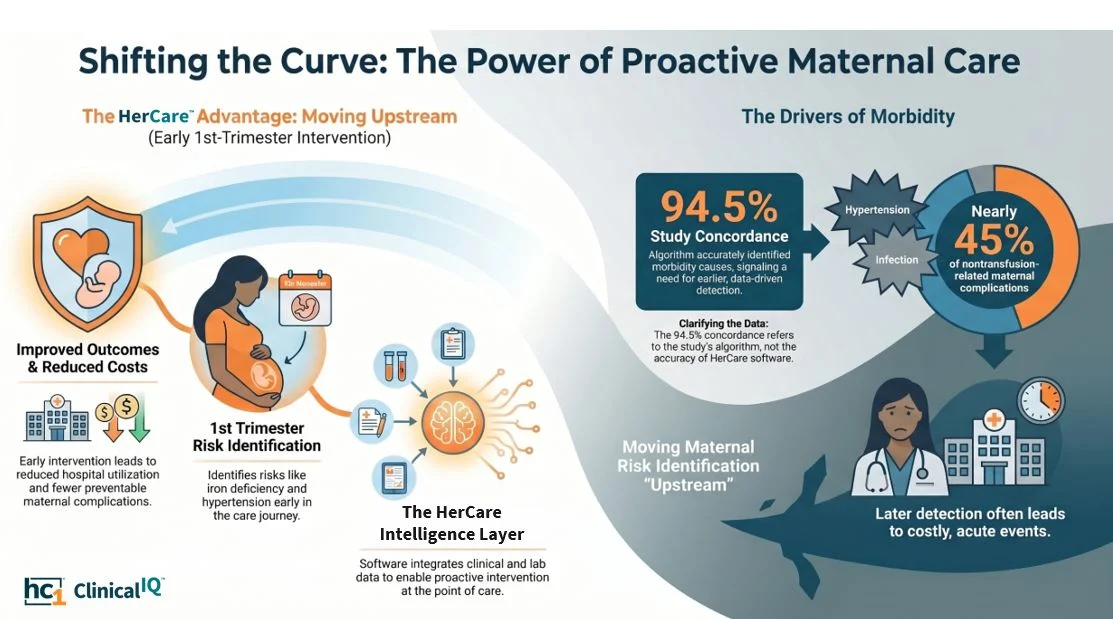
The research introduces a hierarchical algorithm that achieves a 94.5% concordance with manual chart reviews in identifying the primary drivers of maternal morbidity.
Key findings indicate that hemorrhage, hypertension, and infection are major contributors to maternal complications, with hypertension and infection alone responsible for nearly 45% of non-transfusion related cases.
While this study provides clarity on the factors driving maternal morbidity, it also highlights a critical gap in care: risks are often identified only after they have escalated.
At hc1, we are addressing this issue through HerCare.
HerCare utilizes a hierarchical, data-driven approach to identify maternal risk earlier in the care journey, before complications become severe.
By integrating clinical, lab, and longitudinal patient data, we empower providers to proactively detect risks such as iron deficiency, hypertensive disorders, and infections – conditions that significantly contribute to morbidity.
The opportunity lies not just in better classification, but in intervention.
By identifying these risks sooner, we can:
- Improve maternal outcomes and reduce preventable complications
- Decrease costly acute interventions and hospital utilization
- Close the gap between morbidity and mortality drivers through earlier care pathways
We can begin to shift the curve on maternal health by combining clinical insight with actionable intelligence at the point of care.
Learn how we’re supporting earlier maternal risk detection.”
More posts featuring Melissa Hollo on Hemostasis Today.
-
Sep 23, 2026, 04:34David Akande: When Sickle Cell Crises Have No Clear Trigger
-
Sep 23, 2026, 04:13Jean Connors: Safety of Heparin Re-Exposure in Patients with Remote HIT
-
Sep 23, 2026, 04:09Beth Psaila: Applications Now Open for the Gordon Research Conference on Megakaryocytes and Platelets
-
Sep 23, 2026, 03:27Abbie Newton: How Better Data Can Reduce Platelet Wastage
-
Sep 23, 2026, 03:01Suvro Sankha Datta: Rapid Blood Group Genotyping Using Gold Oligo Nanonet Assembly
-
Sep 23, 2026, 02:55Asghar Muhammad: Exploring New Ways to Expand Blood Transfusion Compatibility
-
Sep 23, 2026, 02:49Bianca Rocca: Personalized Cardiovascular Pharmacotherapy in the September 2026 EHJ Issue
-
Sep 23, 2026, 02:35Udaya RajBhandari: A Hidden Risk of Repeated Transfusions in β Thalassemia
-
Sep 23, 2026, 00:08Janar Sathananthan: The Importance of Durable Drug Delivery in DCB Therapy