


Melissa Hollo: Treating Anemia during Pregnancy Is an Investment in Two Generations of Health
Melissa Hollo, Director of Project Management at hc1 and Licensed Independent Clinical Social Worker, shared a post on LinkedIn:
“Treating anemia during pregnancy is an investment in two generations of health.
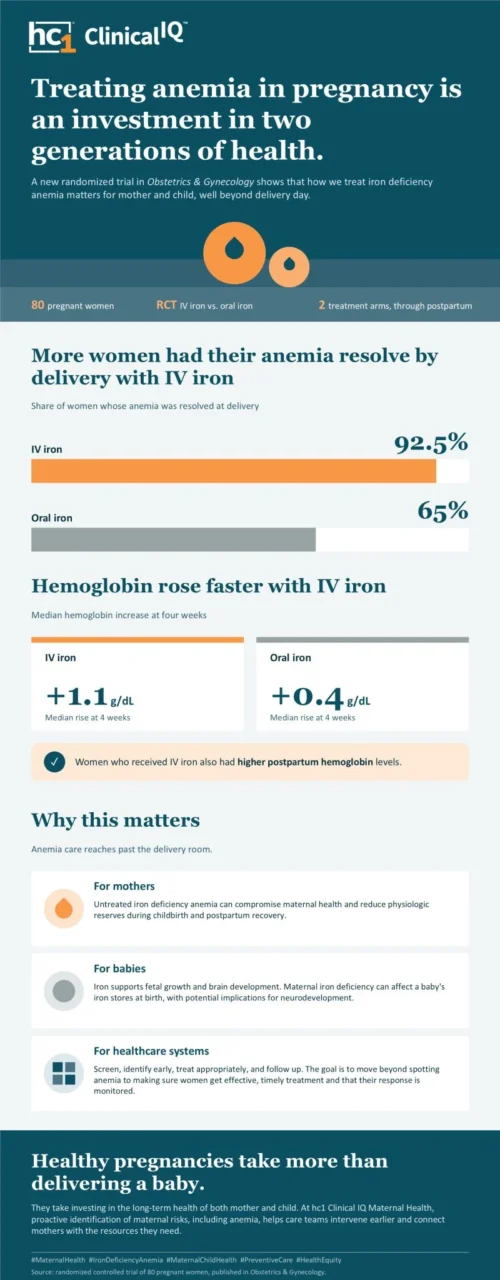
A new study published in Obstetrics and Gynecology highlights the importance of identifying and effectively treating iron deficiency anemia during pregnancy, not just for delivery, but for maternal and child health.
In this randomized controlled trial of 80 pregnant women, researchers found that intravenous (IV) iron produced significantly greater improvements than oral iron: 92.5% of women receiving IV iron had their anemia resolve by delivery, compared with 65% receiving oral iron.
Hemoglobin increased by a median of 1.1 g/dL at four weeks with IV iron, compared with 0.4 g/dL with oral iron.Women receiving IV iron also had higher postpartum hemoglobin levels.
Why does this matter?
- For mothers: Untreated iron deficiency anemia can compromise maternal health and reduce physiologic reserves during childbirth and postpartum recovery.
- For babies: Iron is essential for fetal growth and brain development. Maternal iron deficiency can affect the babys iron stores at birth, with potential implications for neurodevelopment. Supporting maternal iron status is an important opportunity to support a childs health beyond delivery.
- For healthcare systems: Screening, early identification, appropriate treatment, and follow-up can help close gaps in maternal care.
We need to move beyond simply identifying anemia to ensuring women receive effective, timely treatment and that their response is monitored.
At hc1 , we believe proactive identification of maternal risks, including anemia, helps care teams intervene earlier and connect mothers with the resources they need.
Healthy pregnancies require more than delivering a baby. They require investing in the long-term health of both mother and child.
Learn how we’re supporting earlier maternal risk detection.”
Other posts featuring Melissa Hollo on Hemostasis Today.
-
Oct 12, 2026, 17:53Donna Morelli: Hydroxyurea Safe and Effective for Pediatric Sickle Cell in Africa
-
Oct 12, 2026, 17:39Annie Bauzon: Differentiating Direct and Indirect Coombs Tests in Hematology
-
Oct 12, 2026, 17:15Cedric Hermans: Identifying and Diagnosing Hemophilia Carriers and Affected Females
-
Oct 12, 2026, 17:01Bianca Rocca: Evaluating Factor XI Inhibition Lessons from LIBREXIA-ACS
-
Oct 12, 2026, 13:58Francisco Chacón-Lozsán: Catastrophic Antiphospholipid Syndrome A Rapidly Progressive Multiorgan Thrombotic Emergency
-
Oct 12, 2026, 12:50Nawsherwan Mohammad: Study Examines Thrombotic Events in Patients with Polycythemia Vera in Iraq
-
Oct 12, 2026, 12:30Chanakya Nayudu: Looking Beyond Blood Clots – Patient-Reported Outcomes in Antiphospholipid Syndrome
-
Oct 12, 2026, 12:12Jean-Jacques Kiladjian: Improving Treatment Strategies with JAK Inhibitors in Myelofibrosis
-
Oct 12, 2026, 12:04Chloe Homich: AABB Annual Meetings – Building Connections and Advancing Transfusion Medicine