


Mokhtar Tazik: Plasma Self-Sufficiency and Sustainable Access
Mokhtar Tazik, Plasma Bussiness Manager and Local Biotest QA at DAC, shared a post on LinkedIn:
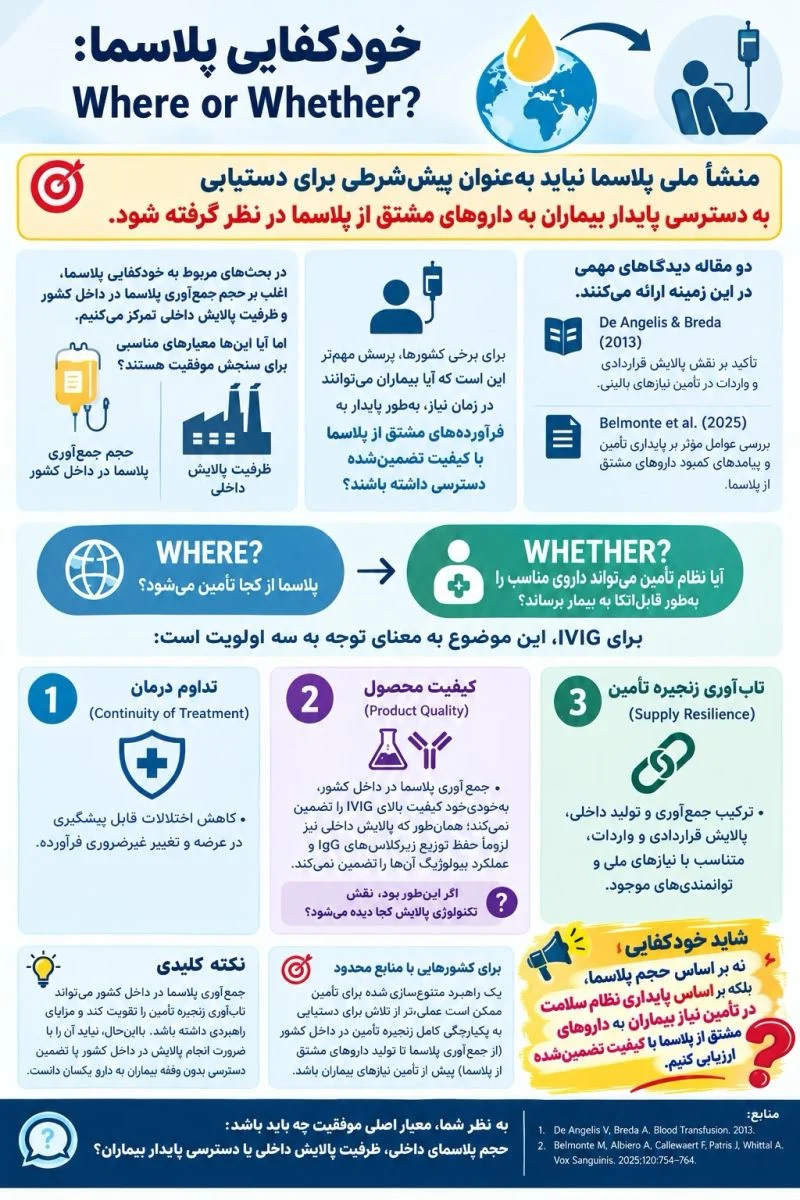
“Plasma Self-Sufficiency: where or whether
Domestic plasma origin should not be considered as a prerequisite for achieving sustainable patient access to PDMPs.
In discussions about plasma self-sufficiency, we often focus on domestic collection volumes and national fractionation capacity. But are these the right measures of success
For some countries , the more relevant question is whether patients can reliably access quality-assured PDMPs when they need it.
Two publications offer important perspectives.
- De Angelis and Breda (2013) questioned the extent to which self-sufficiency should depend on national plasma, highlighting the role of contract fractionation and imports in meeting clinical needs.
- More recently, Belmonte et al (2025),examined the drivers and consequences of PDMP shortages. Their review highlights how supply constraints can lead to treatment delays, dose reductions, discontinuation or switching to alternative products. It also describes the vulnerability created by concentrated global plasma sourcing and long manufacturing timelines.
These findings shift the discussion from where plasma originates to whether the supply system can reliably deliver the right medicine to the patient.
- For IVIG, this means considering three priorities:
- Continuity of treatment: reducing avoidable supply disruptions and unnecessary product switching.
- Product quality: Domestic plasma collection does not guarantee high-quality IVIG, just as domestic fractionation does not automatically guarantee the preservation of IgG subclass distribution or biological functionality.
- Supply Resilience: combining Domestic collection/production, Contract fractionation and Imports according to national needs and available capabilities.
Domestic plasma collection can strengthen resilience and may offer strategic advantages. However, it should not be confused with a requirement to fractionate plasma domestically or with a guarantee of uninterrupted patient access.
For countries with limited resources, a diversified supply strategy may be more practical than pursuing complete national integration (Domestic plasma, Domestic PDMPs )before patients’ needs are met.
Perhaps self-sufficiency should be evaluated not only by how much plasma a country collects, but also by how reliably its healthcare system meets patients’ needs for quality-assured PDMPs.
What should be the primary measure of success need to be considered: domestic plasma volume, domestic fractionation capacity, or sustainable patient access?”
1.Title: Plasma-derived medicinal products self-sufficiency from national plasma: to what extent?
Authors: Vincenzo De Angelis, Antonio Breda
Read the Full Article on Blood Transfusion

2. Title: Understanding supply sustainability of plasma-derived medicinal products: Drivers and consequences of shortages
Authors: Miriam Belmonte, Anna Albiero, Filip Callewaert, Julien Patris, Amanda Whittal
Read the Full Article on Vox Sanguinis

Other posts featuring Mokhtar Tazik on Hemostasis Today.
-
Nov 2, 2026, 12:09Alejandro González Veliz: Does More Calcium Mean More Stability
-
Nov 2, 2026, 12:05Zeev Dvashi: Advancing Synthetic Blood Technologies for Battlefield Medicine
-
Nov 2, 2026, 11:56Rob Maloney: Strengthening Patient Advocacy in Bleeding Disorders
-
Nov 2, 2026, 11:46William McKeown: Advancing Gene and Cell Therapies for Inherited Bleeding Disorders
-
Nov 2, 2026, 11:41Anawat Ratchatorn: Identifying Stroke Mimics in the Emergency Department
-
Nov 2, 2026, 11:29Shruti Gadgil: AI-Powered Smartphone Screening for Anemia Severity in Rural India
-
Nov 2, 2026, 10:41Paulus Kirchhof: Smoking or Vaping – Nicotine Still Affects Vascular Health
-
Nov 2, 2026, 10:30Asesa Omullo: Connecting Sickle Cell Advocates at GANSID 2026
-
Nov 2, 2026, 10:18Salih Ehsan: Beyond IRIDA – Conditions That Mimic Iron-Refractory Anemia