

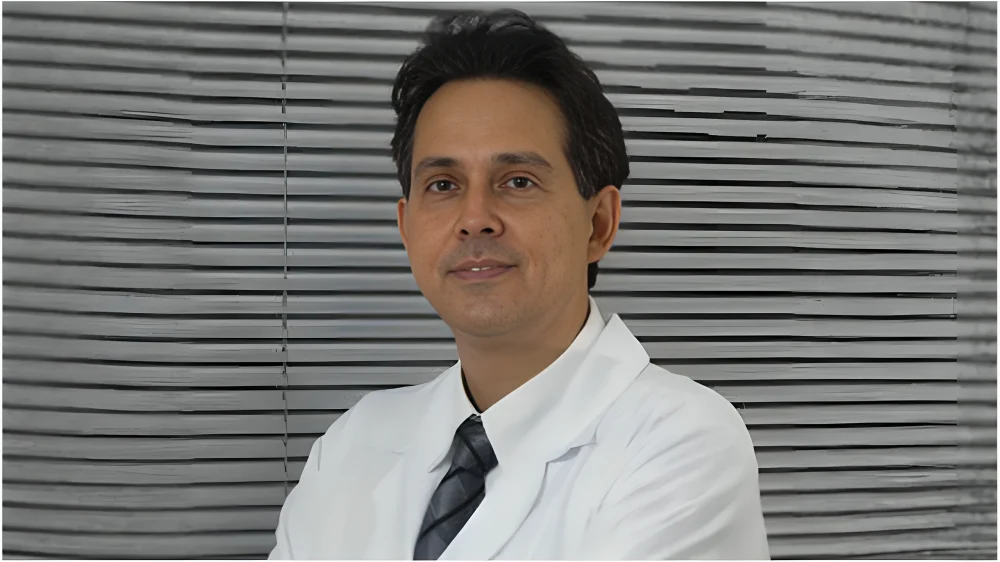
Ney Carter Borges: Understanding Pathophysiology as the Foundation of Precision Cardiovascular Care
Ney Carter Borges, Member Cardiologist of Global Physician Association at Cleveland Clinic Florida, shared a post on LinkedIn:
“Understanding Pathophysiology: The Foundation of Precision Cardiovascular Care
Modern cardiology has evolved from treating coronary obstruction to understanding the biological mechanisms that trigger acute coronary syndromes.
Plaque erosion exemplifies this paradigm shift.
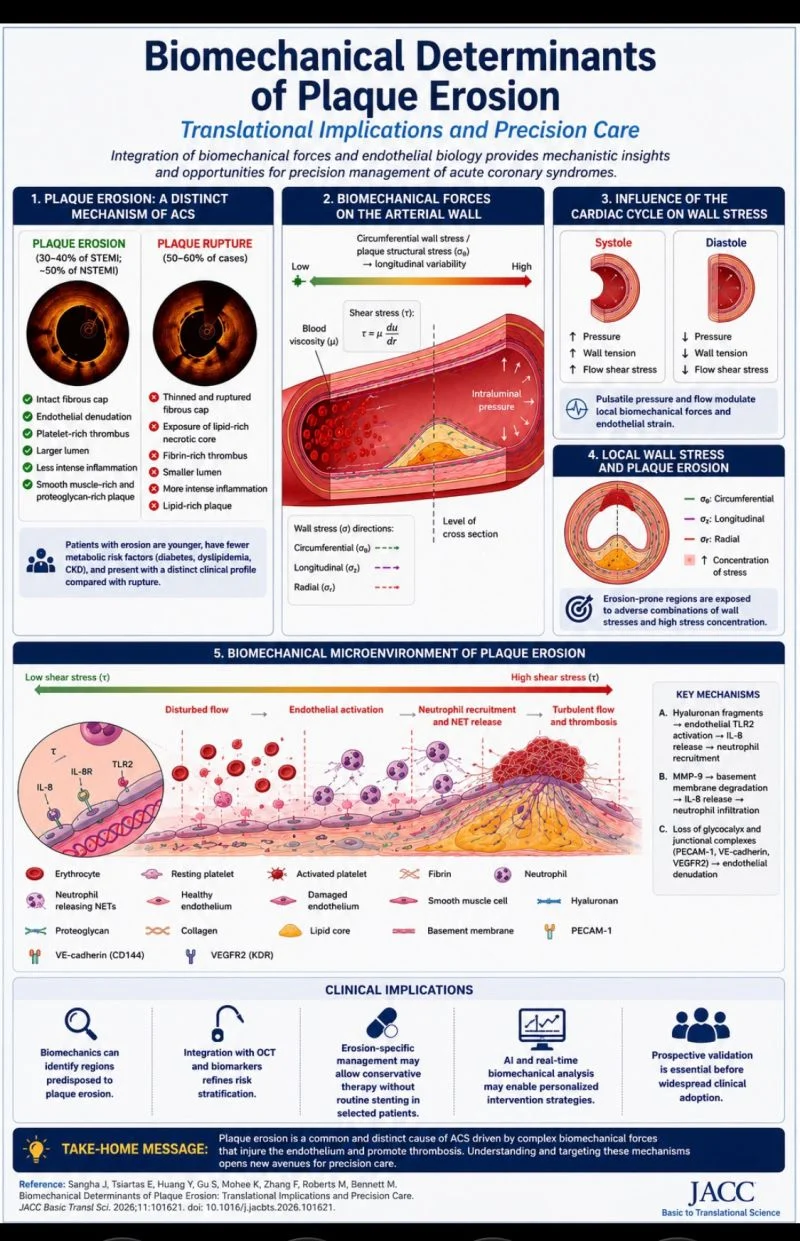
Once considered a secondary phenotype of plaque rupture, it is now recognized as a distinct pathological entity, accounting for approximately 30% of ST-segment elevation myocardial infarctions (STEMI) and nearly 50% of non-ST-segment elevation myocardial infarctions (NSTEMI).
Unlike plaque rupture, erosion develops over an intact fibrous cap, where endothelial denudation and platelet-rich thrombosis occur without structural cap disruption.
Understanding these mechanisms directly influences clinical decision-making. Computational biomechanical studies consistently demonstrate that plaque erosion develops in regions of markedly elevated endothelial shear stress (ESS) and steep endothelial shear stress gradients (ESSG).
In one study, erosion sites exhibited approximately 5-fold higher mean ESS, 20- to 22-fold higher peak ESS, and 5- to 6-fold higher ESSG, accompanied by a 2- to 4-fold reduction in relative residence time, creating a highly thrombogenic microenvironment despite preserved plaque architecture.
Clinical observations reinforce these mechanistic findings. Among patients with plaque erosion, 94% presented with STEMI, while 78% were active smokers, emphasizing the interaction between systemic risk factors and local biomechanical forces.
Importantly, high ESS and ESSG remained stable during 12 months of follow-up, suggesting that adverse coronary flow patterns represent a persistent biological signature rather than a transient phenomenon.
Perhaps the greatest clinical implication is therapeutic.
OCT-guided studies have demonstrated that carefully selected patients with plaque erosion can be successfully treated with intensive antithrombotic therapy without routine coronary stenting, with more than 90% remaining free from major cardiovascular events at four years.
These findings illustrate how understanding pathophysiology transforms treatment—from simply repairing anatomy to targeting the mechanism responsible for thrombosis.
Ultimately, integrating endothelial biology, biomechanics, advanced imaging, and artificial intelligence represents one of the most promising pathways toward truly personalized cardiovascular medicine.”
Find more posts featuring Ney Carter Borges on Hemostasis Today.
-
Oct 23, 2026, 17:45Lucy Brook: Had the Privilege of Attending the Blood 2026 Conference with New Zealand Blood Service
-
Oct 23, 2026, 16:05Platelet Secretion Defects and Their Role in the Diagnosis of Bleeding Disorders
-
Oct 23, 2026, 16:00Hemophilia Alliance team in New Orleans at the ATHN Data Summit
-
Oct 23, 2026, 15:49Brian Sapp: Why Exact Calf Vein Naming Is Critical for DVT Diagnosis?
-
Oct 23, 2026, 15:33Smitirupa Mishra: A Systematic Approach to Bone Marrow Examination
-
Oct 23, 2026, 15:29José Antonio García Erce: Preoperative Anemia Emerges as a Modifiable Surgical Risk in New POWER Study
-
Oct 23, 2026, 15:13Reza Shojaei: Manufactured Red Blood Cells vs Blood Donation
-
Oct 23, 2026, 14:29Jean Jacques Kiladjian: International Scientific Exchange at IHCAMS in Tianjin
-
Oct 23, 2026, 14:11Aravind Palraj: The Prolonged aPTT Puzzle in SLE