


Pooja Choradia: Recognizing Pulmonary Embolism in Pregnancy Before It Is Too Late
Pooja Choradia, Critical Care Associate at P.D. Hinduja Hospital Khar, shared a post on LinkedIn:
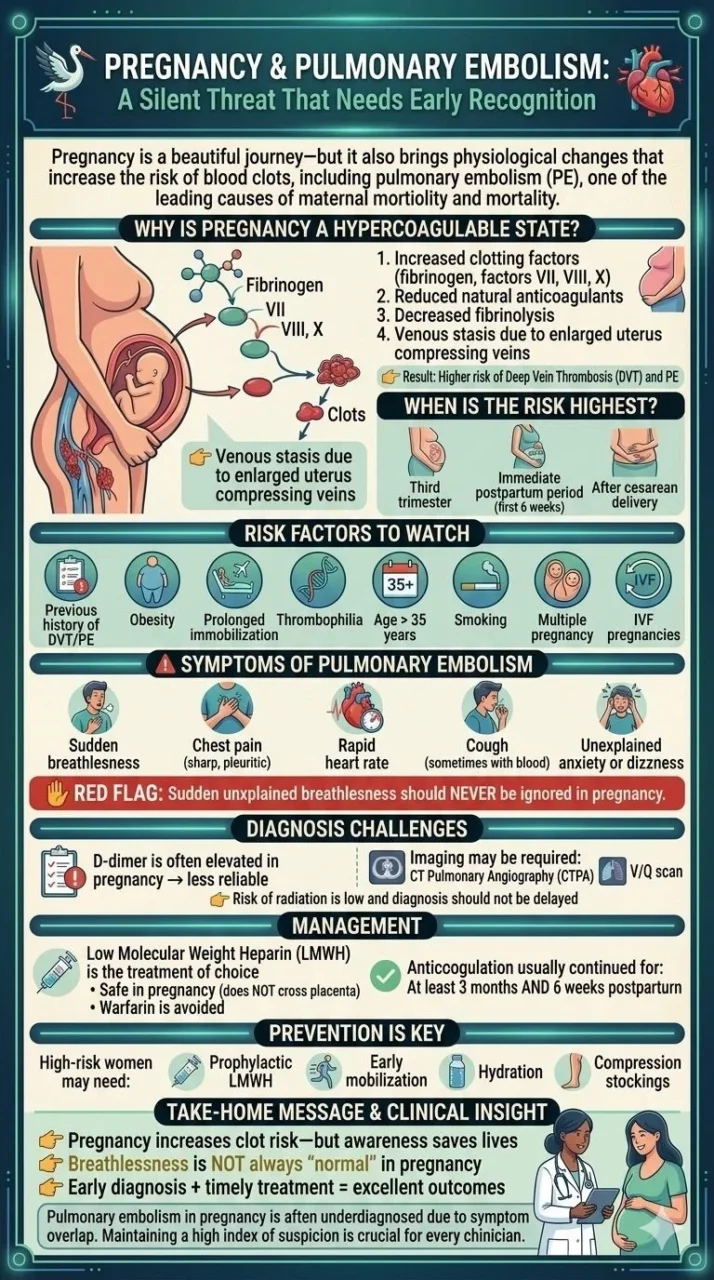
“Pregnancy and Pulmonary Embolism
A Silent Threat That Needs Early Recognition
Pregnancy is a beautiful journey—but it also brings physiological changes that increase the risk of blood clots, including pulmonary embolism (PE), one of the leading causes of maternal morbidity and mortality.
Why is pregnancy a hypercoagulable state?
During pregnancy, the body naturally prepares to prevent excessive bleeding during delivery.
This leads to:
- Increased clotting factors (fibrinogen, factors VII, VIII, X)
- Reduced natural anticoagulants
- Decreased fibrinolysis
- Venous stasis due to enlarged uterus compressing veins
Result: Higher risk of deep vein thrombosis (DVT) and PE
When is the risk highest?
- Third trimester
- Immediate postpartum period (first 6 weeks)
- After cesarean delivery
Risk factors to watch
- Previous history of DVT/PE
- Obesity
- Prolonged immobilization (bed rest, travel)
- Thrombophilia (inherited/acquired)
- Age more than 35 years
- Smoking
- Multiple pregnancy
- IVF pregnancies
Symptoms of pulmonary embolism
Symptoms can be subtle and often overlap with normal pregnancy changes—making diagnosis tricky.
Look out for:
- Sudden breathlessness
- Chest pain (sharp, pleuritic)
- Rapid heart rate
- Cough (sometimes with blood)
- Unexplained anxiety or dizziness
Red flag: Sudden unexplained breathlessness should Never be ignored in pregnancy.
Diagnosis challenges
D-dimer is often elevated in pregnancy – less reliable.
Imaging may be required:
- CT Pulmonary Angiography (CTPA)
- V/Q scan
Risk of radiation is low and diagnosis should not be delayed
Management
Low molecular weight heparin (LMWH) is the treatment of choice.
- Safe in pregnancy (does NOT cross placenta)
Warfarin is avoided during pregnancy.
Anticoagulation usually continued for:
- At least 3 months
- And 6 weeks postpartum
Prevention is key
High-risk women may need:
- Prophylactic LMWH
- Early mobilization
- Hydration
- Compression stockings
Take-home message
- Pregnancy increases clot risk – but awareness saves lives
- Breathlessness is not always ‘normal’ in pregnancy
- Early diagnosis plus timely treatment equals excellent outcomes
Clinical insight
Pulmonary embolism in pregnancy is often underdiagnosed due to symptom overlap.
Maintaining a high index of suspicion is crucial for every clinician.”
Stay updated with Haemostasis Today.
-
Oct 17, 2026, 17:27John Strouse: Building Standards for Whole-Person Sickle Cell Care Through Collaboration
-
Oct 17, 2026, 17:20Jean-Jacques Kiladjian: Exploring the Future of Polycythemia Vera Treatment at MPN Horizons 2026
-
Oct 17, 2026, 17:10Habib Bennaceur: Strengthening Collaboration in Haemophilia, Sickle Cell Disease and Thalassaemia in India
-
Oct 17, 2026, 16:58Danny Hsu: Building Connections at the AUSNBled Collaborative Dinner in Auckland
-
Oct 17, 2026, 16:48Kalyan Roy: Enhancing Patient Experience Through Learning and Collaboration
-
Oct 17, 2026, 16:43Wilfried Dinh: Antiplatelet Therapy in 2026: Duration is Becoming a Dynamic Decision
-
Oct 17, 2026, 16:37Ian Setchfield: Dr. Evans Presents on Safe Anticoagulation Prescribing at East Kent Hospitals
-
Oct 17, 2026, 16:33Lewis Thomas: Connecting Through Shared Experiences at ASCAT 2026
-
Oct 17, 2026, 16:29Nilesh Jethwa: Yasmin Adverse Event Reports Exceed 23,000 Over Two-Year Period