

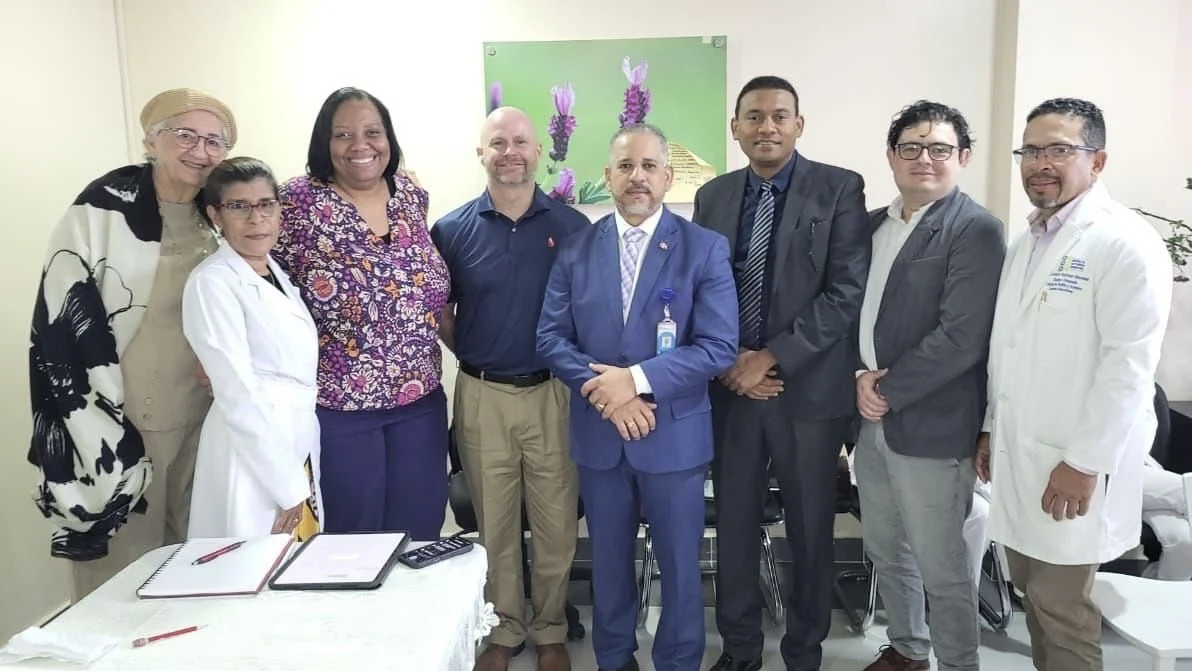
Rob Maloney: From Past to Progress in Hemophilia Care in the Dominican Republic
Rob Maloney, Chief Executive Officer of Hemophilia of Georgia, shared on LinkedIn:
”Recently I sat in a room in the Dominican Republic with men living with hemophilia.
Most were in their thirties and forties.
You could see the disease on their bodies.
- Joints that had stiffened.
- Knees that didn’t fully straighten.
- Movement that carried the memory of years without the right preventive treatment.
For a moment, it felt like stepping into the past.
Because forty years ago, this is what hemophilia looked like in the United States.
Before modern therapies.
Before coordinated care.
Before a community learned how to build systems around rare disease.
That’s what struck me most about the trip.
The challenges weren’t unfamiliar.
They were familiar in a way that felt almost historical.
Through a partnership with the World Federation of Hemophilia, Hemophilia of Georgia has begun working alongside patient organizations, hospitals and clinicians in the Dominican Republic to help strengthen their national program.
Some of that work is technical.
Sharing treatment protocols.
Helping clinics coordinate better across regions.
Advocating for therapies that extend beyond childhood into adulthood.
But a lot of the work is simply learning together.
Healthcare systems look different across countries.
Resources look different.
Cultures look different.
And yet the core questions remain the same.
- How do you help families understand the disease?
- How do you support physicians who may only see a handful of patients a year?
- How do you make sure people living far from major hospitals still receive the care they need?
Those are not Dominican questions.
They’re human ones.
One of the most important lessons for me was this: international partnerships should never feel like charity.
They should feel like collaboration.
Because every system has something to teach.
In the Dominican Republic, we saw extraordinary family networks and a culture of care that is deeply relational.
There are things about how communities support each other there that many of us in American healthcare could learn from.
So yes, we will share what we know.
- Strategic planning.
- Treatment protocols.
- Lessons learned the hard way.
But we’ll also listen.
Because improving care for rare diseases isn’t about exporting expertise.
It’s about building relationships that allow knowledge to move in both directions.
The hope is simple.
That one day, when someone sits in a room in the Dominican Republic with a group of hemophilia patients, the disease won’t be written on their joints anymore.
And that the work we are doing together today helped make that future possible.”
Stay updated with Hemostasis Today.
-
Oct 18, 2026, 13:0810 Posts Not to Miss This Week
-
Oct 18, 2026, 12:58Pierpaolo Di Micco: DOACs vs Vitamin K Antagonists in Long-Term Anticoagulation
-
Oct 18, 2026, 12:51Arianne Missimer: Understanding Ferritin Levels Beyond the Normal Range
-
Oct 18, 2026, 12:37Roberto C. Iglesias: Colon Cancer Prevention Beyond Supplements and Vitamins
-
Oct 18, 2026, 12:27Rafael Alejandro Camero Del Vecchio: Paroxysmal Nocturnal Hemoglobinuria Advancing Complement Inhibition with Ravulizumab
-
Oct 18, 2026, 12:26Abdul Mannan: When INR Misleads – Rethinking Bleeding Risk in Cirrhosis
-
Oct 18, 2026, 12:14Stéphane Laurent: The People and Technology Behind Safe Blood Transfusion
-
Oct 18, 2026, 12:14Abhi Kapuria: When VTE Prophylaxis Breaks Down in the ICU
-
Oct 18, 2026, 11:37Lee Anne Sorto: Beyond Compliance – Making Audits Count in Transfusion Safety