

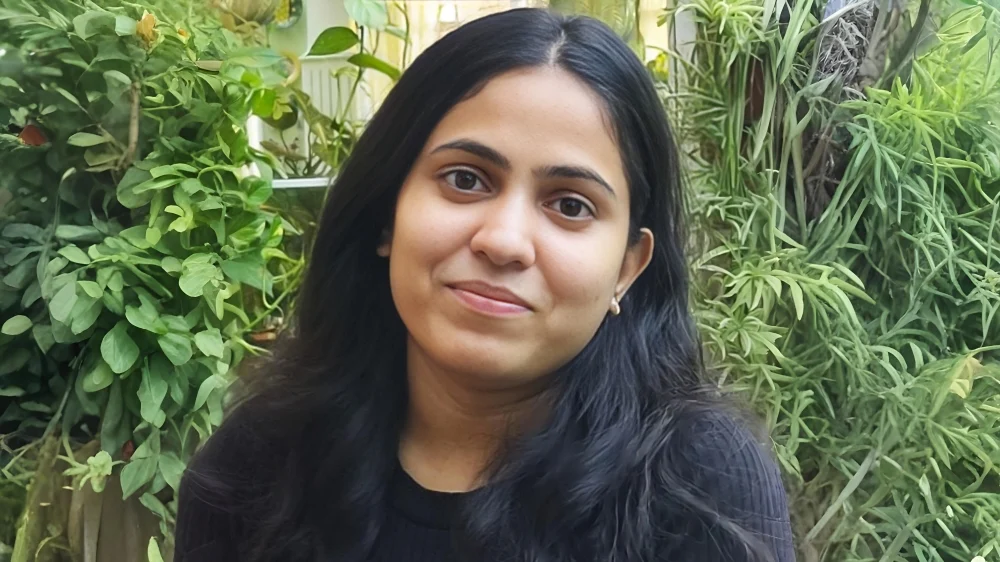
Srishti Goyal: Can Thalassemia Major Be Prevented?
Srishti Goyal, Former Blood Bank Technologist at Indian Red Cross Society (National Headquarters, New Delhi, India), shared a post on LinkedIn:
Every year, thousands of children are born with thalassemia major, a lifelong condition requiring blood transfusions every 2-3 weeks.
Yet here’s the paradox: thalassemia major is one of the most preventable genetic disorders we know. The tragedy isn’t that we lack the tools; it’s that we fail to use them early enough.
Why Screening Matters
Thalassemia major can’t be cured easily, but it can be prevented reliably. Here’s why screening is critical:
1. Carriers are healthy and unaware
- Most carriers (thalassemia minor) have no symptoms
- Without testing, they have no idea they carry the gene
- The problem only emerges when two carriers have children together
2. The risk is predictable
- When both parents are carriers: 25% chance per pregnancy of thalassemia major
- This isn’t a rare event; it’s a 1 in 4 probability with every child
- Every pregnancy, those odds repeat.
3. Early detection changes everything
- Screening before pregnancy: Maximum options and time to decide
- Screening during early pregnancy: Still time for prenatal diagnosis
- Screening after birth: Too late for prevention, only management
4. The cost-benefit is overwhelming
- Carrier screening: ₹500-2,000 per person
- Lifetime cost of managing thalassemia major: ₹50 lakhs to ₹1 crore+
- One prevented case saves immeasurable suffering and massive healthcare costs
Who Should Be Screened
While universal awareness is important, certain populations should be prioritized for systematic screening:
High-risk communities:
- Sindhi, Gujarati, Punjabi ancestry (carrier rates can hit 10-15%)
- Bengali, South Indian
- Mediterranean, Middle Eastern, Southeast Asian, Chinese
- Basically, if your family didn’t originate in Northern Europe, consider it
Life situations:
- Planning marriage or pregnancy
- Already pregnant (first trimester is ideal, but better late than never)
- Have unexplained “mild anemia” that doesn’t fix with iron tablets
- Your partner is a known carrier
Here’s the most important rule: If you’re already confirmed as a carrier, your partner must also be tested. This is critical for informed risk assessment. Because if they’re not a carrier, you’re in the clear. If they are, you need to know ASAP.
How the Testing Actually Works
Step 1: CBC (Complete Blood Count): The First Clue
This is your standard blood test. Costs ₹200-500. Available everywhere.
What doctors look for:
- MCV (cell size) under 80 fL: often way lower, like 60-70 fL
- MCH (Hb per cell) under 27 pg: often way lower
- RBC count: High (> 5.5 million/µL)
- Hemoglobin: Normal or mildly low (10-13 g/dL)
The Pattern: A high number of small, pale red blood cells reflecting ineffective hemoglobin production.
Red Flag for Doctors: Don’t assume all microcytic anemia is iron deficiency. If iron supplementation doesn’t work, think thalassemia.
Step 2: Hemoglobin HPLC: Confirming Beta-Thalassemia Trait
If CBC suggests thalassemia trait, this test is essential. Costs: ₹800-2,000, available in most city labs, some district hospitals.
What it measures:
- Types and amounts of hemoglobin in blood
- Normal adults have mostly HbA (95-98%)
- Small amounts of HbA2 (2-3.5%) and HbF (< 1%)
Beta-Thalassemia Carrier Pattern:
- Elevated HbA2 (> 3.5%, usually 4-7%): Diagnostic hallmark
- Normal or slightly elevated HbF
- Reduced HbA
Why This Works: When beta-globin production is reduced, the body compensates by making more delta-globin chains (which form HbA2).
Step 3: DNA Testing: When More Precision Is Needed
This costs more: ₹3,000-15,000, depending on the lab.
You need it for:
- Alpha-thalassemia – because HbA2 stays normal here, so HPLC won’t catch it
- Confirming the exact mutation if both partners are carriers (needed for prenatal diagnosis or PGT)
- Ambiguous cases where other tests aren’t clear
In India, alpha-thal is less common than beta-thal, but it exists. Southeast Asian ancestry? Or Previous child with unexplained anemia or hydrops fetalis? Definitely get DNA testing
What Happens If Both Parents Are Carriers
The Genetic Counseling Session
When testing reveals both partners are carriers of the same thalassemia type, a genetic counselor (or informed physician) should explain:
Every time you get pregnant:
- 25% chance to Baby has thalassemia major (two bad genes)
- 50% chance to Baby is a carrier like you (one bad gene)
- 25% chance to Baby is totally fine (two normal genes)
What This Means:
- Not every child will be affected, but the risk is significant
- Each pregnancy is an independent event (if the first child is affected, the second child still has 25% risk)
- Carriers can have both affected and unaffected children
- These probabilities assume both parents have the beta-thalassemia trait or both have the alpha-thal trait
This is where timing matters:
- Found out before pregnancy? You have all the options and time to think.
- Found out early in pregnancy? Still okay, prenatal diagnosis is possible.
- Found out at 20+ weeks? Now you’re in crisis mode with very limited choices.
Prevention Strategies
Once both parents are confirmed carriers, several paths exist to prevent thalassemia major:
Option 1: Prenatal Diagnosis: Testing the Fetus During Pregnancy
Two ways to do this:
CVS (Chorionic Villus Sampling): 10 to 13 weeks
- They take a tiny sample of the placenta, test the fetal DNA
- You get a definitive answer: affected, carrier, or normal
Amniocentesis: 15 to 20 weeks
- They take amniotic fluid, and the same genetic testing
- Later timing, harder decisions if the fetus is affected
Both carry a small miscarriage risk (under 1%). Both cost ₹12,000-30,000.
The Decision Point: If the fetus has thalassemia major, parents face the choice of:
- Continuing pregnancy and preparing for lifelong management
- Medical termination of pregnancy (legal in India for genetic disorders)
Some families continue because they believe they can manage. Some terminate because they can’t face putting a child through lifelong transfusions.
But here’s the reality: This is currently the most accessible prevention option in India. It’s available in most cities. It works. And many couples choose this route.
Option 2: Preimplantation Genetic Testing (PGT-M): Test Before Pregnancy Even Starts
How it works:
- Do IVF: ovarian stimulation, egg retrieval, fertilization in the lab
- You get multiple embryos
- Each embryo is biopsied and genetically tested
- You only transfer embryos that are unaffected or carriers
- Affected embryos don’t get used
The result: 99% risk reduction when correctly performed.
Why people love it:
- No termination decisions during pregnancy
- You’re pregnant, knowing the baby is safe
- Peace of mind
Why can’t people do it:
- Costs ₹1.5-3 lakhs per IVF cycle (sometimes need multiple cycles)
- Only available in major cities
- Insurance doesn’t cover it
- Physically demanding: IVF requires hormone injections, egg retrieval
If you can afford it and access it, PGT is the gold standard. But for most Indian families, it’s out of reach.
Option 3: Donor Eggs or Sperm
Use a donor who’s been tested and confirmed not a carrier. Risk eliminated. Child is biologically related to one of you (or neither, if both use donors).
Not for everyone, but it’s an option.
Option 4: Adoption
Some at-risk couples choose adoption, avoiding genetic risks entirely while building their family.
India’s Gaps (Why Prevention Isn’t Happening at Scale)
Despite having the tools, India continues to see ₹10,000-15,000 new thalassemia major births annually. Why?
Gap 1: No Universal Screening Program
There’s no national policy. No universal screening program. You only get tested if:
- The doctor specifically orders it
- Patient/couple is aware and requests it
- Incidental finding during blood tests
Global comparison:
- Cyprus: Mandatory premarital screening since early 1980s
- Iran: National premarital screening program
- Sardinia: School-based screening plus prenatal diagnosis
- All achieved > 90% reduction in new cases
Gap 2: Nobody Knows About This
Most carriers don’t know they’re carriers. Most doctors don’t routinely screen for it. Communities with the highest carrier rates often know the least.
People hear “thalassemia minor” and panic, not realizing it means they’re healthy carriers, not sick.
Gap 3: Testing Infrastructure Is Uneven
- CBC available everywhere
- Hemoglobin HPLC is available only in cities/district hospitals
- DNA testing limited to major metros
- Private labs charge varying (sometimes excessive) amounts
Quality varies wildly. Some labs don’t calibrate HbA2 properly. Results get delayed. Follow-ups don’t happen.
Gap 4: There Are Almost No Genetic Counselors
- Very few trained genetic counselors in India
- Most information is delivered by doctors during rushed OPD consultations
- Couples don’t understand their options or implications
- Decisions made under time pressure without proper support
Gap 5: Late Detection (After Pregnancy Is Advanced)
Many women don’t visit a doctor till second trimester. Screening happens late. Results come back late. Referrals are delayed. By the time both partners are confirmed carriers and counseling happens, she’s 20+ weeks pregnant.
Now what? Prenatal diagnosis is riskier. Decisions are agonizing. Options shrink.
All would be preventable if screening happened in the first trimester. Or better yet, before conception.
Gap 6: PGT Is Unaffordable for Most
₹2-3 lakhs per cycle. No government subsidy. No insurance.
Middle-class families can’t swing it. Rural families don’t even know it exists.
The best prevention tool is only for the rich.
Gap 7: Cultural and Religious Barriers
Some communities oppose termination on religious grounds. Some see IVF as ‘unnatural’. Some families stigmatize carrier status, affecting marriage prospects.
These are real barriers. They need sensitive, culturally appropriate counseling – which doesn’t exist at scale.
Prevention Is Possible, But Only With Action
At the policy level:
- National guidelines for universal prenatal screening
- Subsidized PGT for at-risk couples
- Training programs for genetic counselors
At the healthcare level:
- Doctors must think of ‘thalassemia’ when they see microcytic anemia
- Every carrier diagnosed should trigger partner testing
- Timely counseling and referral pathways
- Quality control in lab testing
At the community level:
- Awareness campaigns in local languages
- Normalize premarital and prenatal screening
- Destigmatize carrier status
At the Individual Level:
- High-risk ancestry plus planning a family? Get screened before you conceive.
- Already a known carrier? Your partner needs testing yesterday.
- Healthcare provider? Make this routine, not exceptional.
Bottom Line
Thalassemia major can be prevented. The science is proven. The tools are available. The cost is minimal compared to lifelong treatment.
What’s missing is systematic implementation, widespread awareness, and timely action.
If you’re planning a family and belong to a high-risk community, get screened. Today. Not next month. Not when you’re already pregnant.
If you’re a carrier, make sure your partner is tested. This one step can save your child from a lifetime of transfusions.
If you’re a healthcare provider, think thalassemia. Screen. Counsel. Refer.
Prevention isn’t just possible. It’s our responsibility.
Next up, Part 4: Living with Thalassemia Major: What Treatment Actually Looks Like”
Stay updated with Hemostasis Today.
-
Sep 23, 2026, 16:04Monia Ezzalfani: Advancing Patient-Centered Care in Hemophilia A and B
-
Sep 23, 2026, 15:49Bilge Başak: How Activated PRP Modulates Osteoarthritic Chondrocyte Function
-
Sep 23, 2026, 14:50Mbonjo Bitsie Dora: Strengthening Sickle Cell Care Through Education, Awareness and Innovation
-
Sep 23, 2026, 13:58The New B12 Diagnostic Algorithm: From Serum Cobalamin to Functional Deficiency
-
Sep 23, 2026, 13:56Noha Soror: Preparing for Hematology and Medical Oncology Board Certification
-
Sep 23, 2026, 13:46Ugochi Ogu: What Can Platelet Proteomics Reveal about Pain and Neurocognitive Vulnerability in Sickle Cell Disease?
-
Sep 23, 2026, 13:42Melissa Hollo: Connecting Obesity and Anemia for Earlier Maternal Risk Intervention
-
Sep 23, 2026, 13:16Beverley Hunt: Advances in Haemostatic Management of Postpartum Haemorrhage
-
Sep 23, 2026, 13:13Ioanna Mela: Recruiting a Research Associate on DNA nanotechnology