


Sukanto Paul: The Day the Sickled Cells Went Home
Sukanto Paul, Technical Supervisor at Narayana Health, shared a post on LinkedIn:
”The Day the Sickled Cells Went Home
It was early morning when a young child with sickle cell disease arrived at the apheresis unit. He looked tired, and his family carried the worry that had become all too familiar—the fear of another sickle cell crisis.
The goal was simple but powerful: Remove the child’s sickled red blood cells and replace them with healthy donor red blood cells, reducing the proportion of HbS-containing cells and improving oxygen delivery.
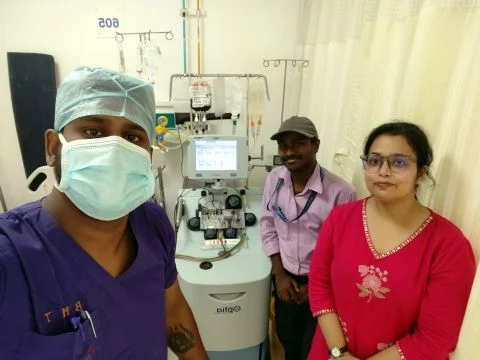
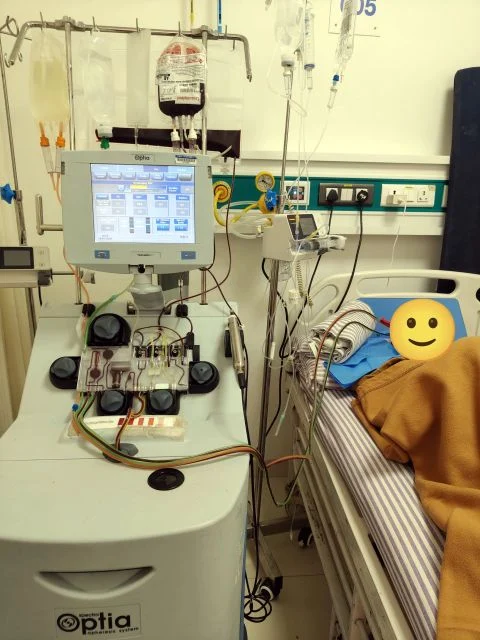
The child was connected to the Spectra Optia apheresis machine. Blood slowly entered the machine, where the red blood cells were separated from the other blood components. The patient’s abnormal red cells were removed in a controlled manner while compatible donor red blood cells were returned to the circulation.
At first, the child watched the machine with curiosity. The gentle rhythm of the procedure continued—blood out, separation, exchange, and blood back in.
For us, every number mattered: hemoglobin, hematocrit, HbS percentage, fluid balance, calcium level, vital signs, and the child’s clinical condition. The procedure was performed carefully with continuous monitoring.
As the exchange progressed, the laboratory target began to come closer—the proportion of sickle hemoglobin was being reduced.
The family watched quietly.
Then came the moment they had been waiting for.
The procedure was completed successfully. The child was stable, comfortable, and surrounded by the team that had cared for him throughout the exchange.
For the family, it was more than an apheresis procedure.
For the child, it was another chance to breathe easier, to play, to go to school, and to live a childhood interrupted too often by sickle cell disease.
And for the apheresis team, it was a reminder that behind every bag of blood and every number on the machine is a child waiting for a better tomorrow.
RBC exchange is not simply the removal and replacement of red cells—it is a carefully coordinated effort to give a child with sickle cell disease a safer tomorrow.”
Stay updated with Hemostasis Today.
-
Oct 12, 2026, 13:58Francisco Chacón-Lozsán: Catastrophic Antiphospholipid Syndrome A Rapidly Progressive Multiorgan Thrombotic Emergency
-
Oct 12, 2026, 12:50Nawsherwan Mohammad: Study Examines Thrombotic Events in Patients with Polycythemia Vera in Iraq
-
Oct 12, 2026, 12:30Chanakya Nayudu: Looking Beyond Blood Clots – Patient-Reported Outcomes in Antiphospholipid Syndrome
-
Oct 12, 2026, 12:12Jean-Jacques Kiladjian: Improving Treatment Strategies with JAK Inhibitors in Myelofibrosis
-
Oct 12, 2026, 12:04Chloe Homich: AABB Annual Meetings – Building Connections and Advancing Transfusion Medicine
-
Oct 12, 2026, 11:51Daniel Sop: Sickle Cell Research Takes Center Stage at ASCAT 2026
-
Oct 12, 2026, 10:36PAI-1 Inhibition as a New Strategy for Enhancing Fibrinolysis and Clot Resolution
-
Oct 12, 2026, 07:39Emmanuel J Favaloro: 100 Years of von Willebrand Disease and the Importance of Local Diagnosis and Management
-
Oct 12, 2026, 07:39Post-Stroke Fatigue Trajectories – 38% Recovered at 12 Months, While 16% Developed New Fatigue – International Journal of Stroke