


Suzan Osman/ LinkedIn ; Dr. S.0 MIKAYE / LinkedIn
May 27, 2026, 13:56
Suzan Osman: The Major Types of Intracranial Hemorrhage in Clinical Practice
Suzan Osman, Registered Nurse at Abu Dhabi Health Services Company, shared a post on LinkedIn:
“Types of Brain Bleeding
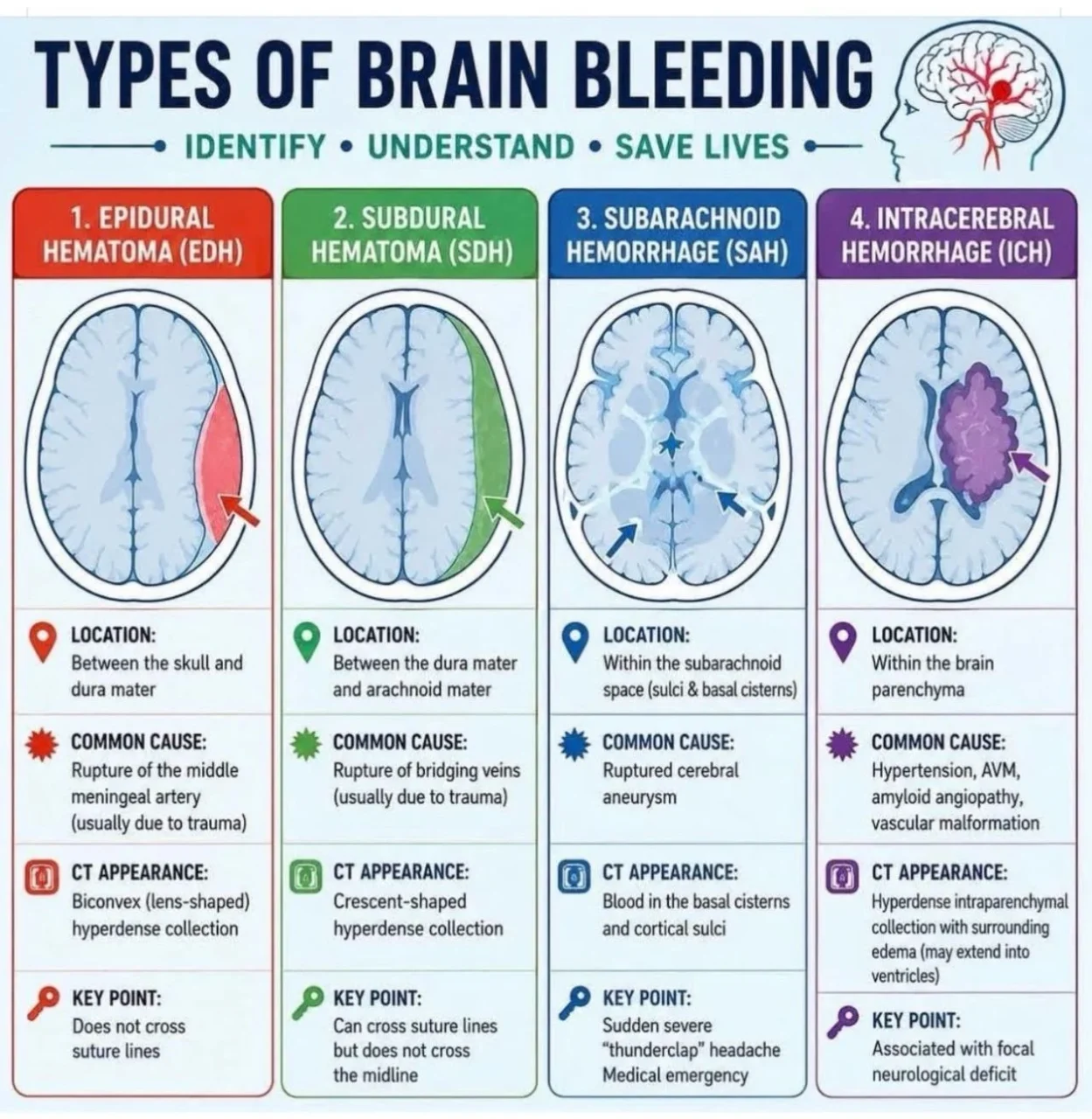
Brain bleeding (intracranial hemorrhage) is bleeding inside the skull. It is classified according to the location of the bleed.
1. Epidural Hemorrhage:
- Bleeding between the skull and dura mater
- Usually caused by head trauma and skull fracture
- Commonly arterial bleeding
- Rapidly progressive and life-threatening
2. Subdural Hemorrhage:
- Bleeding between the dura mater and arachnoid mater
- Usually due to tearing of bridging veins
- Common in elderly patients and after trauma
- Can be acute or chronic
3. Subarachnoid Hemorrhage:
- Bleeding between the arachnoid and pia mater
- Often caused by ruptured cerebral aneurysm
- Presents with sudden severe ‘thunderclap’ headache
- Considered a neurosurgical emergency
4. Intracerebral Hemorrhage:
- Bleeding within the brain tissue itself
- Commonly caused by hypertension
- A form of hemorrhagic stroke
- May cause focal neurological deficits
5. Intraventricular Hemorrhage:
- Bleeding into the ventricular system of the brain
- Seen in premature infants or severe brain injury/stroke
- May lead to hydrocephalus and raised intracranial pressure
Common Symptoms:
- Severe headache
- Vomiting
- Weakness or paralysis
- Altered consciousness
- Seizures
- Speech or vision problems
Major Causes:
- Trauma
- Hypertension
- Ruptured aneurysm
- Anticoagulant use
- Vascular malformations
- Brain tumors
Diagnosis:
- CT scan of the head
- MRI brain
- Cerebral angiography in selected cases
Management:
- Emergency stabilization
- Blood pressure control
- Surgical evacuation when indicated
- Treatment of underlying cause
- Intensive neurological monitoring
Credit for Samwel Mikaye”
Stay updated with Hemostasis Today.
-
Oct 18, 2026, 17:11Owen McCarty: Understanding Prekallikrein and Its Role in Inflammation and Thrombosis
-
Oct 18, 2026, 17:04Emna Gouider Belhadjali: Don’t Miss GPAS 2026 on Bleeding Disorders
-
Oct 18, 2026, 16:53Mehran Ghasemzadeh: Microparticle-Associated Mitochondrial DNA in Stored Platelet Products
-
Oct 18, 2026, 16:38Edward Lee Carter: A 15-Minute Blood Test for Brain Hemorrhage?
-
Oct 18, 2026, 16:29Patrick Taylor: Oral vs Transdermal Estrogen and Cardiovascular Risk in Menopausal Women
-
Oct 18, 2026, 16:19Artangela Henry: A Meaningful Week at the SCDAA National Convention
-
Oct 18, 2026, 16:04Emília Araújo։ New Insights Into the Genetics of Hemophilia B Leyden
-
Oct 18, 2026, 15:43André Marcel Harris: Award-Winning Research on Texas Sickle Cell Data Collection
-
Oct 18, 2026, 15:21Eleonora Gambineri: First Results of the IEI-Haem Consortium at ESID 2026