

Tagreed Alkaltham: Blood Management in Times of Crisis
Tagreed Alkaltham, Transfusion Medicine Lab Supervisor at KSMC, shared a post on LinkedIn:
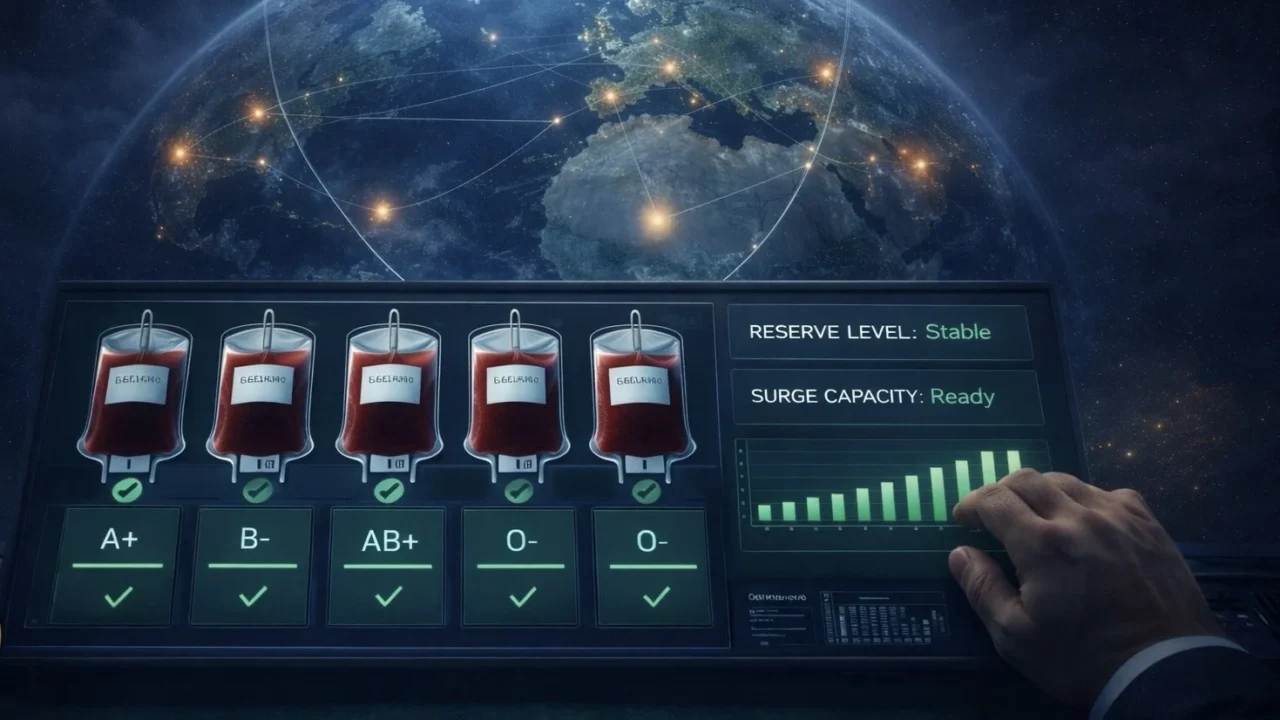
“Blood Management in Times of Crisis
Governance, Structure, and Strategic Readiness
- In transfusion medicine, crises do not test emotion.
- They test systems.
Effective blood management during high demand events is not built at the moment of activation.
It is designed through governance, structured inventory models, and clearly defined escalation pathways long before urgency emerges.
From a leadership perspective, crisis readiness in transfusion services rests on four foundational dimensions:
1 . Strategic Inventory Planning:
Maintaining adequate supply requires more than volume.
It requires defined minimum thresholds, emergency buffer allocation, and continuous monitoring of high risk blood groups and phenotypes.
Resilience is not excess.
It is controlled preparedness.
2. Structured Escalation Frameworks:
Crisis activation must follow predefined criteria, not subjective urgency.
Clear command structures, decision authority, and communication channels determine operational stability under pressure.
Systems function best when authority is clarified before it is needed.
3. Ethical Allocation Governance:
In periods of increased demand, allocation decisions must remain clinically justified, transparent, and policy driven.
Equity in distribution protects both patients and institutional integrity.
4. Operational and Workforce Preparedness:
Simulation drills, cross training, fatigue mitigation, and surge planning ensure continuity of service without compromising safety.
Operational strength is a product of preparation, not reaction.
- Preparedness is not a temporary state.
- It is a leadership discipline sustained over time
- Strong systems do not rely on urgency to function.
- They rely on structure.
Governance designed in stability
is what protects performance under pressure.”
Stay updated with Hemostasis Today.
-
Oct 16, 2026, 15:18Carmine Liberatore: Limited Accuracy of VTE Risk Scores in Multiple Myeloma
-
Oct 16, 2026, 14:55Alex Borstein and the Bleeding Phenotype of Hemophilia A Carriers
-
Oct 16, 2026, 13:59Aya Akmal Amin: Antiphospholipid Syndrome Management and Risk Stratification
-
Oct 16, 2026, 13:10Emanuel Sueldo: CAHT 2026 Celebrates Scientific Progress and Team Achievements
-
Oct 16, 2026, 13:05Maha Othman: Queen’s Health Sciences Advances CAT Risk Models and Pediatric ISTH-BAT Cut-Offs
-
Oct 16, 2026, 13:03Thrombosis Awareness Must Lead to Timely Action – Roche
-
Oct 16, 2026, 12:49Wolfgang Miesbach: 5-Year CBDR Data Confirms Emicizumab Safety and Efficacy in Hemophilia A
-
Oct 16, 2026, 12:40Edward Lee Carter: How Factor XI Inhibition Could Transform Anticoagulation Therapy
-
Oct 16, 2026, 12:40Marc Carrier: Looking Ahead to ISTH 2027 in Vancouver