

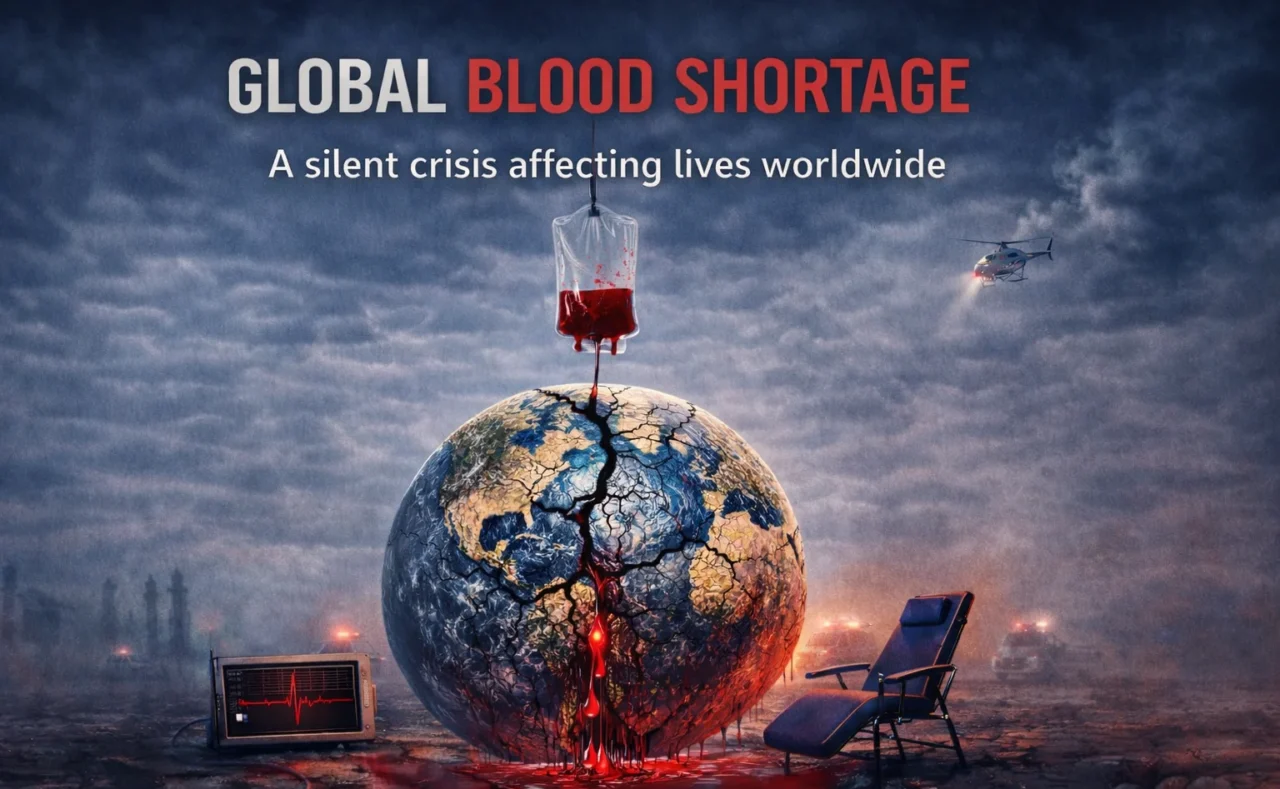
Tagreed Alkaltham: Blood Crisis Unveiled – Global Shortages, Causes, and Lifesaving Fixes
Tagreed Alkaltham, Transfusion Medicine Lab Supervisor at KSMC, shared a post on LinkedIn:
“The Global Blood Shortage: A Silent Crisis Affecting Healthcare Worldwide
The global blood shortage is not a temporary emergency.
It is a persistent worldwide challenge that affects healthcare systems every day often quietly, but with serious consequences.
What causes blood shortages
- It is poverty, limited funding.
- Weak Blood Banks leadership that fail to ensure its availability when lives depend on it.
- Reliance on voluntary non regular donors.
- Low public awareness and common misconceptions about blood donation.
- Crises such as pandemics, conflicts, and natural disasters.
- Increasing demand due to advanced medical care and more patients with cancer and chronic conditions require ongoing blood transfusions.
- Lack of proactive planning and effective inventory management.
- Weak infrastructure: Inadequate facilities for collecting, storing, and testing blood, especially in developing countries.
- Rare blood groups, certain blood types are very rare and depend on a limited group of donors from specific populations.
Which regions are most affected
- Low and middle income countries, where regular donation rates are low and blood bank infrastructure is limited.
- High income countries experience critical shortages during seasonal drops in donation, public health crises, periods of reduced community engagement and Inefficient blood bank management and suboptimal inventory planning.
Blood shortage is not a problem of geography, it is a problem of sustainability and systems.
Some suggested strategies needed to effectively reduce blood shortage
- Providing financial support and international aid to low income countries.
- Promoting regular, voluntary blood donation.
- Building public trust in blood banks by ensuring that the community believes blood donation is safe, meaningful, responsibly managed, and truly used to save patients’ lives.
- Investing in data driven inventory and demand forecasting systems.
- Strengthening governance and leadership in blood banks systems.
- Supporting and strengthening blood bank infrastructure, including collection, testing, and storage facilities.
- Regional and international collaboration for emergency blood sharing during crises.
- Capacity building and workforce training in low resource blood bank systems.
- Supporting research to extend blood shelf life and improve storage technologies.
- Integrating blood availability into global health security and emergency preparedness plans.
- Strengthening global governance, accountability, and sustainability of blood systems.
- Supporting and expanding Patient Blood Management (PBM) programs globally to reduce unnecessary transfusions and optimize blood use.
- Supporting research and innovation in artificial blood and blood substitutes to reduce long term dependence on donated blood.
Final thought:
When blood is not available on time, it is not a shortage of supply it is a loss of life.”
Leila S., Menager HSE at Iranian Blood Transfusion Organization, shared this post on LinkedIn, adding:
“Blood shortage means a shortage of hope for patients whose lives depend on a single unit of blood.”

Stay updated with Hemostasis Today.
-
Sep 25, 2026, 10:49Shefina S: From Presenting to Hosting at TRANSCON 2026
-
Sep 25, 2026, 10:37Michelle Leona Cecil: Hemophilia Advocacy and the Power of Community
-
Sep 25, 2026, 10:13Michael Baria: Platelet Concentration and PRP Outcomes in Partial Rotator Cuff Tears
-
Sep 25, 2026, 09:49Haley Coleman: Volunteering to Support Hemophilia Awareness
-
Sep 25, 2026, 08:55Hitarth Mehta: BHMS Students Gain Practical Exposure to Haemophilia Diagnosis
-
Sep 25, 2026, 07:25Varun Capoor: How Therapeutic Apheresis and Transfusion Medicine Can Complement Clinical Management in SCD
-
Sep 25, 2026, 07:14Manshi Kesharwani: SAK-GQDs Modulate Thrombus Burden and Endothelial Function in Deep Vein Thrombosis
-
Sep 25, 2026, 06:20Farjah Hassan Algahtani: How Can We Better Identify Patients at Risk of Blood Clots after Metabolic and Bariatric Surgery?
-
Sep 25, 2026, 05:59Carla Lewis: Kids Conquering Sickle Disease Joins Nemours Children’s Hospital for 2nd Annual Awareness Event