


Tareq Abadl: Hidden Interferences Behind Unexpected Laboratory Results
Tareq Abadl, Medical Lab Specialist, shared a post on LinkedIn:
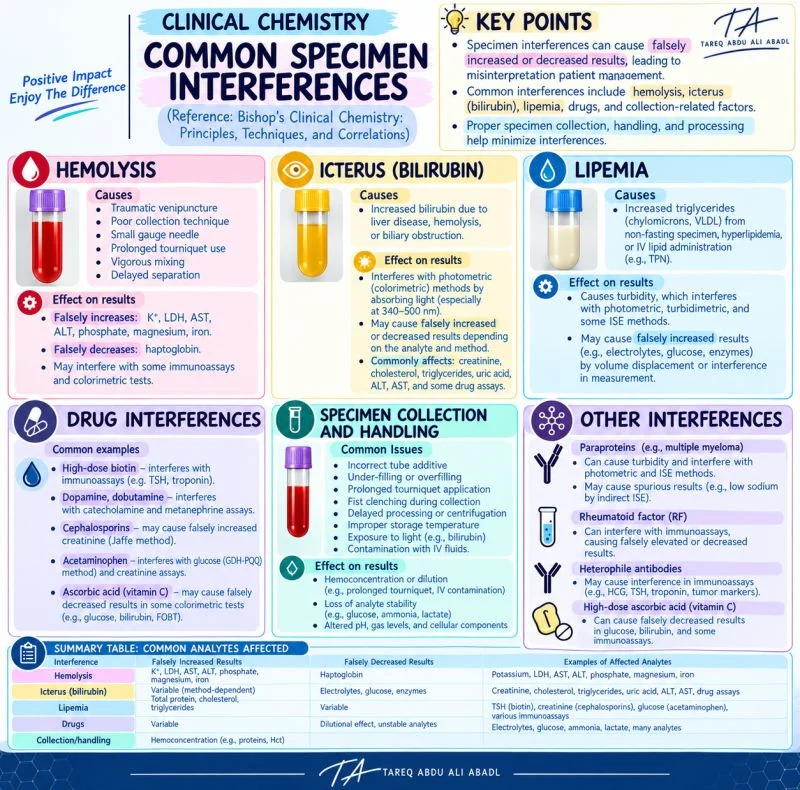
“Common Specimen Interferences in Clinical Chemistry
Not every abnormal laboratory result reflects a true pathological condition!
Specimen-related interferences can significantly affect test accuracy and lead to misleading interpretations.
Key interferences every laboratory professional should know:
1. Hemolysis
The release of intracellular components can affect several analytes, particularly potassium, LDH, and AST.
The degree of interference depends on the analyte and the method used.
2. Icterus
Elevated bilirubin may interfere with certain analytical methods, especially photometric assays, potentially causing falsely increased or decreased results.
3. Lipemia
Excess lipids can cause sample turbidity and interfere with photometric measurements.
The effect varies according to the analyte and analytical platform.
4. Drug and Supplement Interference
Certain medications and supplements, such as high-dose biotin, may interfere with specific laboratory assays.
5. Specimen Collection and Handling
Incorrect tube selection, improper filling, prolonged tourniquet application, delayed processing, and contamination may compromise result accuracy.
6. Other Interferences
Paraproteins, rheumatoid factor, and heterophile antibodies may interfere with selected laboratory methods.
How can we minimize these errors?
- Follow proper specimen collection and handling procedures.
- Inspect samples for hemolysis, icterus, and lipemia when appropriate.
- Consider the analytical method and the laboratory’s interference limits.
- Correlate unexpected results with clinical findings and repeat testing when indicated.
Remember: The direction and magnitude of interference are method-dependent.
Always consult your laboratory’s validated procedures and assay-specific interference data.
Understanding specimen interferences is essential for accurate results and reliable clinical decisions.”
Other posts featuring Tareq Abadl on Hemostasis Today.
-
Oct 27, 2026, 11:42Cece Calhoun: ASH Promotes Clinical Research Training and Mentorship for Emerging Hematologists
-
Oct 27, 2026, 11:41Ifeanyichukwu Ifechidere: The Laboratory Challenges of Measuring Direct Factor Xa Inhibitors
-
Oct 27, 2026, 11:39Gene Therapy Offers New Possibilities for Patients with Thalassaemia in the UAE – Thalassaemia International Federation
-
Oct 27, 2026, 11:35Alan Nurden: rFVIIa Prophylaxis May Reduce Bleeding-Related Healthcare Burden in Glanzmann Thrombasthenia
-
Oct 27, 2026, 10:12Cesar Garrido: WFH Connects with Spanish Thrombosis and Haematology Societies
-
Oct 27, 2026, 10:01Chokri Ben Lamine: CAPS After Autologous SCT – Diagnostic Criteria and Key Mimics
-
Oct 27, 2026, 09:45Jean Terrier: COBRRA Trial – Comparing Bleeding Risks Between DOACs
-
Oct 27, 2026, 08:42Kathleen Freson: SLFN14 at the Crossroads of RNA Regulation, Platelet Biogenesis and Inherited Thrombocytopenia
-
Oct 27, 2026, 08:22Ashenafi Tazebew Amare: Transfusion medicine is no longer just about the blood bag.