


Divyaswathi Citla Sridhar: We Counsel Patients With Obesity About VTE Risk, But What Does Real-World Data Actually Show?
Divyaswathi Citla Sridhar, a pediatric hematologist and oncologist at Arkansas Children’s Hospital, shared a post on LinkedIn:
“We counsel patients with obesity about VTE risk—but what does real-world data actually show?
Our new study published in RPTH Journal analyzed >4 million females prescribed hormonal therapy and found:
• Higher VTE rates with several ethinyl-estradiol–containing therapies in obese users
• No significant VTE increase with progesterone-only therapy
Title: Venous thromboembolism in obese hormonal contraceptive users: a large national database study
Authors: Divyaswathi Citla-Sridhar, Madhvi Rajpurkar, Lakshmi Srivaths, Bethany Samuelson Bannow, Rachel P. Rosovsky, Nancy Sokkary.
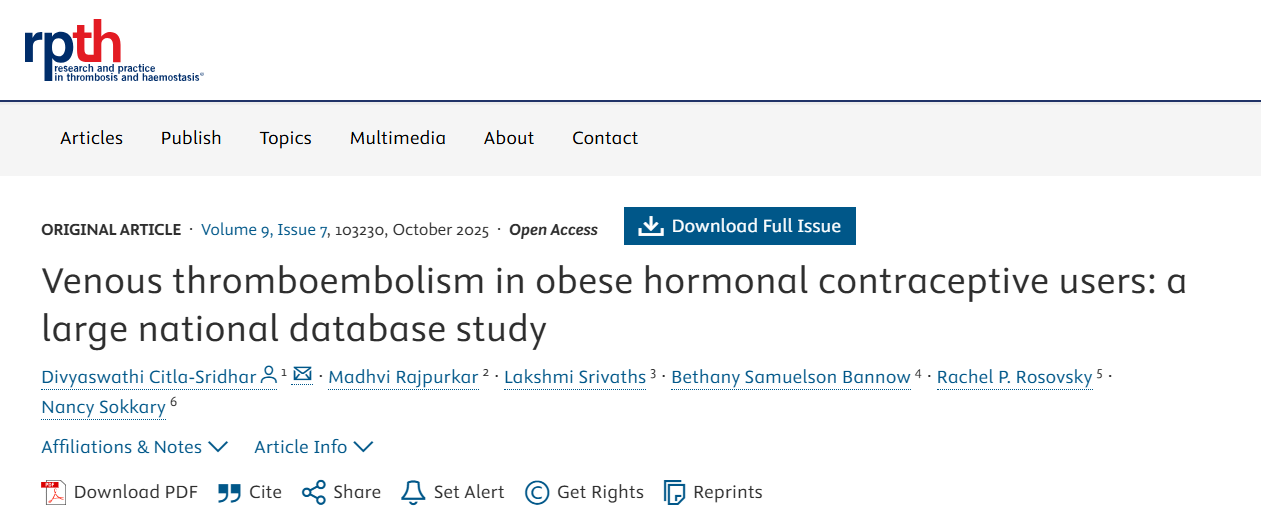
Grateful to work with a fantastic group of collaborators: Madhvi Rajpurkar Lakshmi Srivaths Bethany Samuelson Bannow Rachel Rosovsky Nancy Sokkary & Foundation for Women & Girls With Blood Disorders.”
Learn more with Hemostasis Today.
-
Oct 10, 2026, 10:26Simone Strasser: ROTEM-Guided Transfusion Cuts Blood Product Use in Patients with Cirrhosis
-
Oct 10, 2026, 10:18Jérôme S.: WHO Launches Global Roadmap to Combat Hypertensive Disorders of Pregnancy
-
Oct 10, 2026, 10:07Maha Othman: Look Forward to an Amazing ISTH 2027 in Vancouver!
-
Oct 10, 2026, 10:02Rucha Patil: National Convening Highlights Opportunities for Equitable Hemophilia Care Across India
-
Oct 10, 2026, 09:52Yuria Ito: Should Ferritin Testing Become a Routine Part of Prenatal Care in Japan?
-
Oct 10, 2026, 09:48Ahmed Alotaibi: Can We “Remove” the ABO Problem from Group O Platelets?
-
Oct 10, 2026, 09:31Help Shape the New ASH Iron Deficiency Guidelines – American Society of Hematology
-
Oct 10, 2026, 09:05Wolfgang Miesbach: Moving from Bleed Control to Comprehensive Joint Health
-
Oct 10, 2026, 07:59Leila Caroline Souza Reis: Enoxaparin Dosing for VTE Prevention in Adults With Obesity