

Wolfgang Miesbach: ISTH 2026 – A Landmark Meeting for Hemophilia
Wolfgang Miesbach, Professor of Medicine at Frankfurt University Hospital, shared a post on LinkedIn:
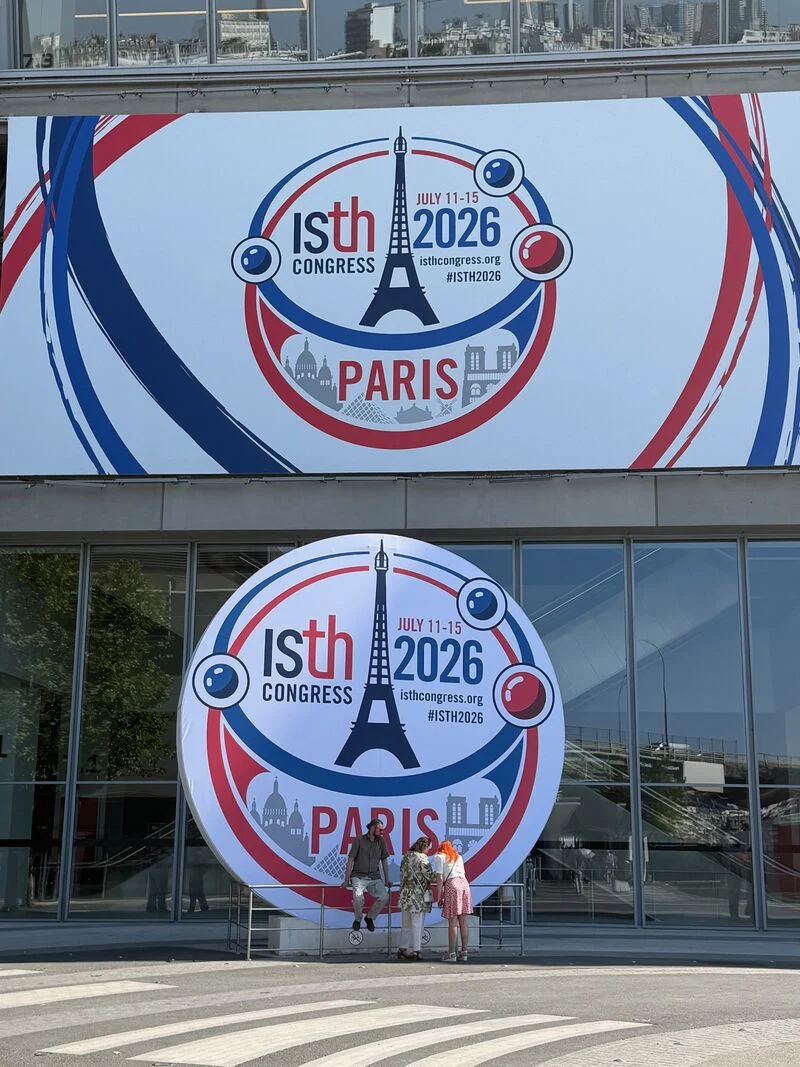
“ISTH 2026 was another landmark for haemophilia.
Across multiple oral sessions, new data span pain and joint health, cardiovascular risk, carrier biology, and interactions with novel therapies:
Joint health and patient‑reported outcomes
OC 43.5 – PROMIS pain measures in adults with haemophilia (Tyler Buckner, B. Reeve, Marilyn Manco-Johnson): PROMIS pain intensity and interference scores with 7‑day recall show very strong correlations with twice‑daily pain ratings, supporting feasible weekly assessment as a valid way to capture ongoing pain burden in persons with haemophilia while still recognizing the added value of high‑frequency measurement during acute bleeds.
Cardiovascular risk and global haemostasis.
OC 43.3 – Hemostatic and cardiovascular profiles with and without atherosclerosis (A. Napolitano, Paolo Simioni and colleagues): In 105 adults with haemophilia A/B, those with atherosclerosis show classic cardiovascular risk factors and subtle ROTEM‑detected procoagulant changes (shorter INTEM clotting time, higher FIBTEM MCF), underscoring the need to assess both traditional risk and global haemostasis rather than assuming protection from arterial disease.
Carrier biology and polygenic modifiers.
OC 66.3 – VWF and ABO modify FVIII and bleeding in haemophilia A carriers (J. Grabell, Paula James and Canadian colleagues): In 92 carriers, VWF levels and ABO blood group significantly influence FVIII activity and bleeding scores, with group O associated with lower VWF/FVIII and higher bleeding burden, supporting a polygenic basis for carrier phenotype beyond the F8 variant alone.
Novel hemostatic therapies and variant FVIII.
OC 66.1 – Modeling FVIII variants and FVIII–emicizumab interactions in mild haemophilia A (K. Davis, Amy Shapiro, J. Johnsen): Structural modeling of individual F8 variants suggests that some hemostatically deficient FVIII proteins may compete with emicizumab at the FIXa–FX complex, potentially modulating the clinical impact of low‑burden subcutaneous prophylaxis in persons with mild haemophilia A.
Together, these topics highlight a move toward truly mechanism‑ and patient‑centred care: refined pain measurement, nuanced cardiovascular and global haemostatic assessment, recognition of polygenic modifiers in carriers, and genotype‑aware use of novel agents.”
Other posts featuring Wolfgang Miesbach on Hemostasis Today.
-
Sep 15, 2026, 08:13Salih Ehsan: Unraveling the Complex Phenotypes of TDT and NTDT
-
Sep 15, 2026, 07:52Tammuella Chrisentery-Singleton: Honored to Present at AHAD-AP Bangkok
-
Sep 15, 2026, 07:38Aaron Paul Kithcart: Connecting Science and Collaboration in Nagasaki
-
Sep 15, 2026, 02:59Caterina Casari: Curious about How Gene Editing is Revolutionizing Our Field?
-
Sep 15, 2026, 02:53Alejandro González Veliz: Can Lifestyle Changes Actually Reverse Atherosclerosis?
-
Sep 15, 2026, 02:08Eugenia Gianos: ACC CVPrevention Council’s New Statin Resources
-
Sep 15, 2026, 01:58Shinya Goto: Country Specific Randomized Trial Show the Merit of DOAC in Intermediate Risk of A
-
Sep 15, 2026, 01:37Lesley Van Wyk: Exploring Sickle Cell Disease – The HbS Story
-
Sep 15, 2026, 01:31Luca Seffin: To the Science, the People, and the Journey – Thank You SR-Tiget