


Yassin Taher/ LinkedIn
May 29, 2026, 09:53
Yassin Taher: Recognizing Clonal Eosinophilic Disorders in Pediatric Hypereosinophilic Syndrome
Yassin Taher, Pediatric Oncology Consultant at Children’s Cancer Hospital, shared a post on LinkedIn:
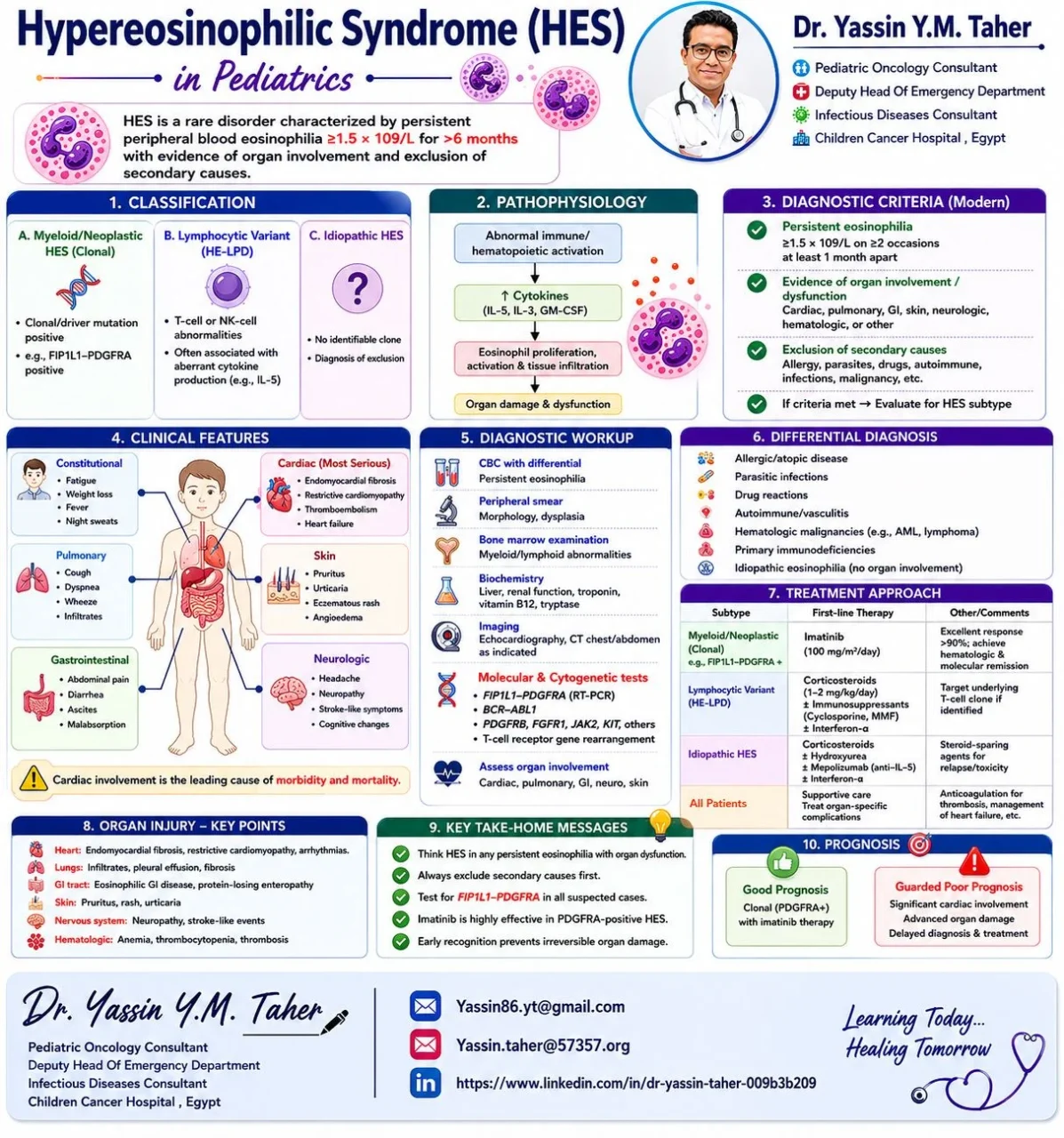
“Pediatric Hypereosinophilic Syndrome (HES) can mimic infection, autoimmune disease, lymphoma, or primary immunologic disorders.
I created this high-yield visual summary to simplify:
- Classification
- Diagnostic approach
- Molecular testing
- Organ involvement
- Modern targeted therapies
Key takeaway: Always evaluate persistent eosinophilia with evidence of organ dysfunction for possible clonal eosinophilic disorders, particularly FIP1L1–PDGFRA–associated disease due to its dramatic response to imatinib.”
Stay updated with Hemostasis Today.
-
Oct 20, 2026, 13:20The Global Blood Crisis – Are We Solving the Wrong Problem?
-
Oct 20, 2026, 06:45Grant Garcia: Why Does a Blood Clot Diagnosis Immediately End an Athlete’s Season?
-
Oct 20, 2026, 06:35Parag Tamhankar: Landmark Study Reveals Genetic Spectrum and Targeted Therapies for ALPS in the Indian Population
-
Oct 20, 2026, 06:26Nina Houben: Neonatal Blood Transfusion Symposium and PhD Defense
-
Oct 20, 2026, 05:46Jan T. Kielstein: DNP Poisoning and Hemoadsorption The Limits of Rescue Therapy
-
Oct 20, 2026, 05:33Giulia Di Paolo: Connecting Plasma Donation to the Patients Who Depend on It
-
Oct 20, 2026, 05:20James Knowles: Exploring Plasma Manufacturing and Strengthening Industry Collaboration
-
Oct 20, 2026, 05:11Giuseppe Lippi։ Understanding Liver Test Abnormalities After AAV Gene Therapy
-
Oct 20, 2026, 05:02Sanam Loghavi: Test Your Hematology Knowledge at ASH 2026!