


Abdulla A. Damluji: OCEANIC-STROKE Trial Analysis and Its Clinical and Market Implications
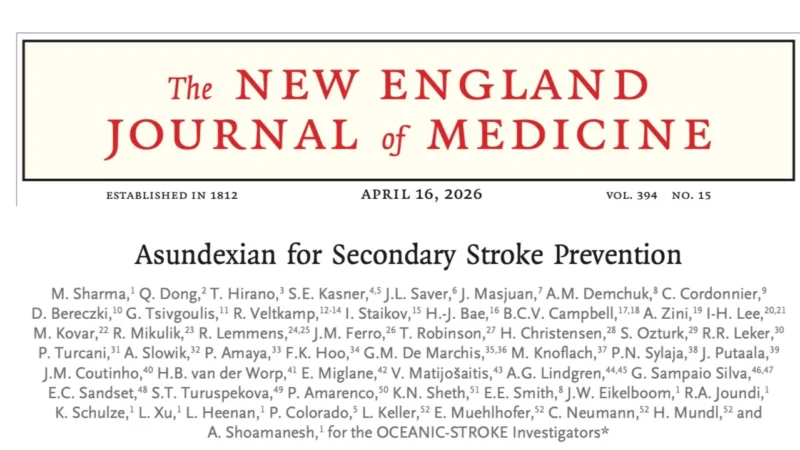
Abdulla A. Damluji, Director of the Cardiovascular Center on Aging at Cleveland Clinic, shared on LinkedIn about a recent article by Mukul Sharma et al, published in NEJM, adding:
”My analysis of the OCEANIC-STROKE trial with key implications for clinical practice and key market implications at the end…
Patients who have had a noncardioembolic ischemic stroke or a high risk transient ischemic attack remain at substantial risk for a second event.
Contemporary data indicate that approximately 5.1% of such patients have a recurrent stroke within one year, and about 22% of persons who survive a minor stroke or transient ischemic attack are dead or disabled five years later.
Antiplatelet therapy reduces this risk only partially.
Dual antiplatelet therapy is effective for the first 21 to 90 days after the event but, when continued beyond that window, is associated with a higher risk of major hemorrhage without a clear additional reduction in stroke.
These realities define a persistent clinical need for an agent that prevents recurrent atherothrombotic stroke without amplifying hemorrhagic risk.
Factor XI, a component of the intrinsic coagulation pathway, offers a biologically plausible target.
Genetic factor XI deficiency is associated with a reduced risk of ischemic stroke, and higher circulating levels of factor XI are associated with a higher risk of ischemic stroke, without an apparent increase in intracerebral bleeding.
This dissociation of pathologic thrombosis from physiologic hemostasis has motivated the development of factor XI inhibitors for secondary stroke prevention.
Asundexian is an oral inhibitor of activated factor XI.
At a daily dose of 50 milligrams, it produces more than 90% inhibition of activated factor XI.
A prior phase 2 study in patients with noncardioembolic ischemic stroke suggested a reduction in symptomatic ischemic stroke without a statistically significant increase in major or clinically relevant nonmajor bleeding.
Those findings informed the Oral Factor Eleven A Inhibitor Asundexian as Novel Antithrombotic Stroke trial, known as OCEANIC STROKE, the results of which were published in the New England Journal of Medicine on April 15, 2026.
Trial Design
OCEANIC STROKE was a phase 3, double blind, event driven, randomized, placebo controlled trial conducted at 702 centers in 37 countries.
Between January 2023 and February 2025, the investigators randomly assigned 12,327 patients, in a 1 to 1 ratio, to receive asundexian at 50 milligrams once daily or matching placebo, in addition to planned dual or single antiplatelet therapy.
Patients were eligible if they were at least 18 years of age and had a noncardioembolic ischemic stroke or a high risk transient ischemic attack within 72 hours after symptom onset.
All patients had at least one of the following: a nonlacunar infarct on imaging of the head, a documented history of atherosclerosis, or imaging evidence of cerebrovascular atherosclerosis.
Patients with an indication for oral anticoagulation, active nontrivial bleeding, or a qualifying stroke related to a specific nonatherosclerotic cause were excluded.
The primary efficacy outcome was the first occurrence of ischemic stroke.
The primary safety outcome was major bleeding as defined by the International Society on Thrombosis and Haemostasis.
The composite of death from cardiovascular causes, myocardial infarction, or stroke was a key secondary outcome.
Baseline Characteristics
The two treatment groups were well balanced at baseline, as summarized in Table 1 of the report.
The mean patient age was 68 years, 24.9% of patients were older than 75 years of age, and 33.3% were women.
Ischemic stroke was the qualifying event in 94.7% of patients, and 27.4% of those presenting with stroke had received intravenous thrombolysis, endovascular therapy, or both.
Large artery atherosclerosis was the most common stroke subtype at presentation, occurring in 42.8% of patients, with small vessel occlusion in 22.6% and stroke of undetermined cause in 29.9%.
Dual antiplatelet therapy was planned at randomization in 62.6% of patients.
The median follow up was 567 days, with an interquartile range of 377 to 729 days.
Primary and Secondary Efficacy Outcomes
As shown in Table 2 and Figure 1A, the primary efficacy outcome of ischemic stroke occurred in 6.2% of patients in the asundexian group and in 8.4% of patients in the placebo group, yielding a cause specific hazard ratio of 0.74 (95% confidence interval, 0.65 to 0.84; P value less than 0.001).
The benefit was generally consistent across prespecified subgroups defined by age, sex, planned antiplatelet regimen, and qualifying stroke subtype, as displayed in Figure 2.
Any stroke, ischemic or hemorrhagic, occurred in 6.6% of the asundexian group and in 8.8% of the placebo group (cause specific hazard ratio, 0.74; 95% confidence interval, 0.65 to 0.84; P value less than 0.001).
The key secondary composite of death from cardiovascular causes, myocardial infarction, or stroke occurred in 9.2% of the asundexian group as compared with 11.1% of the placebo group (cause specific hazard ratio, 0.83; 95% confidence interval, 0.74 to 0.92; P value less than 0.001).
The composite of death from any cause, myocardial infarction, or stroke occurred in 10.5% of patients in the asundexian group and 12.3% of patients in the placebo group (cause specific hazard ratio, 0.85; 95% confidence interval, 0.77 to 0.95; P value of 0.003).
The risk of ischemic stroke within the first 90 days was 3.0% in the asundexian group and 3.5% in the placebo group (cause specific hazard ratio, 0.84; 95% confidence interval, 0.69 to 1.02; P value of 0.08), a difference that did not reach prespecified statistical significance.
Because this prespecified outcome did not meet the threshold for significance under the hierarchical testing procedure, formal hypothesis testing of subsequent secondary efficacy outcomes was not performed.
The incidence of disabling or fatal stroke was 2.1% in the asundexian group and 3.0% in the placebo group (cause specific hazard ratio, 0.69; 95% confidence interval, 0.55 to 0.87), indicating that the benefit extended to clinically severe events.
Safety Outcomes
Safety outcomes are reported in Table 3 and Figure 1B. Major bleeding by International Society on Thrombosis and Haemostasis criteria occurred in 1.9% of patients receiving asundexian and in 1.7% of patients receiving placebo (cause specific hazard ratio, 1.10; 95% confidence interval, 0.85 to 1.44; P value of 0.46).
Major or clinically relevant nonmajor bleeding occurred in 5.5% and 5.0% of patients, respectively (cause specific hazard ratio, 1.12; 95% confidence interval, 0.96 to 1.30; P value of 0.16). The incidence of symptomatic intracranial hemorrhage, hemorrhagic stroke, fatal bleeding, and minor bleeding was similar in the two groups.
The overall incidence of adverse events was 69.3% in the asundexian group and 70.1% in the placebo group, and serious adverse events occurred in 19.2% and 19.5% of patients, respectively.
Interpretation
Among patients treated with antiplatelet therapy within 72 hours after a noncardioembolic ischemic stroke or a high risk transient ischemic attack, the addition of asundexian at 50 milligrams daily was associated with a 26% relative reduction in the cause specific hazard of ischemic stroke and a 17% relative reduction in the composite of death from cardiovascular causes, myocardial infarction, or stroke, without a higher risk of major bleeding, symptomatic intracranial hemorrhage, or hemorrhagic stroke.
The annualized stroke rate observed in the placebo group was consistent with epidemiologic expectations for this population, supporting the external validity of the results.
The findings extend prior genetic and epidemiologic evidence linking factor XI levels to ischemic stroke risk and validate activated factor XI as a therapeutic target for secondary stroke prevention.
Unlike earlier attempts at combination antithrombotic therapy for long term secondary stroke prevention, which have been limited by excess bleeding, lack of efficacy, or both, asundexian appears to separate the prevention of pathologic arterial thrombosis from interference with physiologic hemostasis.
Several limitations remain important to acknowledge. Patients with a National Institutes of Health Stroke Scale score of 8 or higher were relatively few.
Only approximately 5% of the patients were enrolled after a high risk transient ischemic attack.
About 26% of patients discontinued the assigned regimen, similar to percentages observed in comparable trials.
The percentage of Black patients enrolled was small, at 2.3%, which warrants caution when generalizing the results across diverse populations.
Key Points Helpful for Clinical Practice
- In the OCEANIC STROKE trial, asundexian at 50 milligrams once daily, added to dual or single antiplatelet therapy started within 72 hours after a noncardioembolic ischemic stroke or high risk transient ischemic attack, reduced the incidence of ischemic stroke from 8.4% to 6.2% over a median follow up of 567 days.
- The composite of death from cardiovascular causes, myocardial infarction, or stroke was also reduced, from 11.1% to 9.2%, which suggests a clinically meaningful effect beyond stroke alone.
- Disabling or fatal stroke occurred less frequently with asundexian than with placebo (2.1% versus 3.0%), indicating that the benefit extended to the most clinically severe events.
- Major bleeding by International Society on Thrombosis and Haemostasis criteria, symptomatic intracranial hemorrhage, hemorrhagic stroke, and fatal bleeding were not increased by the addition of asundexian to antiplatelet therapy, supporting the concept that factor XIa inhibition can achieve antithrombosis while preserving hemostasis.
- The benefit of asundexian was generally consistent across prespecified subgroups, including stroke subtype (large artery atherosclerosis, small vessel occlusion, and stroke of undetermined cause), age, sex, and planned background antiplatelet regimen.
- Patients with an indication for oral anticoagulation, such as atrial fibrillation, were excluded, so the findings apply specifically to patients for whom antiplatelet therapy would otherwise be the sole antithrombotic strategy.
- Because the prespecified secondary outcome of ischemic stroke at 90 days did not reach statistical significance, the demonstrated benefit is most robust over the full trial follow up period rather than in the immediate postevent window, and clinicians should interpret early benefit cautiously until further analyses are available.
- Underrepresentation of patients with severe stroke, those with a high risk transient ischemic attack, and Black patients remains important to acknowledge when applying these findings to broader clinical populations.
- If approved for this indication, asundexian would offer an additional therapeutic option for secondary stroke prevention in patients with noncardioembolic ischemic cerebrovascular disease who are receiving antiplatelet therapy, with selection based on individual vascular and bleeding risk profiles.
- The trial was sponsored by Bayer and registered at ClinicalTrials.gov under identifier NCT05686070.
Key Market Implications
- OCEANIC STROKE establishes factor XIa inhibition as a validated therapeutic target for secondary stroke prevention, an outcome the antithrombotic industry has pursued for more than a decade.
- Asundexian, if approved, would be the first agent in a historically empty niche, namely an add on antithrombotic for noncardioembolic ischemic stroke that does not increase major bleeding.
- Bayer gains a strategic replacement for rivaroxaban revenues under pressure from generic entry, and asundexian could reasonably achieve multi billion dollar peak annual sales.
- Milvexian, developed by Bristol Myers Squibb and Janssen, is the principal near term competitor; the LIBREXIA STROKE readout will determine if the class matures into a two agent market or remains an asundexian monopoly in secondary stroke prevention.
- Abelacimab, fesomersen, and other factor XI directed programs address adjacent indications and will broaden the class without directly competing in secondary stroke prevention in the near term.
- Generic aspirin and clopidogrel remain foundational and are reinforced rather than displaced, because OCEANIC STROKE evaluated asundexian as an add on to these agents.
- Short course dual antiplatelet therapy and ticagrelor retain their place in the acute and subacute window and are not displaced by asundexian.
- The low dose rivaroxaban plus aspirin strategy derived from COMPASS is likely to lose ground in cerebrovascular use because asundexian delivered comparable efficacy without the bleeding cost.
- Pricing will be anchored to branded oral anticoagulant levels, and a number needed to treat of approximately 45 over 18 months provides a favorable health technology assessment profile if priced in that range.
- The prior OCEANIC atrial fibrillation failure confines asundexian to the noncardioembolic stroke and related vascular indications rather than atrial fibrillation, which constrains total addressable market but does not diminish the commercial opportunity in the stroke niche that OCEANIC STROKE has now opened.”
Title: Asundexian for Secondary Stroke Prevention
Authors: Mukul Sharma, Qiang Dong, Teruyuki Hirano, Scott Kasner, Jeffrey Saver, Jaime Masjuan, Andrew Demchuk, Charlotte Cordonnier, Daniel Bereczki, Georgios Tsivgoulis, Roland Veltkamp, Ivan Staikov, Hee-Joon Bae, Bruce Campbell, Andrea Zini, I-Hui Lee, Martin Kovar, Robert Mikulik, Robin Lemmens, José Ferro, Thompson Robinson, Hanne Christensen, Serefnur Ozturk, Ronen Leker, Peter Turcani, Agnieszka Slowik, Pablo Amaya, Fan Kee Hoo, Gian Marco De Marchis, Michael Knoflach, P.N. Sylaja, Jukka Putaala, Jonathan Coutinho, H. Bart van der Worp, Evija Miglane, Vaidas Matijošaitis, Arne Lindgren, Gisele Sampaio Silva, Else Charlotte Sandset, Saule Turuspekova, Pierre Amarenco, Kevin Sheth, Eric Smith, John Eikelboom, Raed Joundi, Karleen Schulze, Lizhen Xu, Laura Heenan, Pablo Colorado, Lars Keller, Eva Muehlhofer, Christoph Neumann, Hardi Mundl, Ashkan Shoamanesh for the OCEANIC-STROKE Investigators
Stay updated on all scientific advances with Hemostasis Today.
-
Apr 18, 2026, 18:29Vasee Moorthy: Join WHO Clinical Trial Course Launch at Stand With Science 2026
-
Apr 18, 2026, 18:28Holly O’Byrne: Improving Hemorrhagic Shock Care With a Patient Centered System
-
Apr 18, 2026, 18:26Sthanu Subramanian: CVST as The ‘Great Masquerader’ with Normal Initial CT
-
Apr 18, 2026, 18:25Priyanka Raheja: Sharing the Final Analysis From the Roctavian Phase 1/2 Study
-
Apr 18, 2026, 18:23Jim Hoffman: Reversing Vascular Damage through NETosis Modulation and Efferocytosis Balance
-
Apr 18, 2026, 17:57Abstract Submission Deadline Extended for WSC 2026 – World Stroke Organization
-
Apr 18, 2026, 17:49Leonardo Roever: Progress in Prevention, Treatment, and National Care Strategies for Stroke in China
-
Apr 18, 2026, 17:21Voices of Advocacy in Bleeding Disorders Care – HFA
-
Apr 18, 2026, 16:16Zahra Ghasemi: How a Strategic Plasma Model Transformed Hemophilia Care