


Perioperative Challenges in Hemophilia Patients on Rebalancing Therapies
Perioperative management of patients with hemophilia has traditionally focused on replacing the missing coagulation factor to achieve adequate hemostasis. However, the introduction of rebalancing therapies has created a new therapeutic landscape in which coagulation can be improved by modifying endogenous anticoagulant pathways rather than directly replacing factor VIII (FVIII) or factor IX (FIX).
Although these agents reduce bleeding frequency and may simplify prophylactic treatment, they introduce important considerations when patients undergo surgery. The challenge is to achieve sufficient hemostasis without producing excessive thrombin generation or increasing the risk of perioperative thrombosis.
Understanding the Concept of Hemostatic Rebalancing
Hemophilia A and B are characterized by deficiencies of FVIII and FIX, respectively, resulting in impaired thrombin generation. These deficiencies disrupt the amplification phase of coagulation, limiting the formation of sufficient thrombin to produce a stable fibrin clot.
Under physiological conditions, coagulation is regulated by a balance between procoagulant and anticoagulant mechanisms. Rebalancing therapies aim to partially restore this balance by reducing the activity of natural anticoagulants, allowing thrombin generation to increase despite the persistent deficiency of FVIII or FIX.
Rebalancing Therapies: Different Targets, a Common Objective
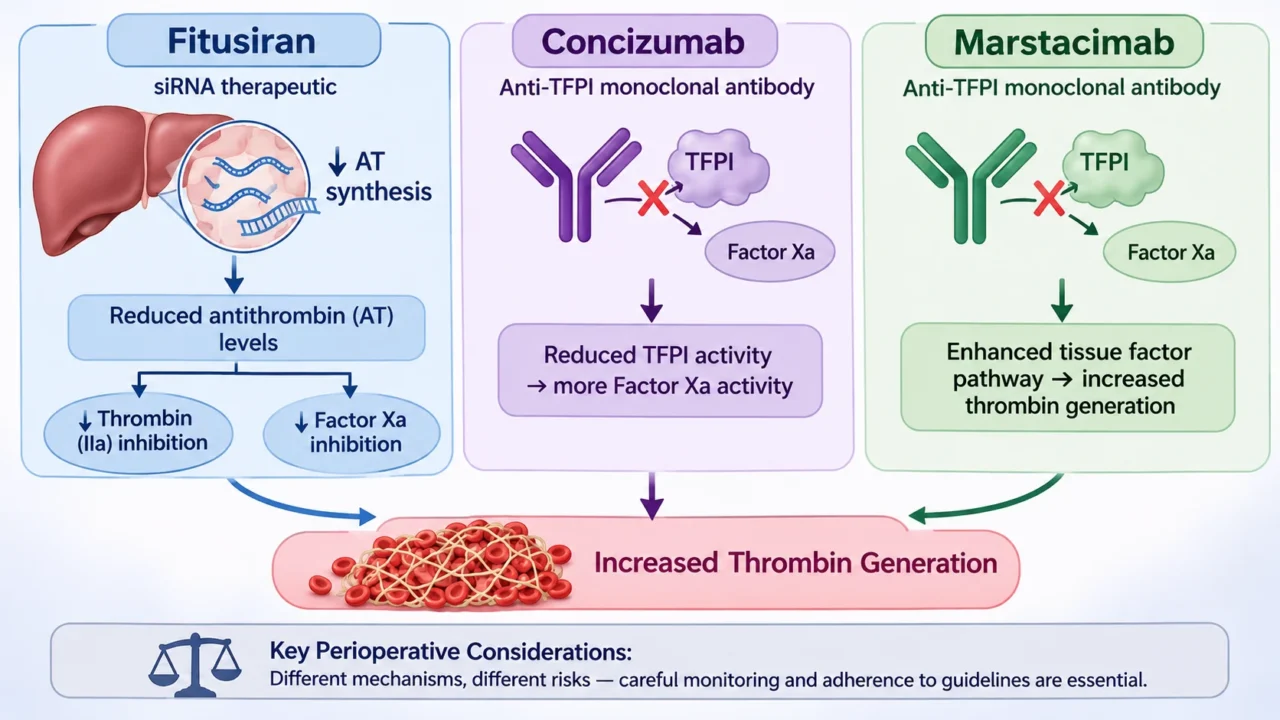
Three agents are particularly relevant to current clinical practice: fitusiran, concizumab and marstacimab. Although all three enhance thrombin generation, their mechanisms of action differ, and these differences are important when developing perioperative treatment strategies.
Fitusiran: Reducing Antithrombin Production
Fitusiran is a small interfering RNA (siRNA) therapeutic that targets antithrombin (AT) messenger RNA in hepatocytes. By reducing hepatic AT synthesis, it decreases the activity of two important natural anticoagulant targets: thrombin (factor IIa) and factor Xa.
This reduction in anticoagulant activity allows greater thrombin generation and partially compensates for the impaired coagulation associated with hemophilia. However, excessive AT reduction may shift the hemostatic balance toward thrombosis, making careful monitoring and adherence to established bleeding-management guidelines particularly important.
Concizumab: Inhibiting Tissue Factor Pathway Inhibitor
Concizumab is a monoclonal antibody that inhibits tissue factor pathway inhibitor (TFPI), a natural anticoagulant that regulates the tissue factor pathway of coagulation. By binding to TFPI, concizumab reduces its inhibitory effect on factor Xa, thereby promoting thrombin generation.
This mechanism enhances coagulation without restoring the missing FVIII or FIX. Because TFPI inhibition can increase coagulation activity, additional factor concentrates or bypassing agents must be used cautiously when treating breakthrough bleeding or providing surgical coverage.
Marstacimab: Another Approach to TFPI Inhibition
Marstacimab is also a monoclonal antibody targeting TFPI, enhancing tissue factor-mediated coagulation and increasing thrombin generation. Although its therapeutic target is similar to that of concizumab, the two agents have distinct pharmacological properties and approved dosing regimens.
Importantly, their perioperative recommendations should not automatically be considered interchangeable. The available evidence and product-specific prescribing information must guide decisions about treatment interruption and resumption.
Why Does Surgery Create a Particular Challenge?
Surgical tissue injury initiates coagulation and activates platelets, while simultaneously triggering inflammatory and endothelial responses. In patients receiving rebalancing therapies, endogenous anticoagulant activity is already reduced, meaning that the addition of conventional hemostatic agents may further increase thrombin generation.
This creates a therapeutic dilemma: insufficient additional treatment may result in surgical bleeding, whereas excessive administration of factor concentrates or bypassing agents may increase thrombotic risk. The objective is therefore not to normalize coagulation tests or maximize thrombin generation, but to maintain adequate hemostasis throughout the perioperative period.
Preoperative Assessment: Identifying Individual Risk
Preoperative planning should begin with a detailed assessment of the patient’s hemophilia type and severity, inhibitor status, current prophylactic treatment, previous bleeding episodes and history of thrombotic complications. The timing of the last administered dose and the expected duration of the therapeutic effect should also be considered.
The procedure itself is equally important. Major orthopedic, abdominal and other invasive operations may require different strategies from dental extractions or minor interventions, particularly when prolonged immobilization and postoperative inflammation are expected. A written plan developed by the hematologist, surgeon, anesthesiologist and laboratory team is essential.
Perioperative Management According to the Rebalancing Agent
Fitusiran: Continuing Prophylaxis With Carefully Controlled Hemostatic Support
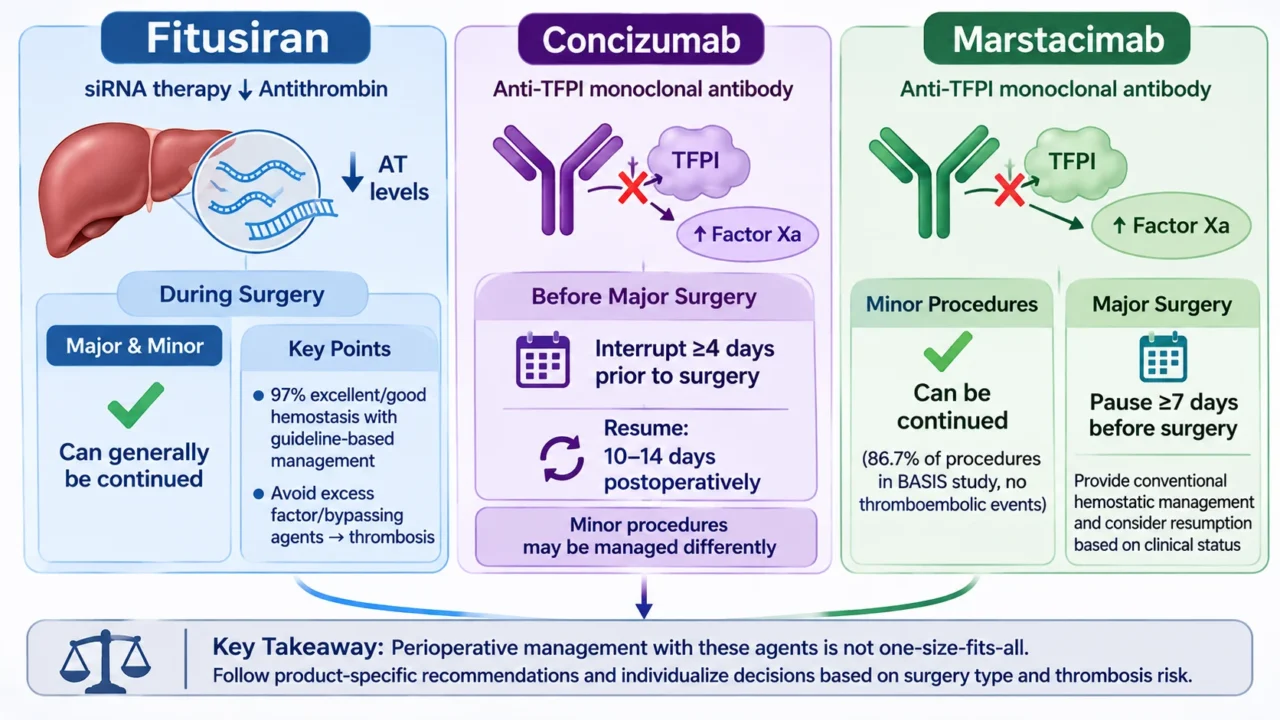
Clinical development data suggest that fitusiran prophylaxis can be continued during both major and minor surgical procedures. In an analysis of 60 major procedures, hemostasis was rated excellent or good in 97% of cases managed according to the bleeding-management guidelines, compared with 90% in cases not managed according to those guidelines.
Importantly, two postoperative thrombotic events were reported in patients who received additional factor concentrates or bypassing agents in excess of the recommended bleeding-management approach. These observations emphasize that additional hemostatic treatment should follow reduced-dose and reduced-frequency protocols rather than conventional regimens being applied automatically.
Concizumab: Temporary Interruption Before Major Surgery
For patients receiving concizumab, the National Bleeding Disorders Foundation’s MASAC Document #300 generally recommends interrupting treatment at least four days before major surgery. Resumption may be considered 10–14 days after surgery, using the same maintenance dose without repeating the loading dose.
This recommendation reflects the limited perioperative evidence and the need to reduce potential thrombotic complications when additional hemostatic agents are required. Minor procedures may be managed differently, and decisions should be made according to the individual clinical situation and the recommendations of the treating hemophilia center.
Marstacimab: Distinguishing Minor From Major Procedures
Available clinical evidence suggests that marstacimab can be continued during minor surgical procedures. In the 2026 analysis of the phase 3 BASIS study, 13 participants underwent 15 procedures, including eight dental and seven other procedures; marstacimab was continued in 86.7% of procedures, and no thromboembolic events were reported during the active treatment period.
However, evidence for major surgery remains insufficient. The current US prescribing information recommends pausing marstacimab at least seven days before major surgery, providing conventional hemostatic management as appropriate and considering resumption according to postoperative clinical status and thrombotic risk. Kim et al., 2026; HYMPAVZI prescribing information.
Laboratory Monitoring: Why Conventional Tests May Be Insufficient
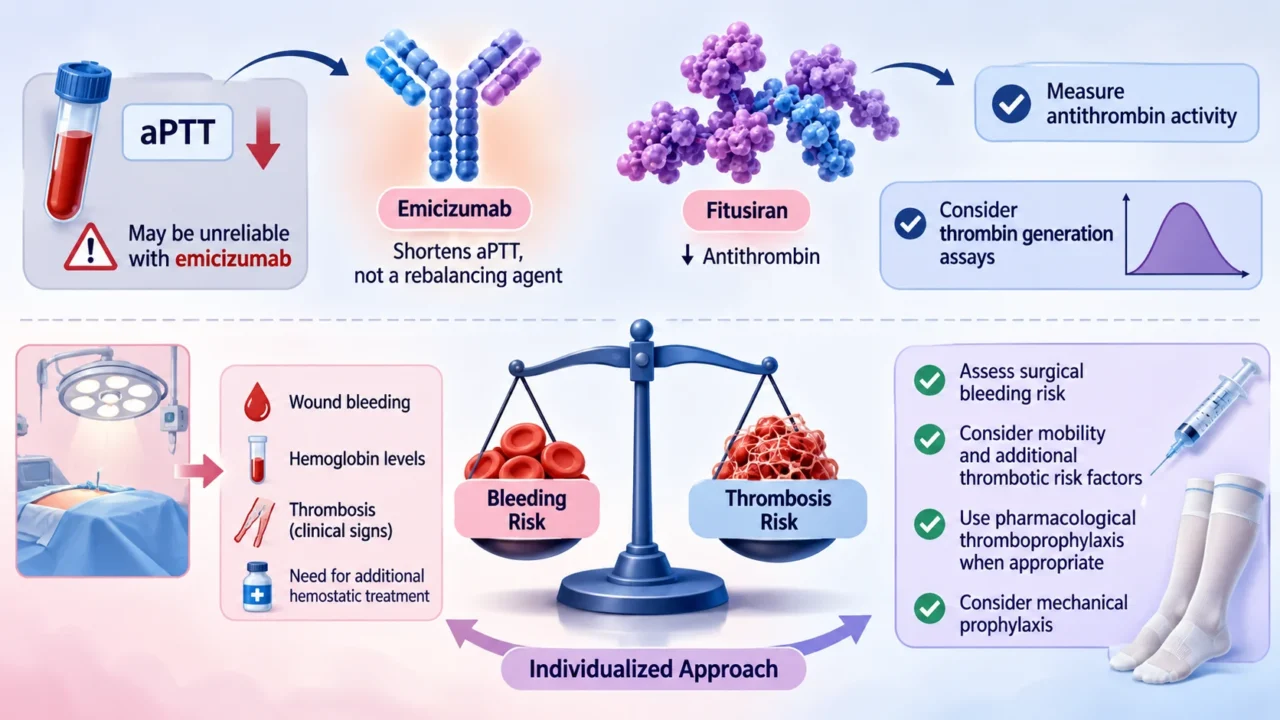
An important challenge in patients receiving non-factor therapies is that conventional coagulation tests do not necessarily reflect the actual hemostatic potential. For example, emicizumab, a bispecific FVIII-mimetic antibody rather than a rebalancing agent, markedly shortens the aPTT and makes conventional aPTT-based FVIII assays unreliable.
For patients receiving fitusiran, antithrombin activity is particularly relevant because it reflects the pharmacodynamic effect of treatment and helps guide dosing. Thrombin generation assays may provide additional information about overall coagulation potential, although their interpretation depends on the assay methodology and they cannot independently establish surgical safety.
Postoperative Management: Maintaining the Balance
Postoperative management requires continued assessment of wound bleeding, hemoglobin levels, clinical evidence of thrombosis and the need for additional hemostatic treatment. The inflammatory response to surgery, reduced mobility and tissue injury may further increase thrombotic risk, particularly in patients whose endogenous anticoagulant pathways are already suppressed.
Pharmacological thromboprophylaxis should not be prescribed automatically or withheld solely because the patient has hemophilia. Its use should be individualized according to surgical bleeding risk, the effectiveness of hemostasis, mobility and additional thrombotic risk factors, with mechanical prophylaxis considered where appropriate.
What Does the Current Evidence Tell Us?
A particularly relevant contribution to this field is the 2026 narrative review by Henderson, Khalife and Uminski, published in Haemophilia. The authors evaluated the available perioperative evidence for fitusiran, concizumab and marstacimab, identifying generally favourable hemostatic outcomes but emphasizing that the overall evidence remains limited.
Among the reported procedures, fitusiran demonstrated excellent or good hemostatic outcomes in approximately 90–97% of cases, depending on the use of recommended bleeding-management protocols. For concizumab, bleeding events were reported in 39 of 94 procedures, with most classified as mild to moderate, while evidence for marstacimab was considerably more limited.
These findings are encouraging, but the available studies differ in surgical complexity, patient characteristics and additional hemostatic treatment. Moreover, the results from minor procedures cannot automatically be extrapolated to major surgery, highlighting the need for prospective studies and standardized perioperative protocols.
Future Perspectives: Toward Individualized Perioperative Care
As rebalancing therapies become more widely integrated into hemophilia management, perioperative strategies will increasingly need to account for the specific mechanism of each agent. Treatment interruption, the selection and dosing of additional hemostatic agents, and the timing of prophylaxis resumption will remain central questions.
Future research should focus on defining optimal treatment protocols for major surgery, identifying patients at increased thrombotic risk and establishing the role of laboratory monitoring in guiding additional hemostatic treatment. Larger prospective studies will be essential to determine whether the favourable early results can be reproduced across different surgical settings.
Conclusion
Rebalancing therapies have introduced a new approach to hemophilia treatment by enhancing thrombin generation through the inhibition of endogenous anticoagulant pathways. Although these agents may simplify prophylaxis and reduce the need for conventional factor replacement, their use creates additional considerations during invasive procedures.
Safe perioperative management requires an individualized strategy that considers the specific therapeutic mechanism, surgical bleeding risk, additional hemostatic treatment and potential thrombotic complications. Ultimately, the goal is to achieve adequate surgical hemostasis without shifting the balance toward excessive coagulation.
FAQs
1. What are rebalancing therapies in hemophilia?
Rebalancing therapies are non-factor treatments that improve coagulation by inhibiting natural anticoagulant pathways. They increase thrombin generation without directly replacing FVIII or FIX.
2. Which agents belong to the rebalancing therapy class?
The three principal agents are fitusiran, concizumab and marstacimab. Fitusiran targets antithrombin, whereas concizumab and marstacimab inhibit TFPI.
3. Why can rebalancing therapies increase thrombotic risk?
By suppressing endogenous anticoagulant mechanisms, these agents shift the hemostatic balance toward coagulation. Additional factor concentrates or bypassing agents may further increase thrombin generation.
4. Should fitusiran be discontinued before surgery?
Not routinely. Clinical studies have included major and minor procedures performed without discontinuing fitusiran, provided that appropriate bleeding-management protocols are followed.
5. How long should concizumab be interrupted before major surgery?
MASAC Document #300 generally recommends interrupting concizumab at least four days before major surgery. Resumption may be considered 10–14 days after surgery, using the maintenance dose.
6. Can marstacimab be continued during minor surgery?
Available clinical data support its continuation during minor procedures in selected patients. For major surgery, current US prescribing information recommends interruption at least seven days beforehand.
7. Does normal coagulation testing indicate adequate hemostasis in patients receiving rebalancing therapies?
Not necessarily. Conventional coagulation tests may not accurately reflect the overall hemostatic potential during non-factor treatment, and interpretation should be specific to the therapeutic agent.
8. Is additional factor replacement always required during surgery?
No. The need for additional hemostatic treatment depends on the procedure, the patient’s bleeding risk and the prophylactic agent. When factor concentrates or bypassing agents are required, dosing must follow therapy-specific recommendations.
9. Should postoperative thromboprophylaxis be used in patients with hemophilia receiving rebalancing therapies?
It should be considered individually. Surgical characteristics, mobility, bleeding control and additional thrombotic risk factors should guide the decision.
10. What is the greatest challenge in perioperative management of rebalancing therapies?
Maintaining sufficient hemostasis without excessive thrombin generation. This requires multidisciplinary planning, careful selection of additional hemostatic agents and continuous postoperative reassessment.
Written by Hermine Sayiyan, MD
Stay updated with Hemostasis Today.
-
Nov 11, 2026, 15:03Maria Elisa Mancuso: World-Renowned Faculty and 33 Global Participants Unite at Hemophilia Academy 2026
-
Nov 11, 2026, 15:01Hassan Raza: The JAK2 V617F Revolution
-
Nov 11, 2026, 14:57Edward Lee Carter: Factor Xla Inhibition Enters Clinical Practice – FDA Approval of Asundexian
-
Nov 11, 2026, 14:45ITP Is More Than a Platelet Count: Why Patient Perspectives Matter – ITP Australia and New Zealand
-
Nov 11, 2026, 14:27Aswin K Mohan։ Intravenous Iron in Heart Failure and Infection Risk
-
Nov 11, 2026, 14:12Thomas Lund: Advancing Home Treatment in Hematology Across Borders
-
Nov 11, 2026, 14:06Ahmed Alotaibi: The Hidden Iron Deficiency Behind a Normal Haemoglobin
-
Nov 11, 2026, 14:03Zain Khalpey: How Chronic Hypertension Reshapes the Heart
-
Nov 11, 2026, 13:52Vera Ignjatović: The Changing Balance of Hemostasis Across Childhood