

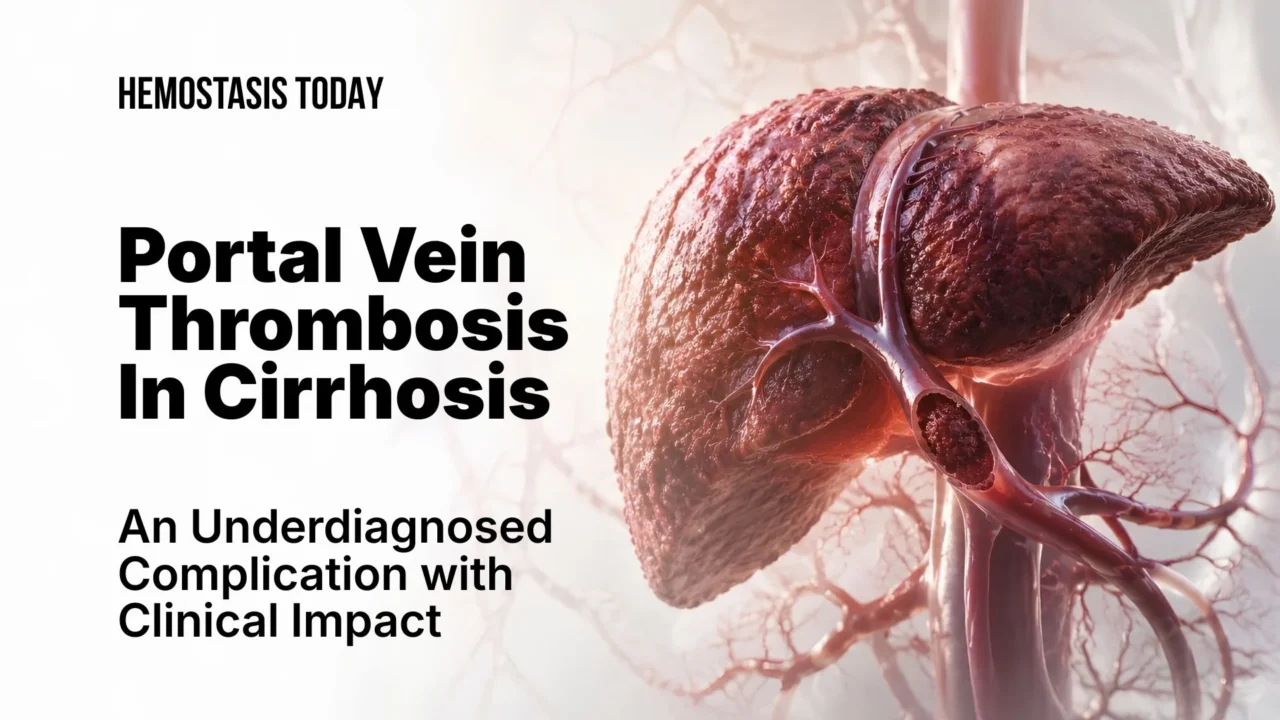
Liver Cirrhosis and Portal Vein Thrombosis: Understanding a Critical Complication
Cirrhosis is the end stage of chronic liver disease, characterized by progressive fibrosis, architectural distortion, and loss of hepatic function.
It is associated with major complications including portal hypertension, ascites, variceal bleeding, hepatic encephalopathy, and hepatocellular carcinoma.
Portal vein thrombosis (PVT) is an increasingly recognized complication that can adversely affect disease course and transplant outcomes.
PVT is defined as thrombus formation within the portal vein, compromising portal blood flow from the splanchnic circulation to the liver and further worsening hepatic hemodynamics in cirrhosis.
The Changing Understanding of Coagulation in Cirrhosis
Cirrhosis was long viewed as a bleeding disorder due to reduced clotting factor production, prolonged coagulation tests, and thrombocytopenia.
However, it is now understood as a state of rebalanced hemostasis, where both procoagulant and anticoagulant pathways are altered.
This fragile balance can tip toward bleeding or thrombosis, explaining the risk of portal vein thrombosis despite abnormal coagulation tests.
Why Does Portal Vein Thrombosis Develop in Cirrhosis?
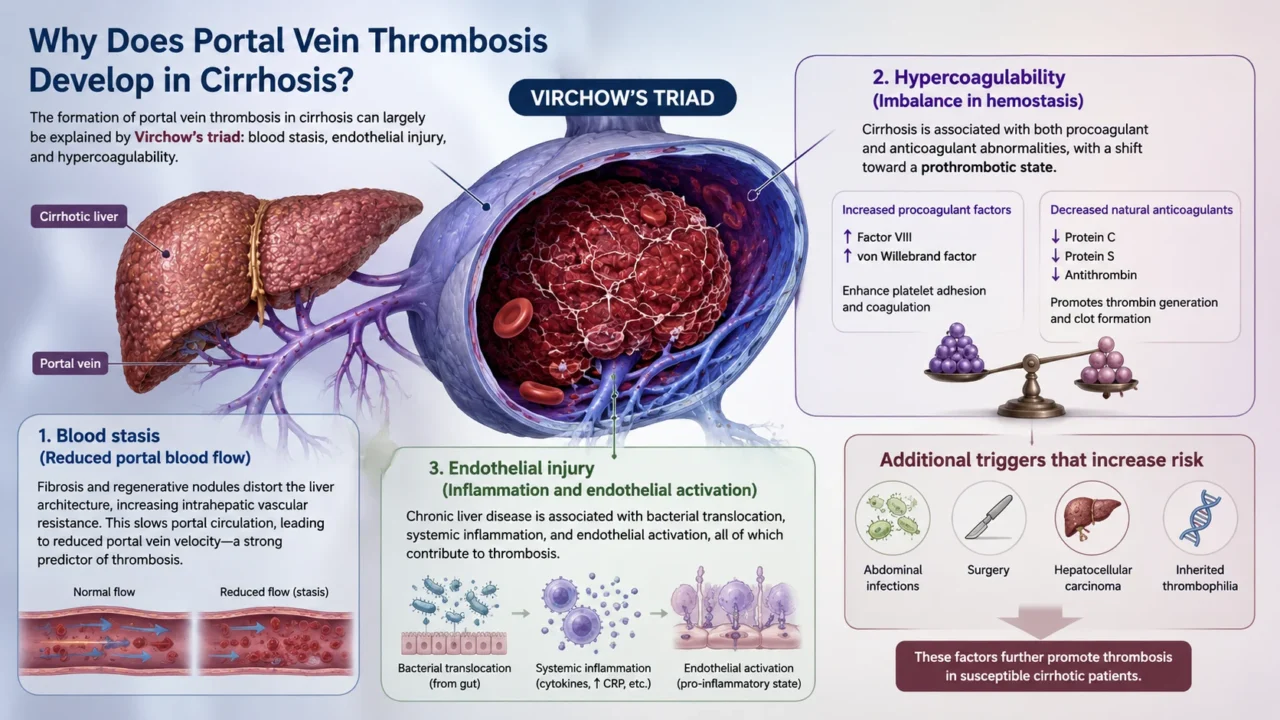
The formation of portal vein thrombosis in cirrhosis can largely be explained by Virchow’s triad, which includes blood stasis, endothelial injury, and hypercoagulability.
One of the most significant contributors is reduced portal blood flow. As fibrosis and regenerative nodules progressively distort the liver architecture, intrahepatic vascular resistance increases.
This slows portal circulation and creates an environment favorable for clot formation. Reduced portal vein velocity is considered one of the strongest predictors of thrombosis.
At the same time, important hemostatic changes occur. Cirrhotic patients often have elevated levels of factor VIII and von Willebrand factor, both of which enhance platelet adhesion and coagulation.
Meanwhile, natural anticoagulants such as protein C, protein S, and antithrombin are reduced. This imbalance promotes thrombin generation and increases the risk of clot formation.
Inflammation also plays a major role. Chronic liver disease is frequently associated with bacterial translocation, systemic inflammation, and endothelial activation, all of which contribute to thrombosis. Additional triggers such as abdominal infections, surgery, hepatocellular carcinoma, and inherited thrombophilia may further increase the risk.
Clinical Presentation
The clinical manifestations of portal vein thrombosis vary depending on whether the process is acute or chronic.
Acute portal vein thrombosis may present with sudden abdominal pain, nausea, vomiting, fever, and rapid worsening of ascites. In severe cases, the thrombus may extend into the mesenteric veins, potentially causing intestinal ischemia, a life-threatening condition that requires urgent medical intervention.
Chronic portal vein thrombosis is often more subtle and may remain asymptomatic for long periods. It is frequently discovered incidentally during imaging performed for other reasons.
When symptoms develop, they usually reflect worsening portal hypertension. Patients may experience increased splenomegaly, progressive thrombocytopenia, recurrent ascites, and a higher risk of variceal bleeding.
Over time, chronic thrombosis may lead to cavernous transformation of the portal vein, where collateral vessels develop around the occluded vein.
Diagnostic Approaches
Early diagnosis is essential for preventing complications and guiding treatment decisions.
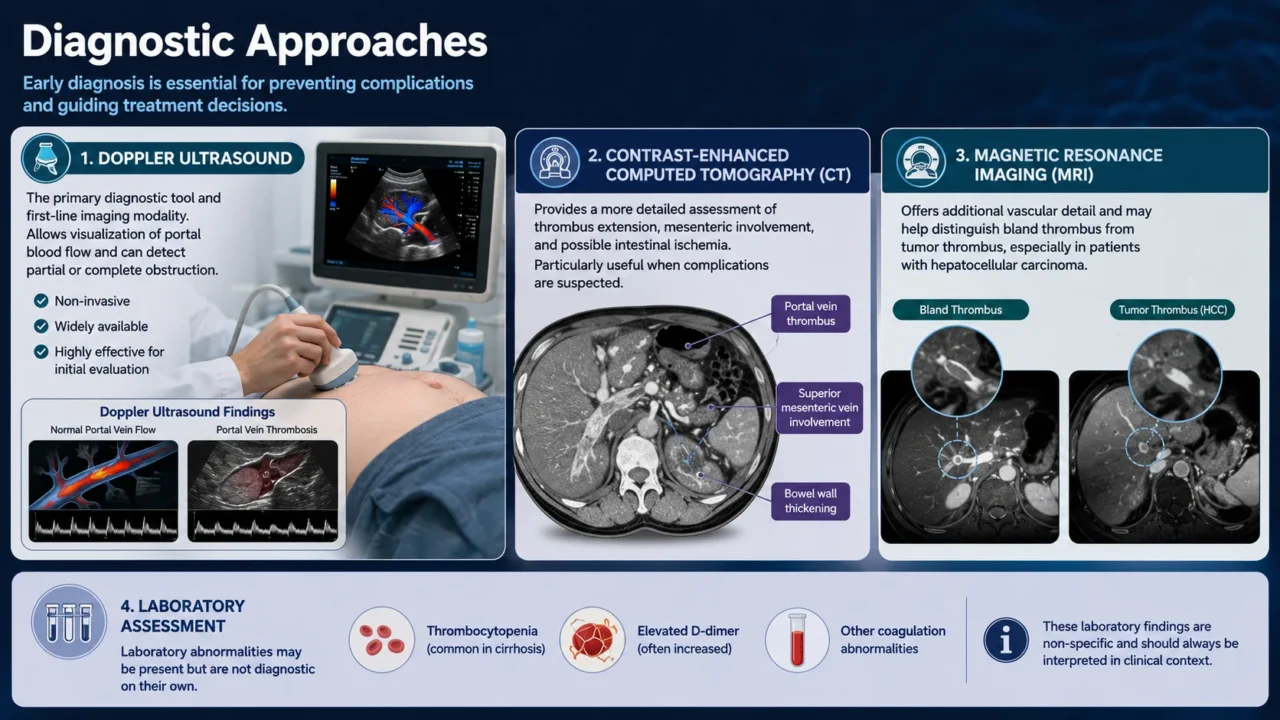
Doppler ultrasound is the primary diagnostic tool and remains the first-line imaging modality. It allows visualization of portal blood flow and can detect partial or complete obstruction. It is non-invasive, widely available, and highly effective for initial evaluation.
Contrast-enhanced computed tomography provides a more detailed assessment of thrombus extension, mesenteric involvement, and possible intestinal ischemia. It is particularly useful when complications are suspected.
Magnetic resonance imaging can offer additional vascular detail and may help distinguish bland thrombus from tumor thrombus, especially in patients with hepatocellular carcinoma.
Although laboratory abnormalities such as thrombocytopenia and elevated D-dimer may be present, they are not sufficient for diagnosis and should always be interpreted in clinical context.
Why Portal Vein Thrombosis Matters
Portal vein thrombosis is not simply an incidental finding in cirrhosis. It can significantly worsen the natural course of liver disease.
By obstructing portal flow, thrombosis increases portal pressure and may accelerate complications such as variceal bleeding and refractory ascites. Reduced hepatic perfusion can worsen liver function and contribute to further decompensation.
In liver transplant candidates, portal vein thrombosis is especially important because extensive thrombosis can make transplantation technically more difficult and may negatively affect postoperative outcomes.
For these reasons, timely recognition and management are crucial.
Treatment Strategies
The management of portal vein thrombosis in cirrhosis requires careful balance between thrombosis prevention and bleeding risk.
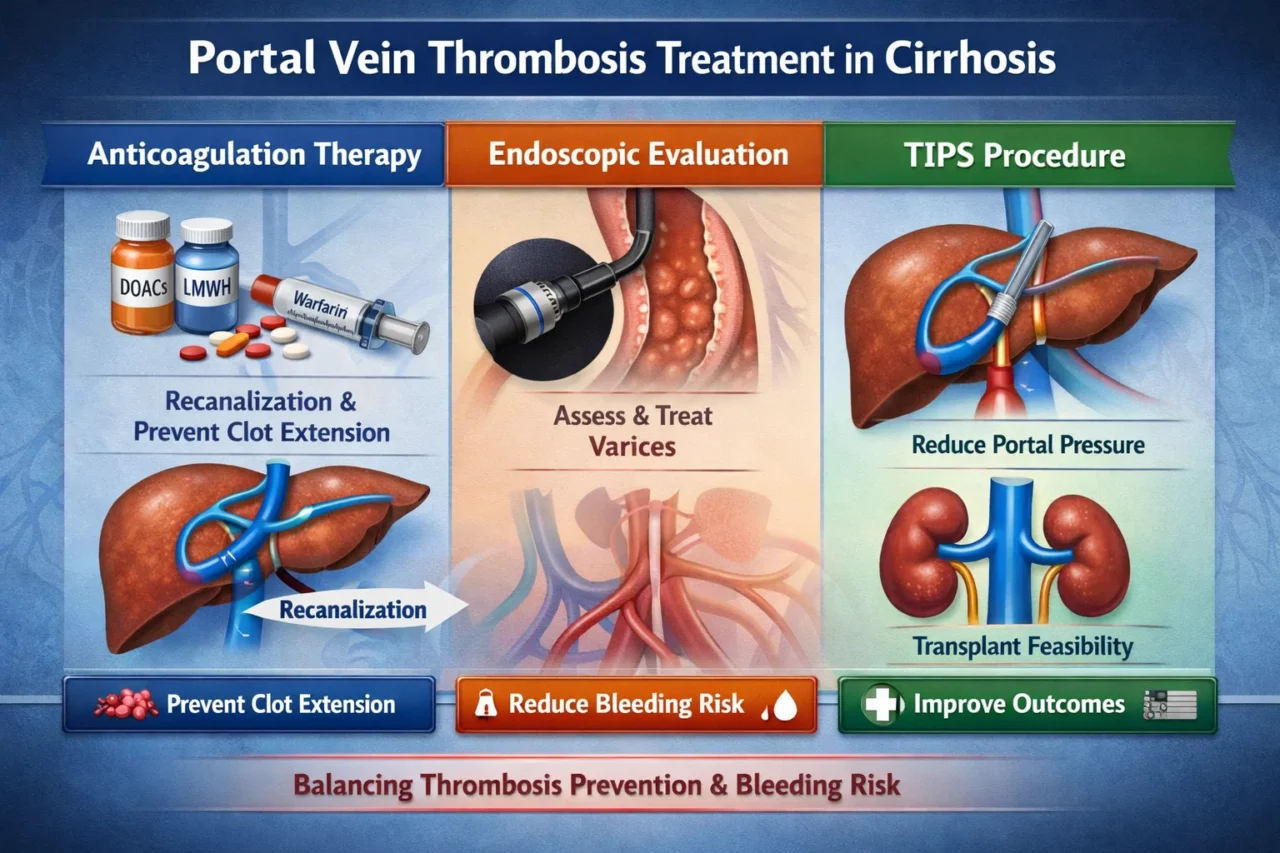
Anticoagulation remains the cornerstone of treatment in many patients. Its primary goals are to achieve portal vein recanalization, prevent clot extension, and reduce recurrence.
Traditional treatment options include low-molecular-weight heparin and vitamin K antagonists, while direct oral anticoagulants are becoming increasingly common in selected cases.
Clinical studies have shown that anticoagulation can achieve significant recanalization rates and may improve overall outcomes, particularly when initiated early.
Before starting anticoagulation, endoscopic evaluation of esophageal varices is recommended. If high-risk varices are present, prophylactic treatment may be necessary to minimize bleeding complications.
In selected patients, especially those with progressive thrombosis or severe portal hypertension, transjugular intrahepatic portosystemic shunt (TIPS) may be considered. By reducing portal pressure and improving blood flow, TIPS can support thrombus resolution and improve transplant feasibility.
New Treatment Approaches and Updated Guidelines
The management of portal vein thrombosis in cirrhosis has changed considerably in recent years, with modern guidelines supporting earlier and more individualized therapeutic decisions. Traditionally, many patients were managed conservatively because of concerns regarding bleeding complications, especially in the presence of thrombocytopenia and esophageal varices. However, emerging evidence has shown that delayed treatment may reduce the likelihood of portal vein recanalization and worsen long-term outcomes.
According to the latest American Gastroenterological Association (AGA) Clinical Practice Update, anticoagulation should be considered in patients with recent portal vein thrombosis, particularly when the thrombus occupies more than 50% of the vessel lumen, involves the main portal vein, extends into mesenteric vessels, or demonstrates progression over time. The AGA also emphasizes the importance of early cross-sectional imaging and regular follow-up every three months during treatment to monitor response and guide further management.
The full expert review published in Gastroenterology further supports individualized decision-making and highlights the expanding role of direct oral anticoagulants (DOACs) and interventional radiology in selected cases.
Direct oral anticoagulants (DOACs) such as apixaban and rivaroxaban are increasingly used alongside low-molecular-weight heparin and warfarin. In carefully selected patients with compensated cirrhosis, DOACs may offer similar efficacy with added convenience and potentially better safety.
The ISTH recommends individualized anticoagulation based on liver function, Child-Pugh class, renal function, and bleeding risk, particularly in symptomatic patients, thrombus progression, and transplant candidates.
Portal vein recanalization with Transjugular Intrahepatic Portosystemic Shunt (TIPS) is another key advancement, improving outcomes in refractory portal hypertension, progressive thrombosis, and transplant eligibility, with high success rates in expert centers.
Overall, cirrhosis management is shifting toward a balanced view of bleeding and thrombosis, supporting earlier, more personalized intervention.
The Clinical Challenge of Bleeding Versus Clotting
One of the greatest challenges in cirrhosis management is understanding the coexistence of bleeding and thrombotic risk.
Elevated INR and low platelet counts often create the impression that patients are naturally anticoagulated. However, this is a misconception. These laboratory abnormalities do not accurately reflect the full complexity of hemostatic balance in cirrhosis.
A patient may have severe thrombocytopenia and still develop significant thrombosis. This dual risk makes individualized clinical assessment essential when deciding on anticoagulation.
Prognosis and Future Perspectives
The prognosis of portal vein thrombosis depends on the extent of vascular involvement, response to therapy, presence of mesenteric extension, and severity of underlying liver disease.
Early detection and timely intervention improve the chances of recanalization and reduce complications. As understanding of cirrhosis-associated thrombosis continues to evolve, treatment strategies are becoming more precise and individualized.
Future research will likely refine risk stratification and improve therapeutic approaches, particularly regarding the role of direct oral anticoagulants and advanced interventional techniques.
Implications for Practice
Portal vein thrombosis should no longer be regarded as a rare or secondary finding in cirrhosis, but rather as an integral expression of its fragile and rebalanced hemostatic state.
Clinicians must maintain a high index of suspicion, even in patients traditionally considered “auto-anticoagulated.” Early recognition through appropriate imaging, coupled with timely risk stratification, is essential to prevent progression and complications.
Management decisions should be individualized, balancing thrombotic burden against bleeding risk, and guided by evolving evidence rather than historical assumptions of coagulopathy in cirrhosis.
As therapeutic options expand and diagnostic awareness improves, integrating portal vein thrombosis assessment into routine cirrhosis care pathways is no longer optional—it is essential for improving outcomes in advanced liver disease.
Frequently Asked Questions (FAQ)
1. What is portal vein thrombosis in liver cirrhosis?
Portal vein thrombosis (PVT) is the formation of a blood clot inside the portal vein, which carries blood from the digestive organs to the liver. In patients with liver cirrhosis, this can worsen portal hypertension and further impair liver function.
2. Why do patients with cirrhosis develop portal vein thrombosis?
Cirrhosis causes structural damage to the liver, slowing portal blood flow and creating conditions favorable for clot formation. In addition, changes in the coagulation system and chronic inflammation increase the risk of thrombosis.
3. Can cirrhosis cause both bleeding and clotting?
Cirrhosis is associated with a rebalanced but unstable hemostatic state, where both bleeding and thrombosis can occur. While bleeding risk has long been recognized, patients are also vulnerable to clinically significant thrombotic events.
4. What are the symptoms of portal vein thrombosis?
Symptoms vary depending on whether the thrombosis is acute or chronic. Acute cases may cause abdominal pain, nausea, fever, and worsening ascites, while chronic PVT may remain asymptomatic or present with worsening portal hypertension and variceal bleeding.
5. How is portal vein thrombosis diagnosed?
Portal vein thrombosis is usually diagnosed with Doppler ultrasound as the first-line imaging method. CT scans and MRI may be used for more detailed evaluation, especially to assess the extent of thrombosis or mesenteric involvement.
6. Is portal vein thrombosis dangerous?
Untreated portal vein thrombosis can exacerbate portal hypertension, increase the risk of variceal bleeding, and impair hepatic perfusion. In advanced cases, it may extend to mesenteric vessels and result in intestinal ischemia, a life-threatening complication.
7. Should all cirrhotic patients with portal vein thrombosis receive anticoagulation?
Not always. Treatment decisions depend on the extent of thrombosis, liver function, bleeding risk, presence of varices, and whether the patient is a liver transplant candidate. Current guidelines recommend individualized management.
8. Are direct oral anticoagulants (DOACs) safe in cirrhosis?
Recent studies and updated guidelines suggest that DOACs such as Apixaban and Rivaroxaban can be safe and effective in selected patients with compensated cirrhosis, particularly Child-Pugh A and some Child-Pugh B cases.
9. Can portal vein thrombosis be reversed?
Early anticoagulation may achieve partial or complete recanalization of the portal vein. Outcomes depend mainly on the timing of diagnosis, thrombus extent, and underlying liver disease severity.
10. What are the latest guideline updates for portal vein thrombosis in cirrhosis?
Recent 2025–2026 guidelines from AGA, EASL, and ISTH recommend earlier anticoagulation, regular imaging follow-up every three months, broader use of DOACs in selected patients, and greater use of portal vein recanalization and TIPS in complex cases.
Written by Anna Stepanyan, MD
Stay updated with Hemostasis Today.
-
Sep 30, 2026, 01:52Javed Anees: DADA2 – When a Young Stroke Is More Than a Stroke
-
Sep 30, 2026, 01:51How a Venous Thrombus Becomes Revascularized – ISTH
-
Sep 29, 2026, 22:45Victor Agunyego: Paracetamol – The Most Common Drug We Underestimate
-
Sep 29, 2026, 22:42Nova Sinclair: Advancing the Future of Hematology – Meet Our 2027 Organizing Committee
-
Sep 29, 2026, 22:41Lorenz Räber: Intracoronary Imaging in PCI – Why, When, How, and Which Modality?
-
Sep 29, 2026, 22:31Selma Turkovic: Pleased to Deliver the Opening Presentation at Kingston Hospital
-
Sep 29, 2026, 22:31Miguel Teran: Ultrasound and Simulation in Arterial Blood Sampling
-
Sep 29, 2026, 22:28Mohammad Refaei: Navigating Your Career in Hematology From Training to Practice
-
Sep 29, 2026, 22:27Matteo Foschi: 10 Clinical Pearls for Antithrombotic Therapy in Secondary Stroke Prevention