

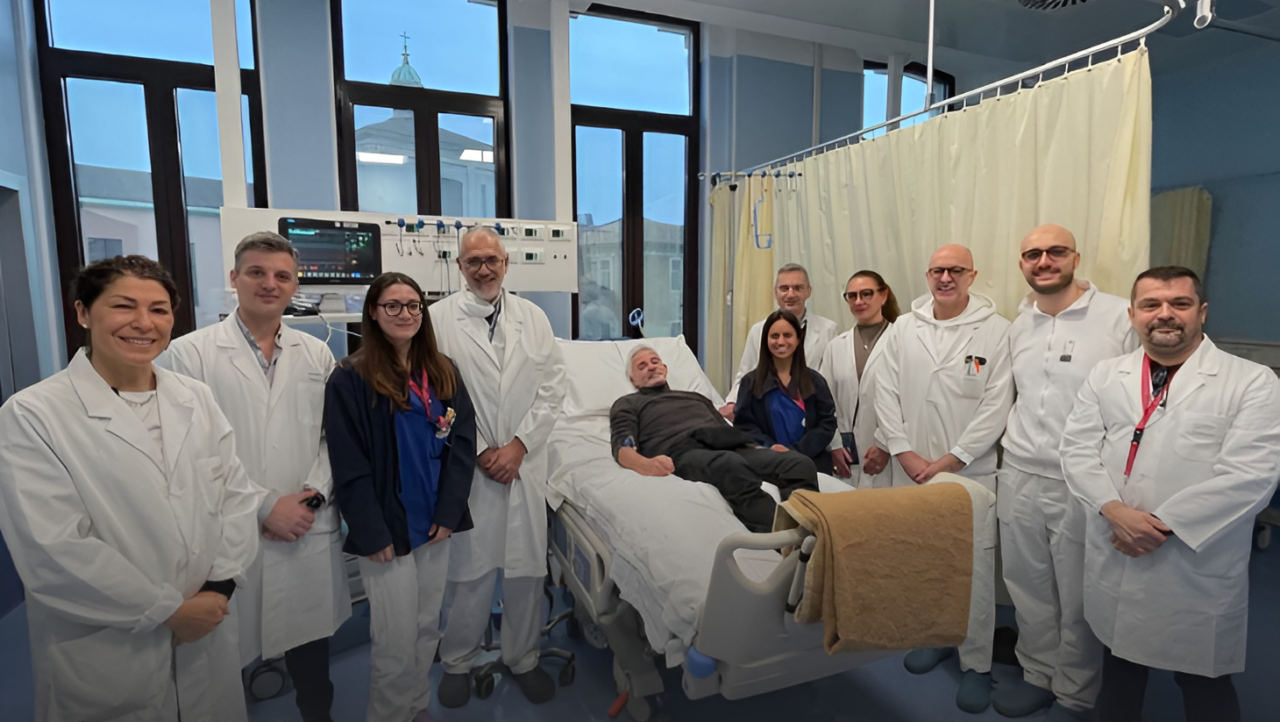
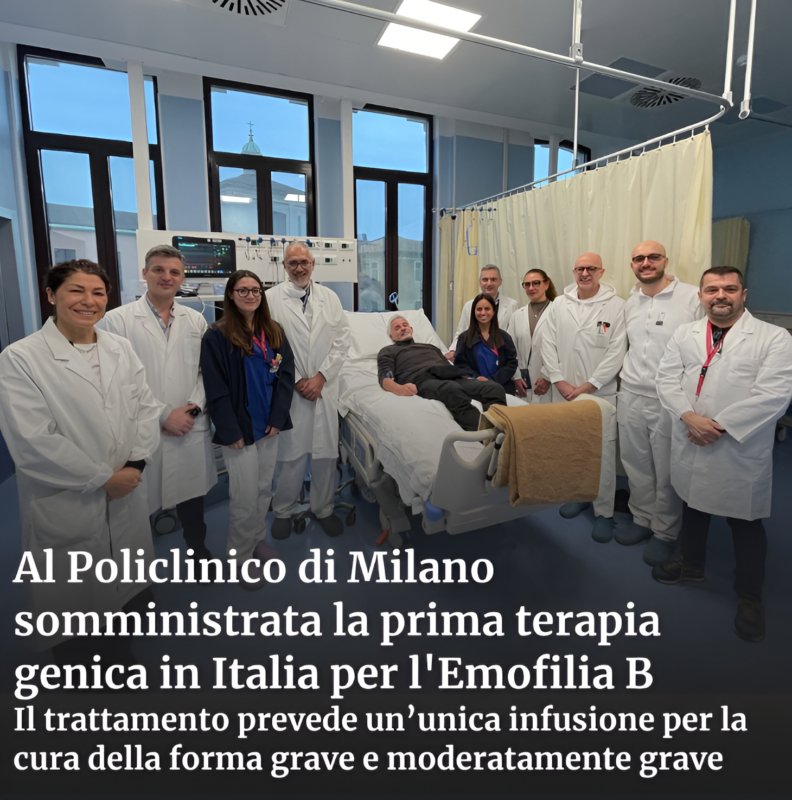
First Italian Gene Therapy for Hemophilia B at the Polyclinic of Milan
Polyclinic of Milan (Ospedale Policlinico di Milano) posted on LinkedIn:
”The first gene therapy in Italy for the treatment of severe or moderately severe hemophilia B, a rare hereditary disease caused by the deficiency of coagulation factor IX, has been administered at the Polyclinic of Milan. The therapy, indicated only for adult patients, was performed in the Haemophilia Centre of the Polyclinic of Milan, directed by Flora Peyvandi, recognised as a national and international reference point for congenital haemorrhagic diseases and the Hub Centre of the Lombardy Region for the Congenital Haemorrhagic Diseases Network (MEC).
The treatment, recently authorized by the Italian Medicines Agency and now accessible through the National Health Service, consists of a single and unrepeatable infusion that allows the body to produce Factor IX independently, significantly reducing the need for periodic infusions provided for by traditional replacement therapies.
Haemophilia B is an inherited genetic disorder characterised by the deficiency of Factor IX, a protein essential for blood clotting. Those affected have a high tendency to develop spontaneous bleeding or bleeding caused by minimal trauma, often localized in the joints and muscles, with the risk of chronic pain, progressive joint damage and significant limitations in daily life.
Through this result, the Polyclinic of Milan confirms its vocation to lead the introduction of advanced therapies in the public health system. In recent years, the Hospital has performed the first Italian gene therapy treatments for haemophilia A and has participated in international studies dedicated to rare coagulation diseases, integrating clinical activity, research and training.
“Gene therapy represents an important turning point in the evolution of the treatment of hemophilia B,” says Flora Peyvandi. For the first time, we have a treatment administered in a single infusion, capable of allowing patients to produce adequate levels of Factor IX and reducing the impact of the disease on daily life. It is a result that stems from the joint work of our professionals, institutions and patient associations, and which opens up new perspectives for the treatment of this disease”.
“The treatment of the first patient in Italy with gene therapy for haemophilia B testifies to the role of the Polyclinic of Milan as a public hospital capable of bringing innovations that really make a difference into clinical practice. Investing in skills, research and a multidisciplinary organization that values professionals means guaranteeing patients increasingly advanced care. This achievement represents a further step in our mission to offer everyone access to the best therapeutic opportunities available,” says CEO Matteo Stocco.”
Stay updated with Hemostasis Today.
-
Oct 16, 2026, 17:32Shruthi Narayan: STORM-PE and STRIKE-PE Studies Advance Understanding of Recovery After Pulmonary Embolism
-
Oct 16, 2026, 17:22Wolfgang Miesbach։ What a Near-Perfect FISH Score Fails to See
-
Oct 16, 2026, 17:06Troels Wienecke: Connecting Myeloproliferative Disease and Ischemic Stroke
-
Oct 16, 2026, 17:03Only 5 Days Left to Submit Your Research for EAHAD 2027
-
Oct 16, 2026, 16:48Abdul Rahman: Reticulocyte Count and Bone Marrow Activity
-
Oct 16, 2026, 16:44DOAC Adherence in Stroke Patients With Atrial Fibrillation – International Journal of Stroke
-
Oct 16, 2026, 16:22Shannon Farmer: Driving Patient Blood Management Forward in Australia and New Zealand
-
Oct 16, 2026, 16:01Obi Light Ogbonnia: The Greatest Reward Is Changing Lives, Not Winning Awards
-
Oct 16, 2026, 15:18Carmine Liberatore: Limited Accuracy of VTE Risk Scores in Multiple Myeloma