


Claudio Laudani: Efficacy and Safety of Colchicine for Secondary Prevention in Coronary Artery Disease
Claudio Laudani, Former Postdoctoral Researcher at UF Health Jacksonville, shared a post on LinkedIn about a recent article he and his colleagues co-authored, adding:
“Anti-inflammatory therapies are increasingly recognized as key tools to reduce major adverse cardiovascular events (MACE) in patients with coronary artery disease (CAD). Among them, colchicine has the most established and widely studied role in this setting.
However, the recent findings from clear-synergy have raised important questions regarding the efficacy and safety of colchicine for secondary prevention in CAD.
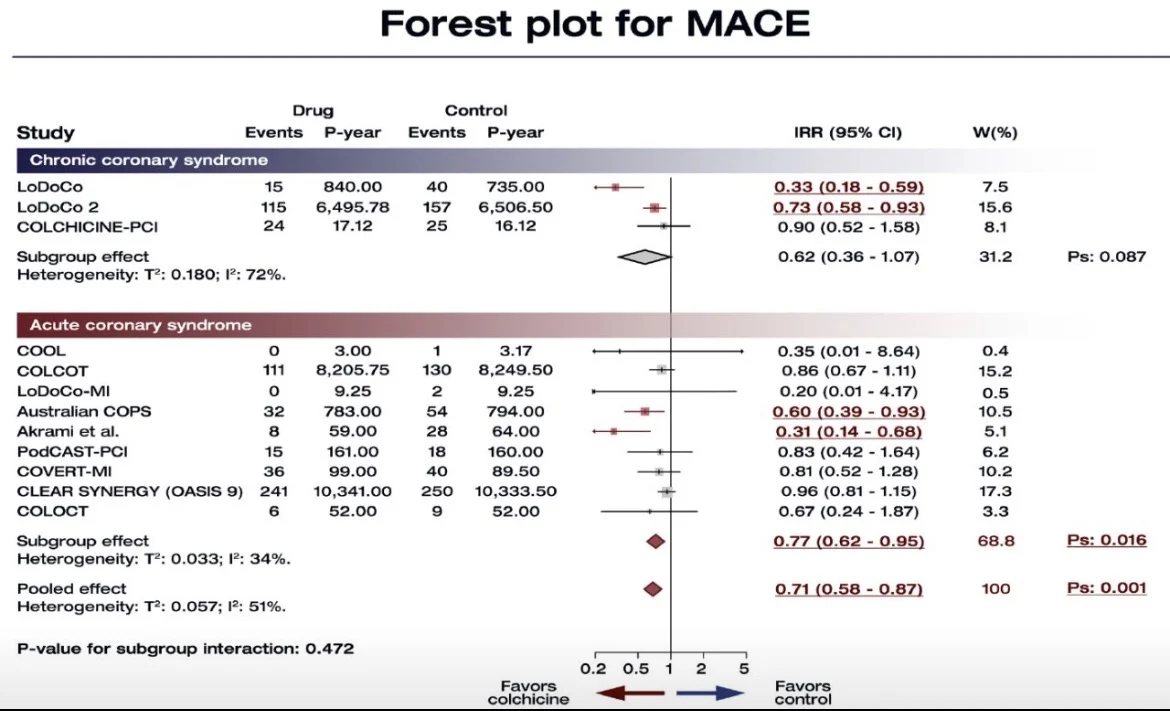
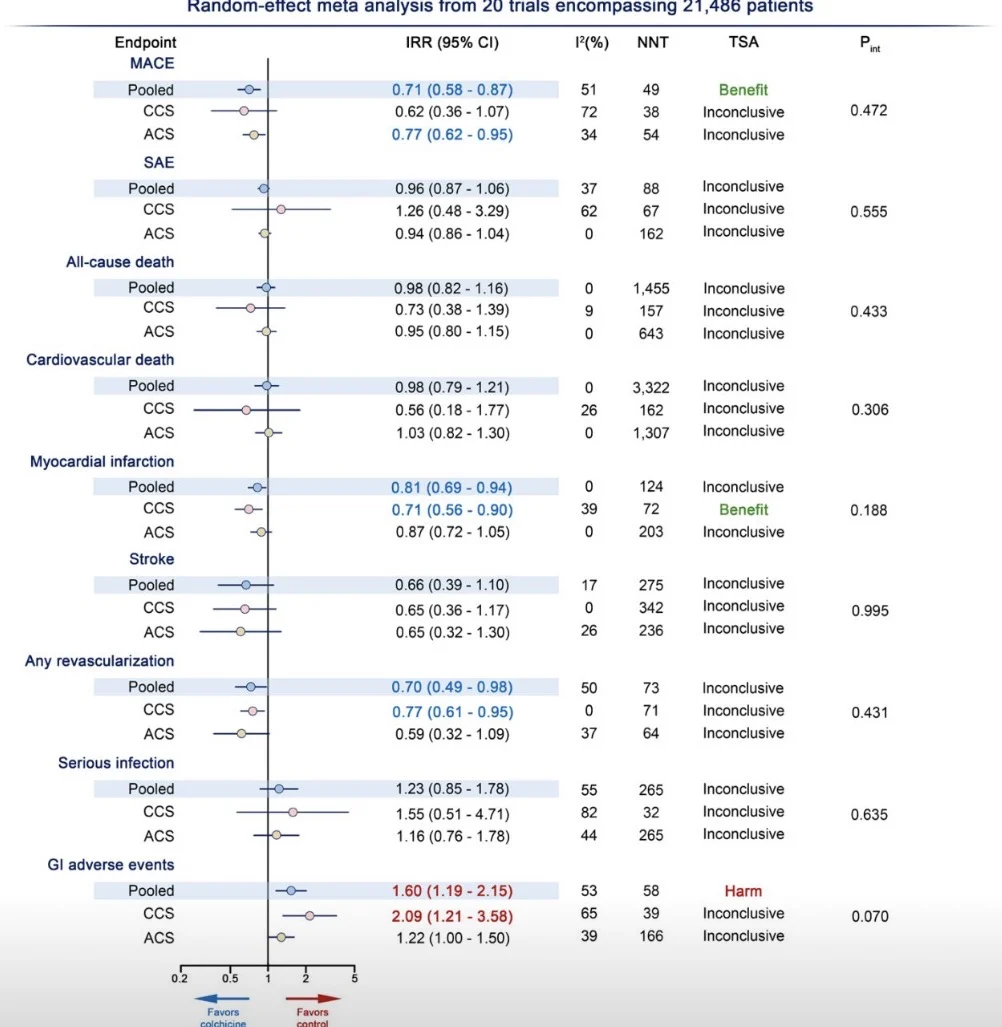
To address these uncertainties, we conducted the largest meta-analysis on colchicine to date, including 20 randomized controlled trials and 21,486 patients. We explored possible sources of heterogeneity and the influence of confounders, including clinical presentation (acute or chronic coronary syndrome), baseline medications, and the influence of colchicine dose administered, and COVID-19 pandemic. In addition, we performed trial sequential analysis to assess the conclusiveness of the results.
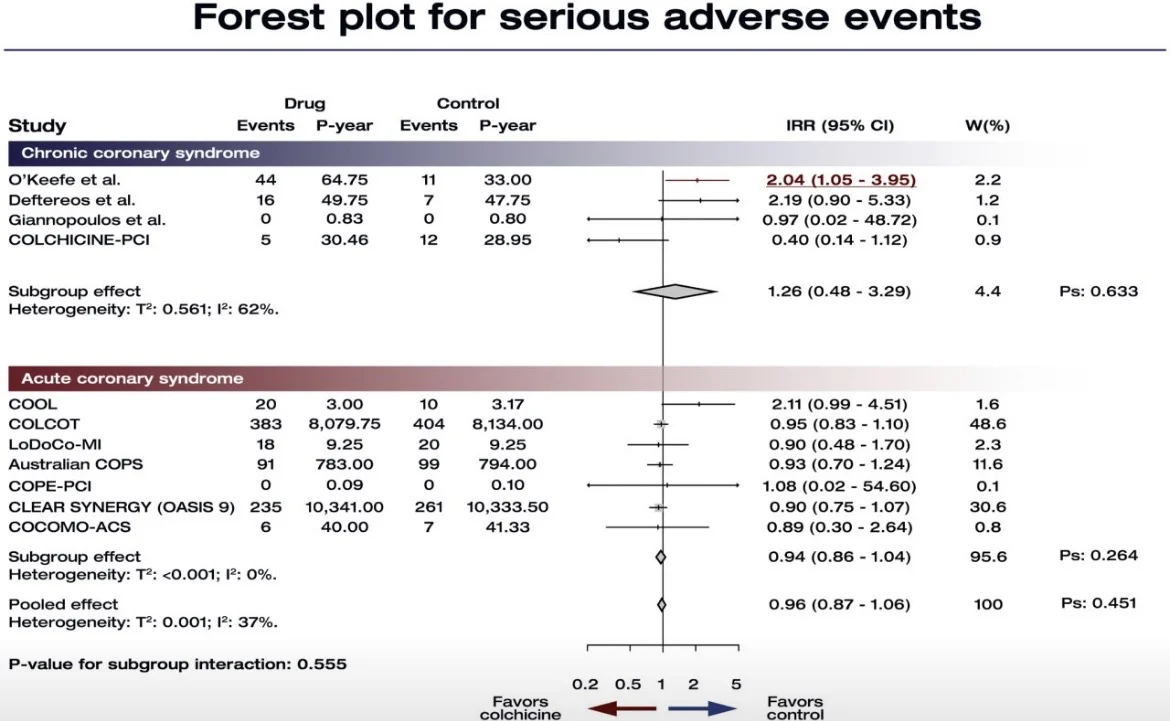
Overall, colchicine reduced MACE by 29%, driven by a 19% reduction in myocardial infarction and 30% reduction in revascularization, without inreasing serious adverse events. These resulted in a number needed to treat of 49 patients, and a NNT/NNH ratio of 0.5. Importantly, no significant interaction by presentation was detected, suggesting that both ACS and CCS patients may benefit from colchicine adminsitration.
However, there was a significant increase in gastrointestinal adverse events, which should be accounted when considering adding colchicine for secondary prevention of MACE, and adverse events were more likely to occur with high dose colchicine, suggesting that low-dose colchicine may achieve the best benefit/risk balance.
Finally, among possible confounders, only the COVID pandemic resulted as a possible explanation for the neutral results reported in the clear-synergy trial. Interestingly, TSA showed that results were conclusive for MACE and gastrointestinal events, further reassuring on the overall efficacy and safety of this medication for treatment of patients with CAD.”
Title: Safety and Efficacy of Colchicine across the Spectrum of Coronary Artery Disease: A Systematic Review and Meta-Analysis of 20 Randomized Trials
Authors: Claudio Laudani, Kamil Bujak, Giovanni Occhipinti, Riccardo Rinaldi, Antonino Imbesi, Jorge Sanz Sanchez, Mattia Galli, Antonio Abbate, Luis Ortega-Paz, Davide Capodanno, Dominick Angiolillo
Read the Full Article on American Society for Clinical Pharmacology and Therapeutics.

Stay updated on all scientific advances with Hemostasis Today.

-
Sep 11, 2026, 17:41Khaled Musallam: Earlier Recognition, Better Outcomes in NTDT
-
Sep 11, 2026, 17:29Reyhan Kose Cobanoglu: APS ACTION Registry Study Published in Lupus
-
Sep 11, 2026, 17:14Obi Light Ogbonnia: From Kenya to Global Sickle Cell Advocacy
-
Sep 11, 2026, 17:01EAHAD 2027 Marks 20 Years
-
Sep 11, 2026, 16:54Denise Braendgaard: Reimagining Health Systems Through Collective Action
-
Sep 11, 2026, 16:47Jehad Khamaysa: Budd-Chiari Syndrome as the Initial Presentation of Behçet’s Disease in a 16-Year-Old
-
Sep 11, 2026, 16:44Mostafa Faisal Mohammed Saleh: From HLA Biology to Curative Therapy
-
Sep 11, 2026, 16:38Jim Kaveney: Class I, Level A – Lifestyle is Now the Official Standard in AFib Care
-
Sep 11, 2026, 16:31George Touma: Do We Really Need to Implant Metal in Every High-Bleeding-Risk Patient?