


Khokon Miah Akanda: FDA Approves a First-in-Class Hypertension Drug
Khokon Miah Akanda, Senior Brand Executive at Apex Pharma Limited, shared on LinkedIn:
“FDA approves a first-in-class hypertension drug!
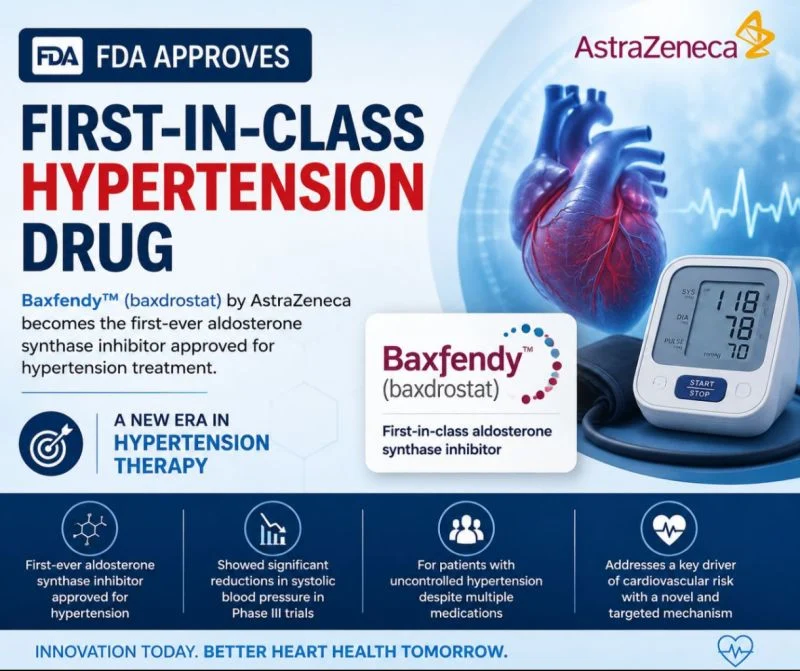
The US FDA has recently approved Baxfendy (baxdrostat) by AstraZeneca, the first-ever aldosterone synthase inhibitor for hypertension treatment.
What makes this approval significant is its completely new mechanism of action. Instead of only managing symptoms, the drug directly targets aldosterone production, a hormone linked to persistently high blood pressure and cardiovascular risk.
In Phase III trials, the drug demonstrated clinically meaningful reductions in systolic blood pressure in patients whose hypertension remained uncontrolled despite multiple medications.
This marks one of the most important cardiovascular drug innovations in recent years and highlights how pharma continues to evolve toward more targeted and mechanism-based therapies.
Exciting to see innovation reshaping chronic disease management.”
Stay updated with Hemostasis Today.
-
Oct 14, 2026, 07:36Daniel Pereira Monteiro: ASCAT 2026 A Day of Science, Connection and Community
-
Oct 14, 2026, 07:20Rachael Jackman: Understanding Models of Transfusion Medicine at AABB 2026
-
Oct 14, 2026, 07:09Dianne E. van der Wal: A New Chapter in Academia Celebrating a Journey in Research, Teaching and Platelet Science
-
Oct 14, 2026, 06:55Mahdieh Dagina Pedersen: A Meaningful Milestone in Hemophilia A Research and Oral Drug Development
-
Oct 14, 2026, 06:37Neoklis Mparis: Unilateral Adrenal Haemorrhage in Primary Antiphospholipid Syndrome During Bridging Anticoagulation
-
Oct 14, 2026, 06:00Aymen A.: LAAC vs. OAC in Patients with Atrial Fibrillation Including CHAMPION-AF and CLOSURE-AF Trials
-
Oct 13, 2026, 21:05Francisco Chacón-Lozsán: Heparin-Induced Thrombocytopenia – When an Anticoagulant Triggers Thrombosis
-
Oct 13, 2026, 21:04Aref Zribi: Isolated Tumor Thrombus and the Role of Prophylactic Anticoagulation
-
Oct 13, 2026, 21:01Alex Larson: Why Normal Bloodwork Does Not Always Tell the Whole Story