

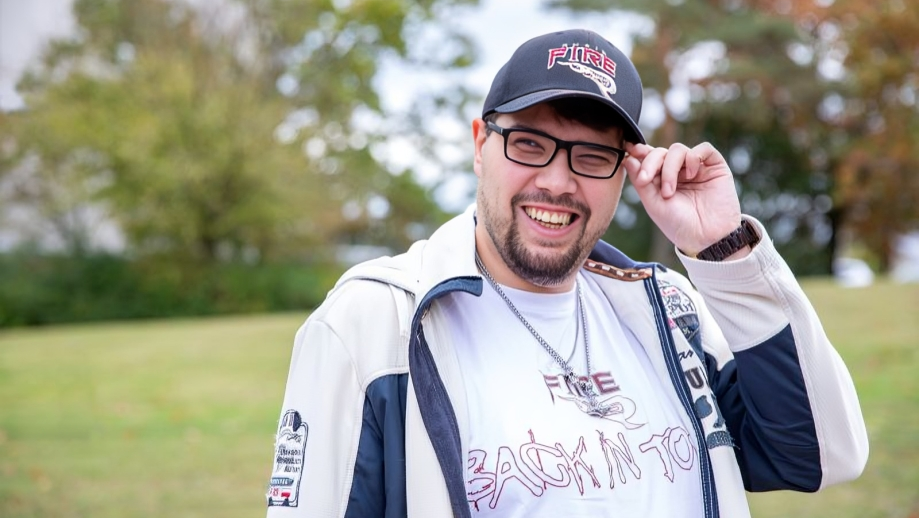
Andreas Tiede: Treating our First Hemophilia B Patient with Gene Therapy
Andreas Tiede, Professor in the Department of Hematology, Hemostasis, Oncology and Stem Cell Transplantation at Hannover Medical School, eposted from Medizinische Hochschule Hannover on LinkedIn:
”A very special moment to share. Treating our first hemophilia B patient with gene therapy was a milestone for our team — and it’s amazing to see how much it has changed his life. Full of energy and plans for the future… what a difference a single infusion can make!”
Quoting Medizinische Hochschule Hannover‘s post:
”For the first time in Germany: MHH treats hemophilia B with gene therapy
Going on vacation, doing sports and feeling healthy – what is a matter of course for most people was only a dream for Marvin M. for a long time. The young man suffered from severe hemophilia B, a form of the so-called hemophilia, which severely restricted his life. The turning point came with a new type of treatment at the Clinic for Hematology, Hemostaseology, Oncology and Stem Cell Transplantation at the Hannover Medical School (MHH). Marvin M. received gene therapy and now has a great chance of good health in the long term. He is the first patient in Germany to be treated with this type of therapy for hemophilia B.
Hemophilia B is an inherited disorder of blood clotting that is due to the absence of clotting factor IX. The symptoms are the same as with hemophilia A. “In those affected, the blood plasma clots more slowly. There is a risk that the smallest injuries or even spontaneously lead to bleeding into large joints and muscles, sometimes even into the gastrointestinal tract or the central nervous system,” explains Professor Dr. Andreas Tiede from the Department of Hematology, Hemostaseology, Oncology and Stem Cell Transplantation. The bleeding has serious consequences. As a result, joints can be completely destroyed in the long term, for example. Both men and women are affected by the hereditary disease. However, it is almost exclusively men who have severe characteristics. Professor Tiede estimates the total number of severe hemophilia B patients in Germany at around 500. In them, the activity of coagulation factor IX is less than two percent of the norm. To increase clotting activity, they have to inject themselves with the missing factor IX for a lifetime. Since this has a short half-life, twice a week by default.”
Find more information here.
Find more posts on Hemostasis Today.
-
Oct 9, 2026, 11:44Ayyappan V Nair: PRP and Rehabilitation – Can It Help Athletes with Partial Rotator Cuff Tears?
-
Oct 9, 2026, 11:29Jigesha Dholakia: Supporting the Hemophilia Community Through the Unite Walk
-
Oct 9, 2026, 11:06Nobles Green: How siRNA Therapy Helps the Body Form Stronger Clots
-
Oct 9, 2026, 10:53Switching From Emicizumab to Denecimig in Hemophilia A – Rare Disease Advisor
-
Oct 9, 2026, 10:40What New U.S. Data Reveal About GT – Glanzmann’s Research Foundation
-
Oct 9, 2026, 10:32Anjali Pandey: The Morphologic Clues to MDS With del(5q)
-
Oct 9, 2026, 10:13Reza Shojaei: 5 Leadership Responsibilities for a Sustainable Plasma Ecosystem
-
Oct 9, 2026, 08:38Johannes Gratz: Perioperative Care in Factor VII Deficiency – Treating the Patient, Not the Number
-
Oct 9, 2026, 08:28Ghanim Fajish: Vascular Cells May Retain a Prothrombotic Memory of Oxidative Stress