

From Fear to Freedom: Hemophilia A, Emicizumab Prophylaxis, and the Rewriting of a Childhood
Part I: Before Prophylaxis: When Bleeding Defined Childhood
There was a time when hemophilia did not merely complicate life — it structured it.
Before 2021, the management of severe Hemophilia A in Armenia relied predominantly on on-demand factor replacement. Treatment was reactive. Bleeding occurred first; intervention followed. This paradigm shaped not only clinical outcomes but entire biographies.
Recurrent spontaneous hemarthrosis led to progressive hemophilic arthropathy. Joint destruction, deformity, chronic pain, limited mobility, and premature disability were common trajectories. Approximately 75% of adult patients — particularly those aged 20–45, the most socially and economically active population — carried some degree of disability. Childhood was interrupted by hospital corridors; education fractured by absences; social participation constrained by fear.
Fear was not theoretical. It had a smell.
For T.A., hemophilia was first experienced not as a diagnosis but as sensation: the metallic odor of blood saturating the air; the taste that would not leave her mouth; the suffocating anxiety of uncontrolled nasal hemorrhage.
In the 1990s, at the age of seven, she underwent posterior nasal tamponade — a life-saving yet traumatic intervention. The tampon remained in place for seven days. She could not eat. She could barely swallow. She slept with her mouth forced open so she would not suffocate. Plasma dripped through translucent tubing into her veins. Her grandmother held her jaw through the night to keep her airway patent.
Years later, she would write:
“I am afraid that I will open my eyes and see the yellow hospital walls again.
I am afraid I will not be able to breathe.
I am afraid the yellow liquid will drip again into my vein.”
This is not merely literature. It is longitudinal clinical testimony. Repeated hemorrhages left physical scars — anemia, iron deficiency, weakness — but also reshaped temperament. Trauma in hemophilia is not metaphorical; it is embodied.
Academic resilience became her strategy for survival. She studied ahead, prepared for interruption, and refused to allow absence to define her intellectual trajectory. Today, T.A. is a distinguished scientist, lecturer, and one of the most thoughtful and socially engaged minds in her community. Her success stands as testimony not only to personal strength, but to the importance of medical evolution.
Part II: After 2020: Emicizumab and the Restoration of Time
In 2020, within the framework of the World Federation of Hemophilia (WFH) Humanitarian Aid Program, Armenia introduced emicizumab prophylaxis for patients with severe Hemophilia A.
This marked not simply a therapeutic update, but a paradigm shift.
Emicizumab is a humanized bispecific monoclonal antibody that functionally mimics activated factor VIII by bridging FIXa and FX, thereby restoring thrombin generation independent of FVIII levels. Its subcutaneous administration and sustained pharmacokinetic profile allow for stable hemostatic protection.
Clinically, the results have been transformative.
- More than 46 children have experienced zero spontaneous bleeding episodes.
- No new joint hemorrhages have been documented under continuous prophylaxis.
- No progressive arthropathy or joint deformities have developed in this cohort.
- Hospitalizations and emergency interventions have markedly decreased.
But the most compelling outcomes are developmental. Children attend school without interruption. They participate in swimming, judo, taekwondo, and chess. Three Armenian adolescents with hemophilia are now international champions.
This is what effective prophylaxis accomplishes: it restores continuity. Hemophilia no longer dictates whether a child will miss class tomorrow.
Why Continuity Matters
Hemophilia A is not merely a coagulation disorder; it is a determinant of life trajectory.
Prophylaxis is not a luxury. It is a standard of care aligned with contemporary evidence and ethical responsibility. Sustained national provision of emicizumab represents a strategic public health commitment.
Quality of life in hemophilia must be measured not only by annualized bleeding rates, but by the absence of fear.
T.A.’s childhood reminds us what uncontrolled bleeding costs — physically, emotionally, developmentally. The children growing up today under emicizumab prophylaxis remind us what modern medicine can restore: time, movement, dignity, and possibility.
When effective prophylaxis is available, hemophilia does not have to define identity. It becomes a diagnosis — not a destiny.
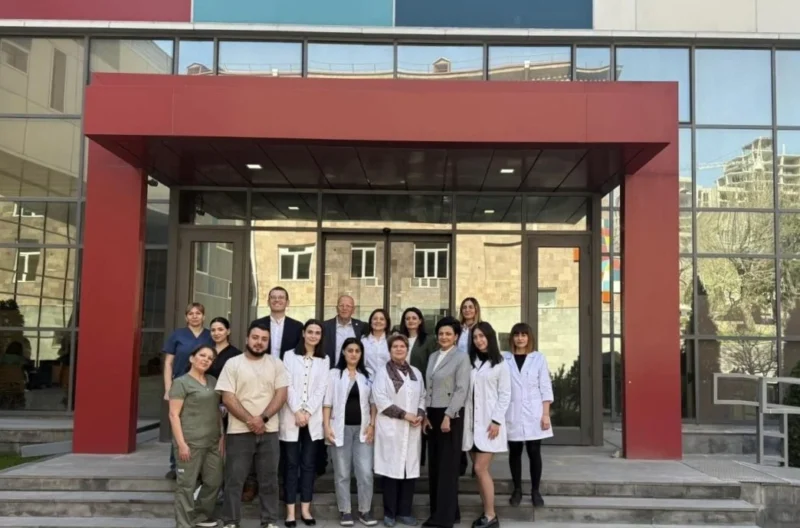
Written by Heghine Khachatryan, MD, PhD, Editor-in-Chief at Hemostasis Today, Head of Hemophilia and Thrombosis Center at Yeolyan” Hematology and Oncology Center Ministry of Health, Republic of Armenia
-
Oct 19, 2026, 16:36Christopher Pittman: Blood Clot Prevention Cannot End at Hospital Discharge
-
Oct 19, 2026, 16:13Javier M. Floren: When Immune Cells Move With Their Environment
-
Oct 19, 2026, 16:04Hussnain Javaid: New EHA Guidelines for HbSC Disease Management
-
Oct 19, 2026, 15:50Deep Madkaiker: A New Academic Opportunity in Transfusion Medicine at ACTREC
-
Oct 19, 2026, 15:19Why Hematologists Should Care About Diminished Ovarian Reserve in SCD – ASH Education
-
Oct 19, 2026, 14:16Hyperfibrinolysis as an Underrecognized Cause of Bleeding
-
Oct 19, 2026, 13:36Shobhna Ladva: Aspen Pharma EME Raises Awareness of Blood Clot Risks During Hormonal Transitions
-
Oct 19, 2026, 13:11Giulia Furnari: Connecting With Global Hematology Experts at IACH 2026
-
Oct 19, 2026, 12:46Andrew Choong: Recognizing Thrombosis Before It Becomes Life-Threatening