

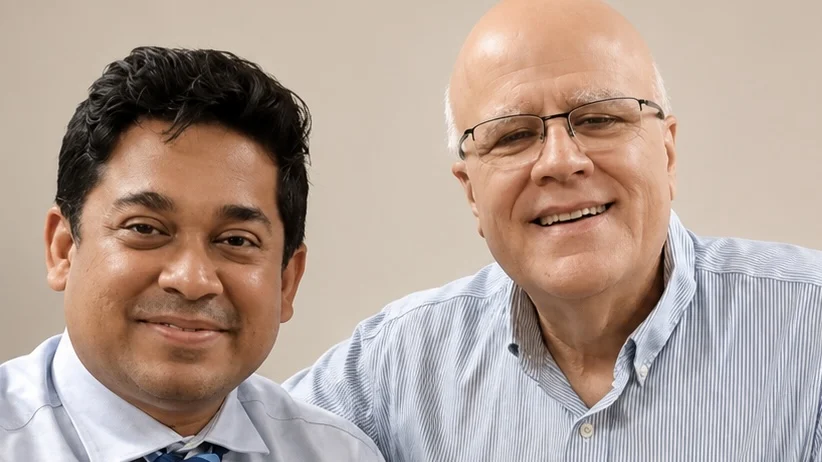
Debojyoti Chakraborty: Small But Meaningful Steps Toward A Gene Editing Trial For Sickle Cell Disease In India
Debojyoti Chakraborty, Principal Scientist at CSIR-IGIB, shared a post on LinkedIn:
“As we continue taking small but meaningful steps toward a gene editing trial for sickle cell disease in India, I have been reflecting on how many people quietly stand behind such an effort.
At the forefront are the clinicians, hematologists, BMT physicians, nurses, transfusion specialists, coordinators, and patient-support teams across India and abroad who have generously shared their time, experience, and guidance with us.
Many of these conversations have happened late in the evening after clinics, during hospital visits, over long calls discussing patient logistics, apheresis workflows, follow-up challenges, and difficult real-world questions that cannot be solved from a laboratory bench alone.
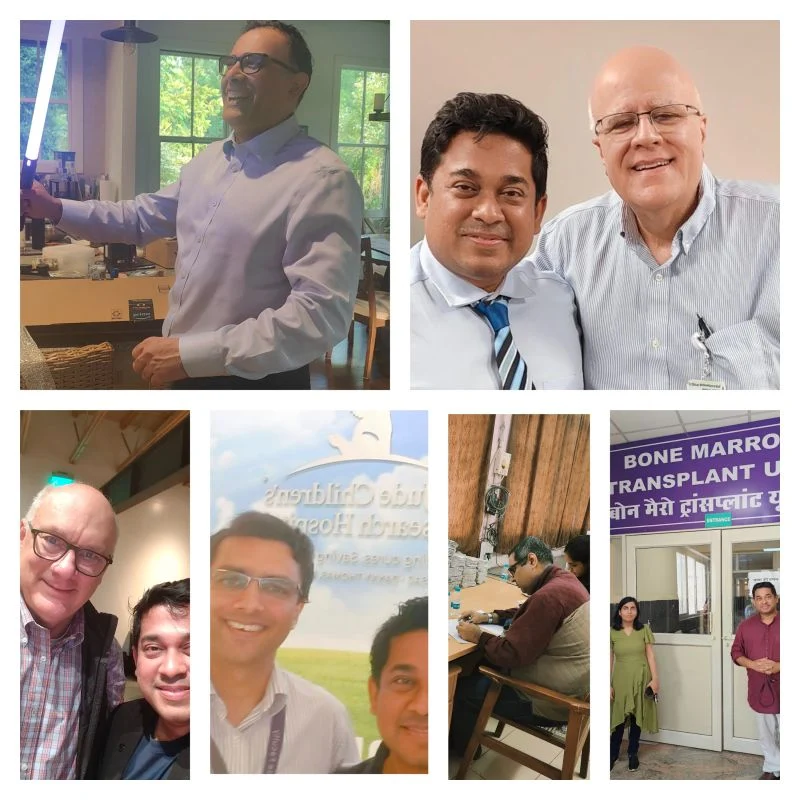
At the forefront is a devoted clinical team led by Rishi Dhawan with Gopal Patidar (AIIMS (All India Institute of Medical Sciences, New Delhi)) working alongside the phenomenal Shweta Pathak (NCBMC, Jabalpur) in one of the sickle cell belts of the country.
Enabling them is a group of international stalwarts like Haydar Frangoul (Tristar Medical Group), Akshay Sharma (St. Jude Children’s Research Hospital), Donald Kohn and Mark Walters (UCLA and UCSF) who have generously shared their wealth of knowledge from similar pivotal trials done in the west and Minoo Battiwalla (shown below with a light saber for obvious reasons) who mentored, assisted and facilitated in every way possible- if mountains have to be moved, these people have kept providing us the tools to do so.
Not to forget the invaluable inputs from the clinical fraternity who have dealt with this disease in India, working alongside tribal populations who are significantly affected by the it – Drs. Pradeep Patra, Dipti Jain, Dr. Jyotishbhai Patel and several others whose wisdom, experience and knowledge have all contributed to define our therapeutic approach and clinical protocols.
Working in sickle cell disease, especially in underserved and high-burden regions, constantly reminds us that science is ultimately about people. The compassion and commitment shown by clinical teams caring for patients every day has deeply shaped how we think about translation, accessibility, and responsibility.
There is still a long road ahead, and much work remains before advanced therapies can become truly accessible. But collaborations built on trust, shared purpose, and patient-centered thinking make this journey possible.
Deeply grateful to everyone who continues to support, question, guide, and believe in this effort.
In the end if this therapy reaches the poorest of the poor, the sick and the needy, it will not be due to the technology or the scientific advancements we had to make during the process, but because of the spirit of kindness, compassion and cooperation that every person whom I interacted with in this long journey showed and continues to do so.”
Stay updated with Hemostasis Today.
-
Oct 17, 2026, 12:21Jalen Hurts Sidelined by a Superficial Blood Clot: What to Know
-
Oct 17, 2026, 09:33Robert Lookstein: Mechanical Thrombectomy Shows Functional Benefits in Intermediate-High-Risk PE
-
Oct 17, 2026, 09:18Sarra Hmidi: Tunisia Highlights Thrombosis Prevention on World Thrombosis Day
-
Oct 17, 2026, 09:05Addressing the Hidden Burden of Bleeding Disorders in Women – Hemophilia Society Mumbai Chapter
-
Oct 17, 2026, 08:49Maria Magnusson: Karolinska Experts Explore Gene Therapy in Sickle Cell Disease and Hemophilia
-
Oct 17, 2026, 04:07Weihao Li: Global HEPATIC Registry Findings on Post-Transplant Arterial Thrombosis
-
Oct 17, 2026, 03:56Ghaith Abu-Zeinah: ASH Publishes 2026 Guidelines for Myelofibrosis Management in Blood Advances
-
Oct 17, 2026, 03:48Tristan Siokos: Why Vascular Occlusion Is More Than Just Clots – Breakdown of the 8 Pathways
-
Oct 17, 2026, 02:36Archil Jaliashvili: Oxygen Transport in Capillaries