

Join the Webinar on Immunoglobulin Access and Stewardship in the UK and Australia – ISBT
International Society of Blood Transfusion (ISBT) posted on LinkedIn:
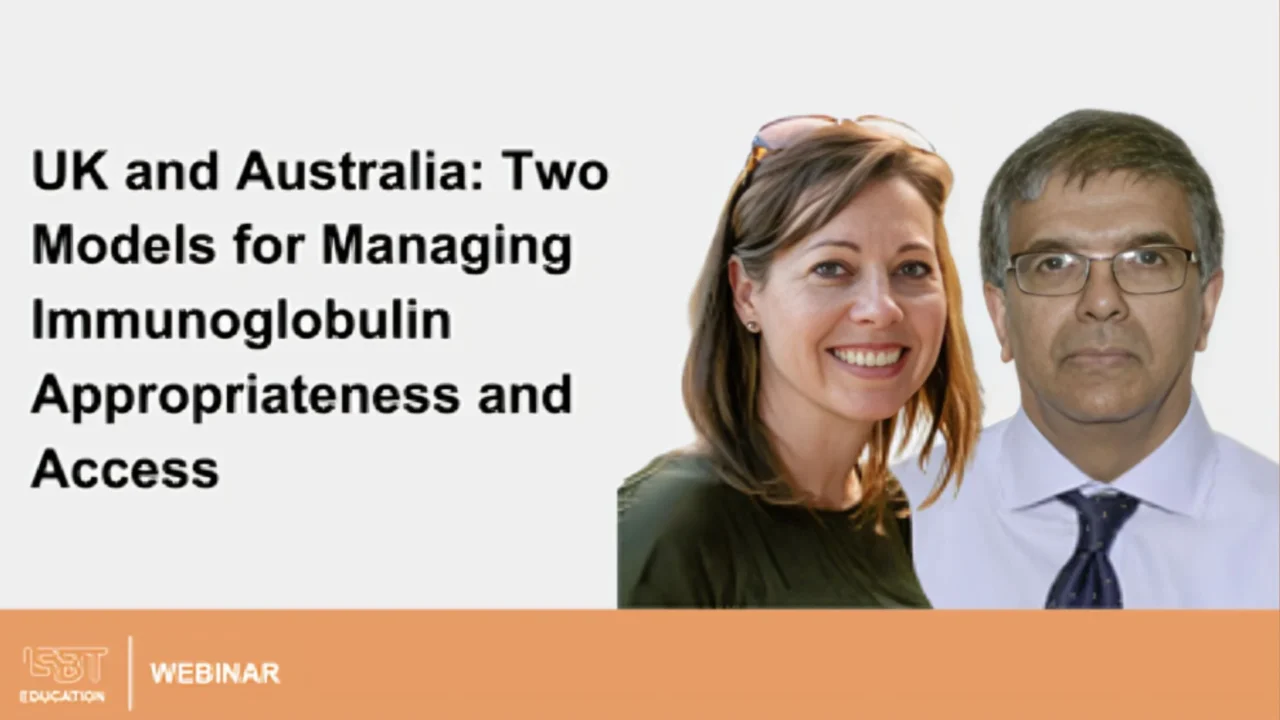
“ISBT Webinar: UK and Australia – Two Models for Managing Immunoglobulin Appropriateness and Access
Join us on 1 April 2026, 2–3pm CEST for an insightful session exploring how the UK and Australia govern immunoglobulin (Ig) use.
Learn how national structures, data-driven stewardship, and practical oversight strategies ensure appropriate Ig access – even during shortages.
What you’ll take away:
- How Ig governance and funding work in the UK and Australia
- Methods for patient-level Ig data collection and feedback
- Practical approaches to prescribing oversight and stewardship
- Ideas to guide policy, monitoring, and equitable access in your own country
Speakers
Siraj Misbah – Consultant Immunologist, Oxford University Hospitals
Nicolle Ginman – Nurse Consultant, Immunoglobulin Program, Royal Adelaide Hospital
Don’t miss this opportunity to gain concrete ideas for strengthening Ig policy and stewardship!”
Stay updated with Hemostasis Today.
-
Oct 9, 2026, 15:15Maha Othman: Uncovering the Consensus on TXA in TBI – Call for Collaboration on a Landmark Umbrella Review
-
Oct 9, 2026, 15:07Daniel D. Han: How Inhalation Product Exposure Impairs Cardiac and Platelet Recovery After MI
-
Oct 9, 2026, 14:58William Toole: How Ultrasound-Guided PRP Therapy Relieves Joint and Tendon Pain
-
Oct 9, 2026, 14:50Shayan Mohammadmoradi: In Corpus Christi for the 20th Midwest Platelet Conference
-
Oct 9, 2026, 14:37Tariq Tramboo: High Platelet Concentrate for Osteoarthritis Knee – Recent Meta-Analyses
-
Oct 9, 2026, 14:26Yousma Khan: Hematology Series – Beyond RBCs, WBCs and Platelets
-
Oct 9, 2026, 14:13Jesus Ardila Novoa: Why the WHO’s Historic Essential Medicines List Decision Is Just the Beginning
-
Oct 9, 2026, 14:07Chokri Ben Lamine: Pain After Allogeneic Stem Cell Transplantation in Sickle Cell Disease
-
Oct 9, 2026, 13:55Chandler Purser: AABB 2026 Focuses on Transfusion Safety and Audit-Driven Practice Improvement