


Powerful Impact of NETs on Thrombosis: 20 Years of Discovery
Emmanuel J Favaloro, Editor in Chief, Seminars in Thrombosis and Hemostasis, shared an insightful post on LinkedIn:
”Neutrophil Extracellular Traps: At the Interface of Thrombosis and Comorbidities. Lead author is one of our previous Young Investigator Awardees. Enjoy!”
Download the full article for free here.
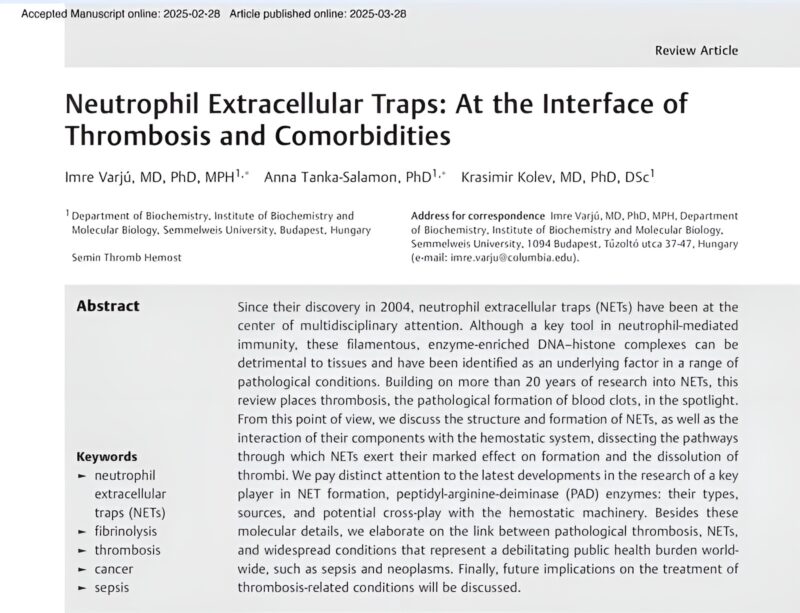
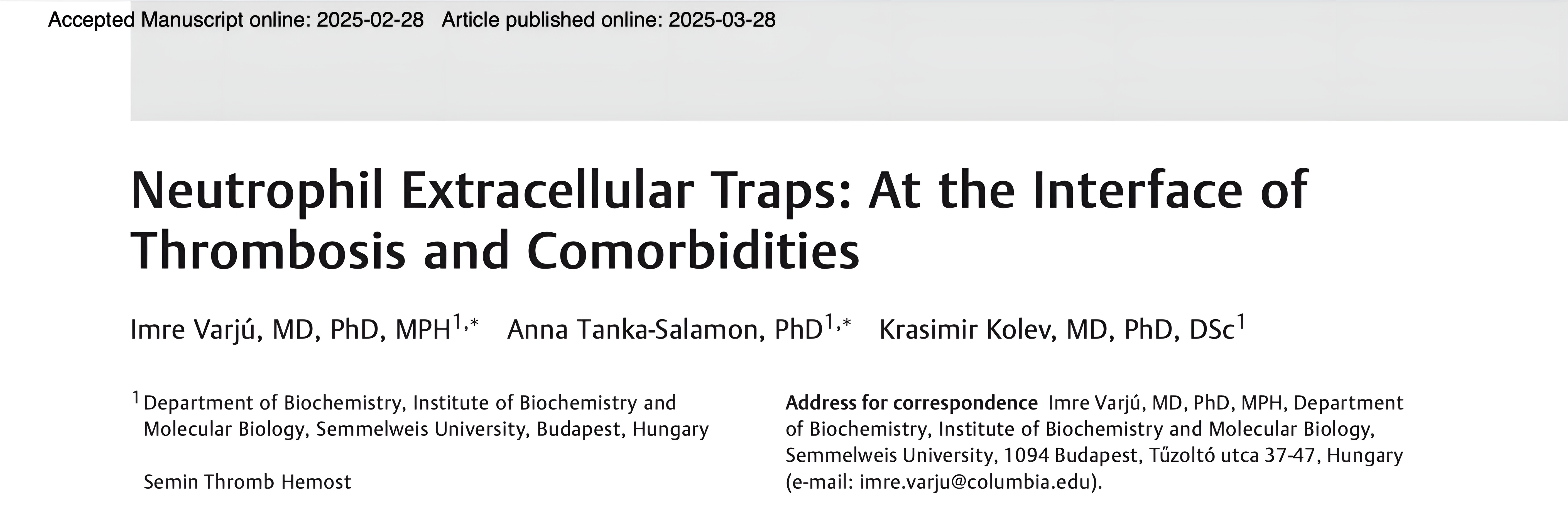
Neutrophil extracellular traps (NETs), discovered in 2004, are key in immunity but also contribute to tissue damage and thrombosis.
Research reveals how NETs interact with the hemostatic system, influencing clot formation and resolution.
Peptidyl-arginine-deiminase (PAD) enzymes, central to NET formation, also link to coagulation pathways.
These insights connect NETs to conditions like sepsis and cancer, opening paths for targeted anti-thrombotic therapies.
Discover a lot more insights in this recently published article ”Neutrophil Extracellular Traps: At the Interface of Thrombosis and Comorbidities” by Imre Varjú, Anna Tanka-Salamon and Krasimir Kolev in the Seminars in Thrombosis and Hemostasis.
All the latest advancements in the field of hematology featured in Hemostasis Today.
-
Sep 19, 2026, 10:52Consuela A. Albright: The Critical Role of Black Blood Donors in Sickle Cell Treatment
-
Sep 19, 2026, 10:47Amber Yates: Inside Agios’ Partnership with the Sickle Cell Community
-
Sep 19, 2026, 10:46Anton Farkas: Mechanical Thrombectomy for Acute PE in Early Pregnancy
-
Sep 19, 2026, 10:40Marjolein Smidt: ASH Raises Ferritin Thresholds for Iron Deficiency
-
Sep 19, 2026, 10:34Nawsherwan Mohammad: ASH 2026 Guidelines Redefine How We Detect Iron Deficiency
-
Sep 19, 2026, 10:21Upcoming Podcast on Thalassaemia with The Lancet Haematology
-
Sep 19, 2026, 10:20Steve Helm: Cardiology and Anticoagulation Pharmacist Role Opens Near NYC
-
Sep 19, 2026, 10:12Omid Seidizadeh: A Great Pleasure to Speak on vWD at the 59th NordCoag Congress
-
Sep 19, 2026, 10:08Carsten Hansen: What Happens During a Sickle Cell Crisis?