


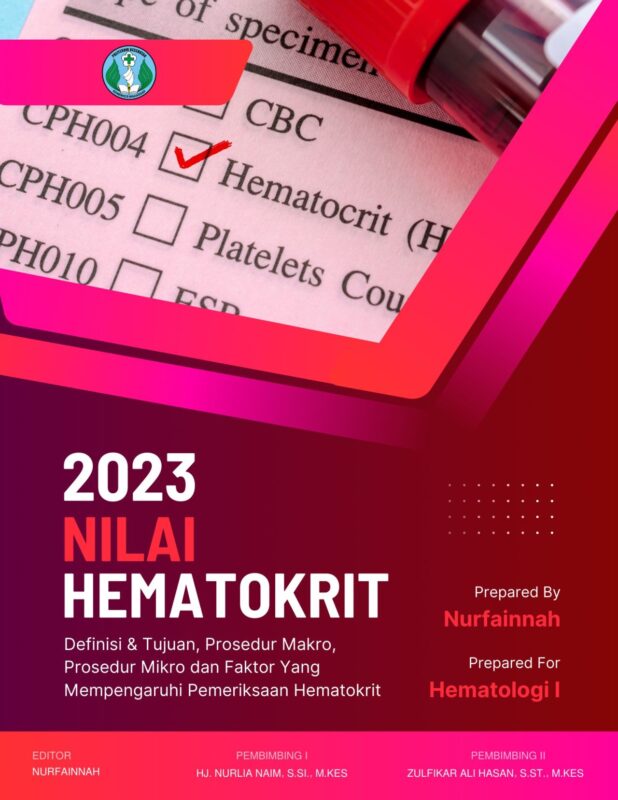
Nurfainnah: Hematocrit Test — Back to the Basics, But Make it Meaningful
Nurfainnah, Laboratory Analyst at Laboran Resource Hub, shared on LinkedIn:
”Hematocrit Test — back to the basics, but make it meaningful.
I would like to share the e-module “Hematocrit Test” that I compiled during my studies in Medical Laboratory Technology
This module discusses one of the basic hematology tests that seems simple but is very decisive in interpreting the clinical condition of patients, including:
• Definition and purpose of hematocrit testing
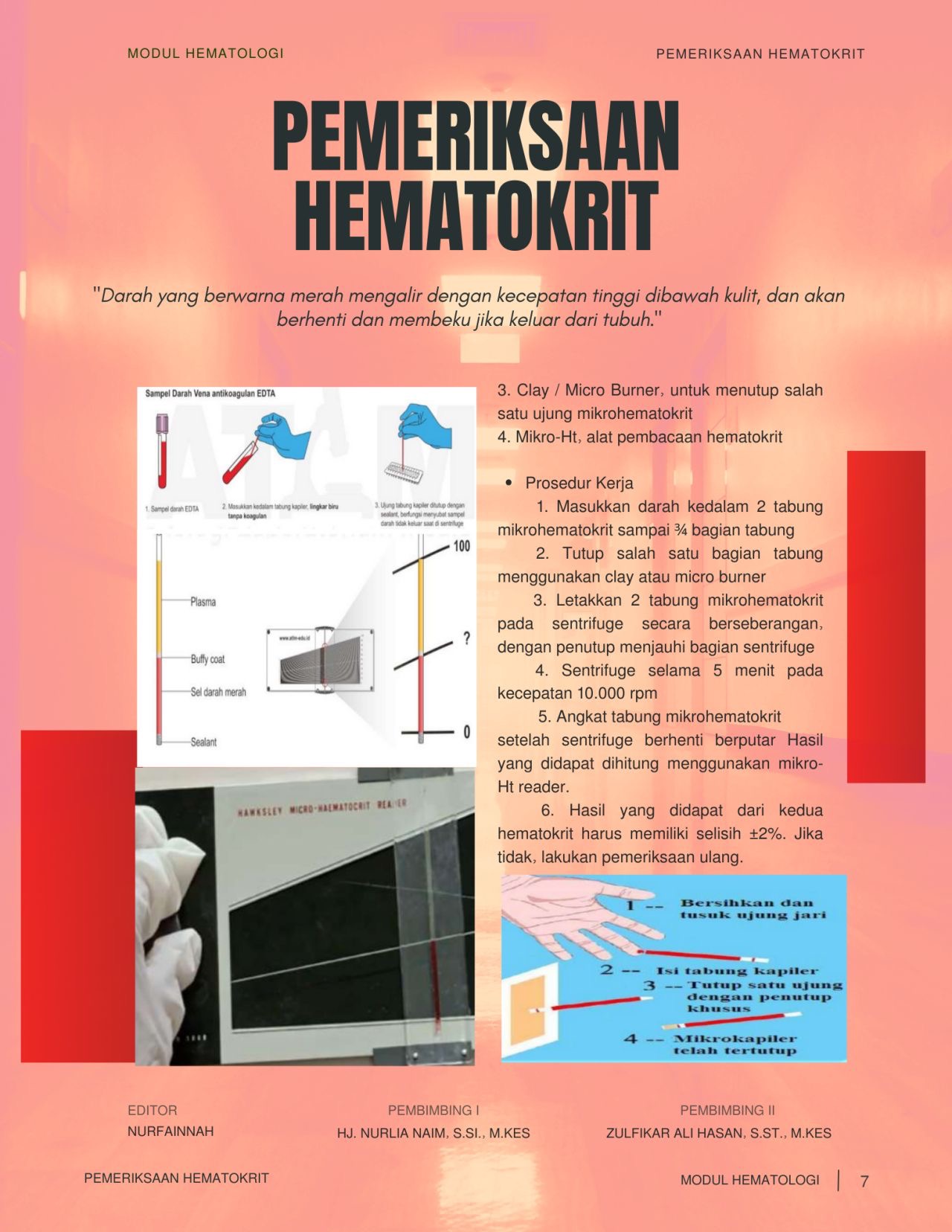
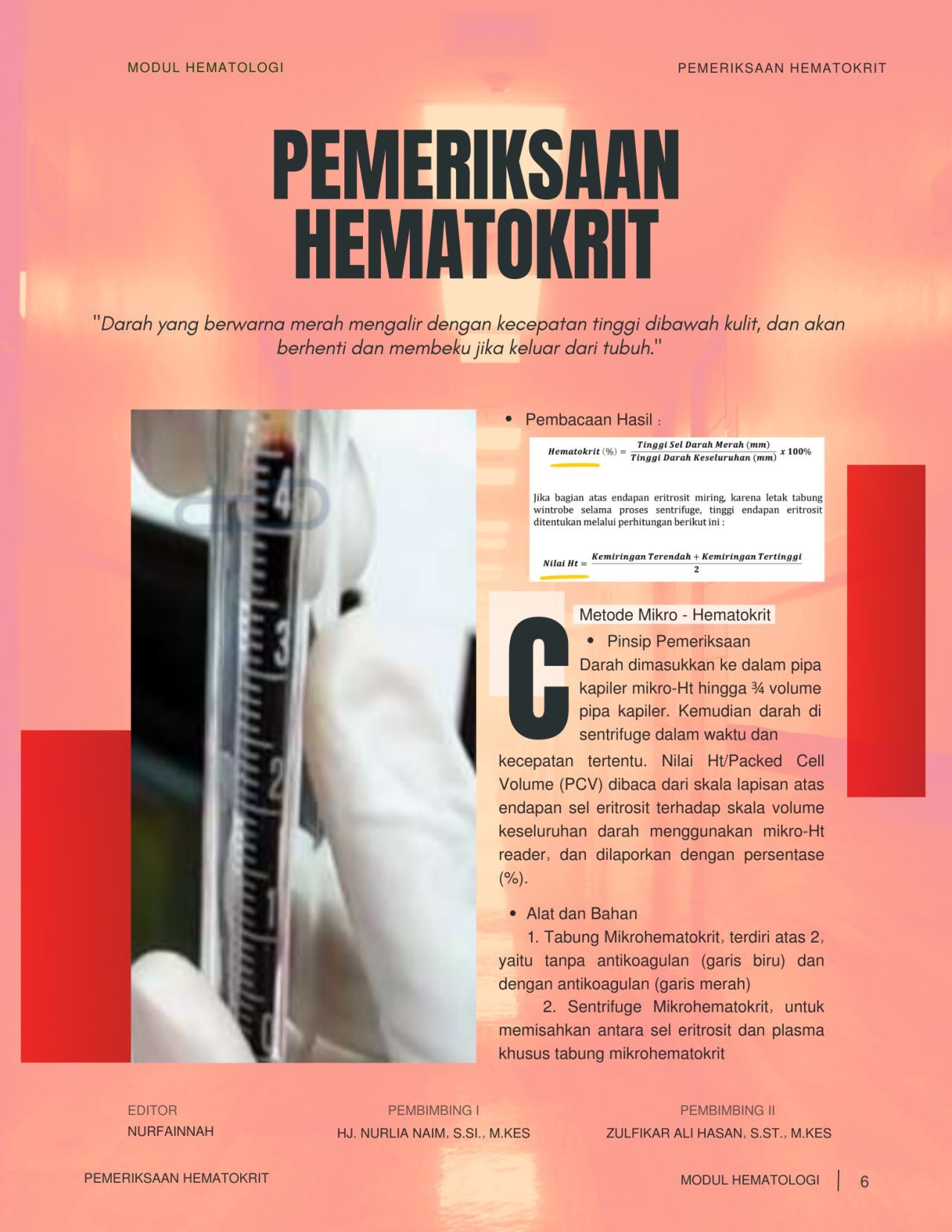
• Macro and micro hematocrit methods
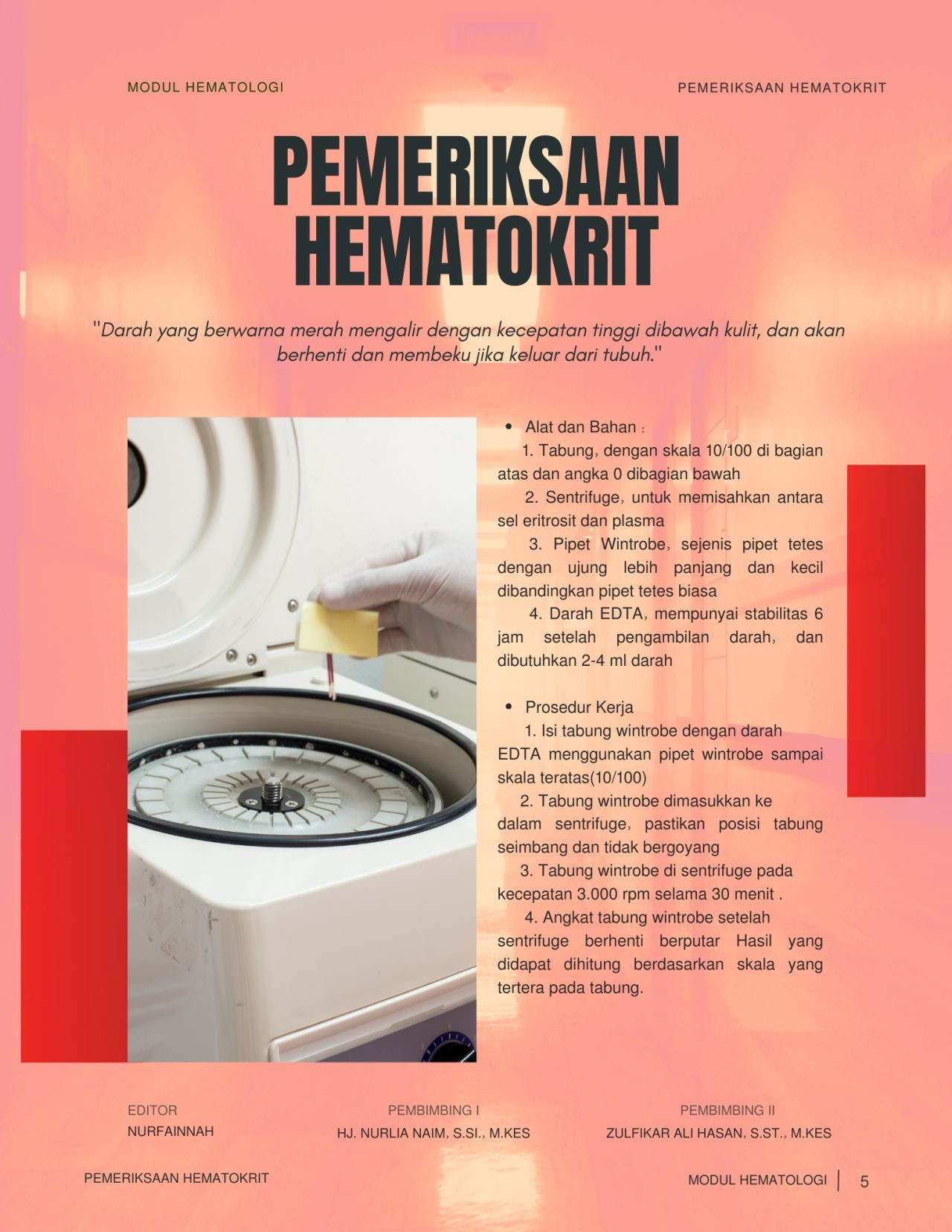
• Principles, tools, and testing procedures
• Normal values and clinical significance of hematocrit results
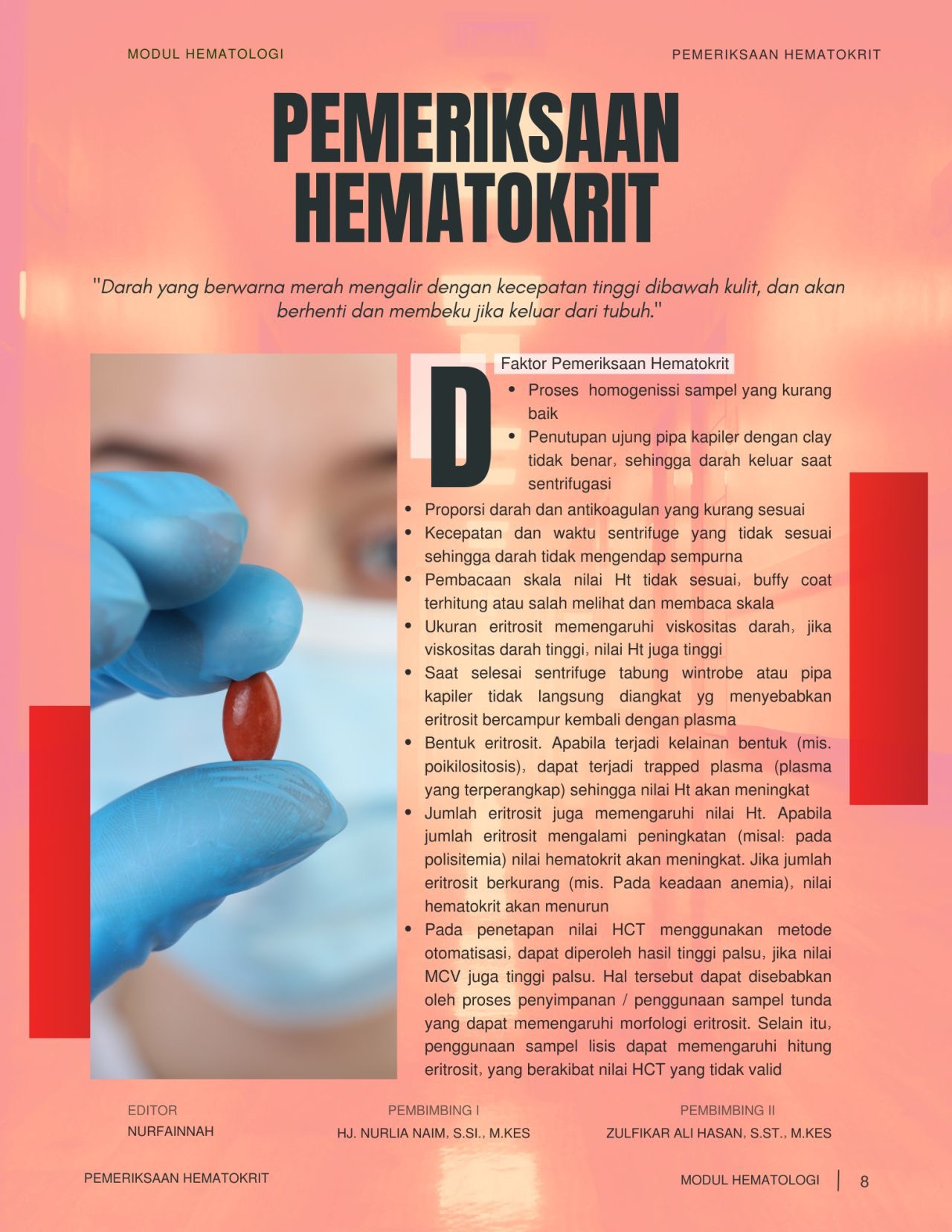
• Factors that affect test results
Sometimes, a simple percentage can tell a bigger story about hydration status, anemia, or erythrocyte disorders.
We hope this module can be a useful reference for those of you who are studying hematology, preparing for laboratory practice, or simply refreshing your knowledge
Let’s keep learning, sharing, and growing in laboratory science.”
Stay updated with Hemostasis Today.
-
Oct 20, 2026, 16:51Suzan Nakasendwa: A Growing Stroke Challenge in Uganda
-
Oct 20, 2026, 16:38Steve Moon: How Does Smoking Cessation Duration Affect Ischemic Stroke Risk
-
Oct 20, 2026, 16:25Cedrice Mentor: Reducing Platelet Wastage Through Cold Storage
-
Oct 20, 2026, 16:09Thirunavukkarasu Angappan: Can a Purified Fibrinogen Concentrate Replace Cryoprecipitate
-
Oct 20, 2026, 16:01Kalyan Roy: Platelet Conservation Through Evidence-Based Transfusion Practice
-
Oct 20, 2026, 15:28Stacy E. Croteau: 33 Countries, One Mission – Better Bleeding Disorder Care
-
Oct 20, 2026, 15:19Teresa Barnes: What Does a Pulmonary Embolism Mean for Jalen Hurts?
-
Oct 20, 2026, 15:04Laura S.: Could Speaking Up Prevent Maternal Deaths from Thrombosis?
-
Oct 20, 2026, 14:44Pete Stibbs: VTE in Professional Athletes – When Fitness Is Not Enough