

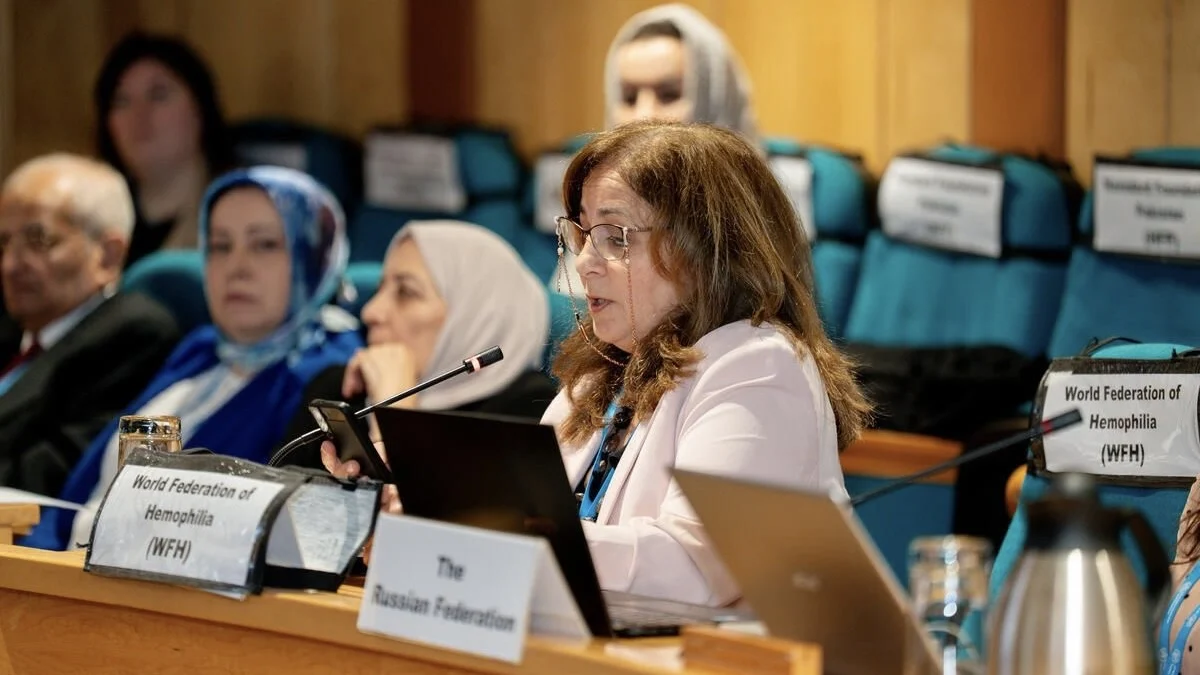
Rana Saifi: An Exciting Time for the Bleeding Disorders Community
Rana Saifi, Regional Manager of Middle East at World Federation of Hemophilia, shared World Federation of Hemophilia’s post on LinkedIn, adding:
“Exciting time for the bleeding disorders community with this high level advocacy led by WHO Member States and supported actively by the WFH.”
Quoting World Federation of Hemophilia’s post:
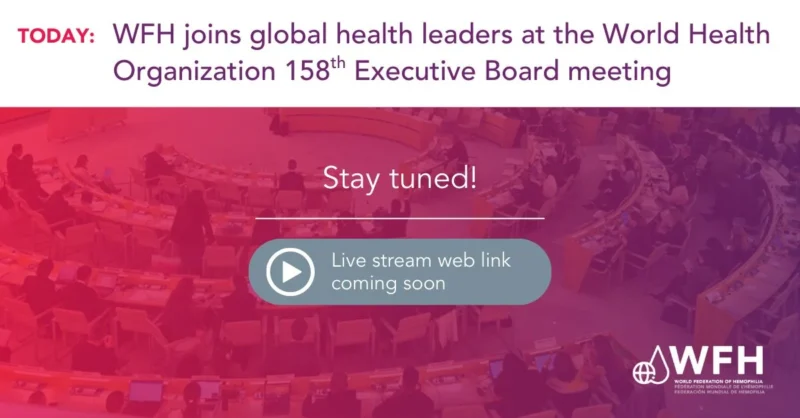
“Today, the World Federation of Hemophilia joins global health leaders at the World Health Organization 158th Executive Board meeting in Geneva EB158, where a landmark Member State-led resolution on Global Action to Advance Health Equity for People with Hemophilia and Other Bleeding Disorders is on the agenda.
This resolution is led by Armenia with co-sponsorship by Bosnia & Herzegovina, Egypt, Georgia, Iraq, Latvia, Malta, Morocco, Nepal, Paraguay, Spain, Sri Lanka and Togo.
The draft resolution text can be viewed on the WHO EB158 website.
Follow us on our social media channels today, as we will share WHO EB158 live streaming web-link, as the discussion on this resolution is planned to take place later today Treatment For All.”
More posts featuring Rana Saifi.
-
Sep 30, 2026, 14:13Ashok Choudhury: Portal Vein Thrombosis and Outcomes in Cirrhosis
-
Sep 30, 2026, 13:57Leslye Conde Bazán: When Conventional Imaging Is Not Enough – The Role of IVUS
-
Sep 30, 2026, 13:41Huda Salah Eldin: The Challenge of Balancing Antithrombotic Therapy After PCI
-
Sep 30, 2026, 13:29Abdus Salam: What Can CT Venography Reveal About the Veins?
-
Sep 30, 2026, 13:03Amira Mohy: Diagnostic Flow Cytometry Panels for Hematological Malignancies
-
Sep 30, 2026, 12:52Paul Watton: Could Repetitive Head Impacts Leave a Molecular Memory?
-
Sep 30, 2026, 12:41The Journey to ISTH 2027 Starts in Vancouver
-
Sep 30, 2026, 11:36Basit Ali: A Closer Look at CT Venography
-
Sep 30, 2026, 11:16Christina Pohlman: Could aPL Levels Help Predict Stroke Recurrence?