

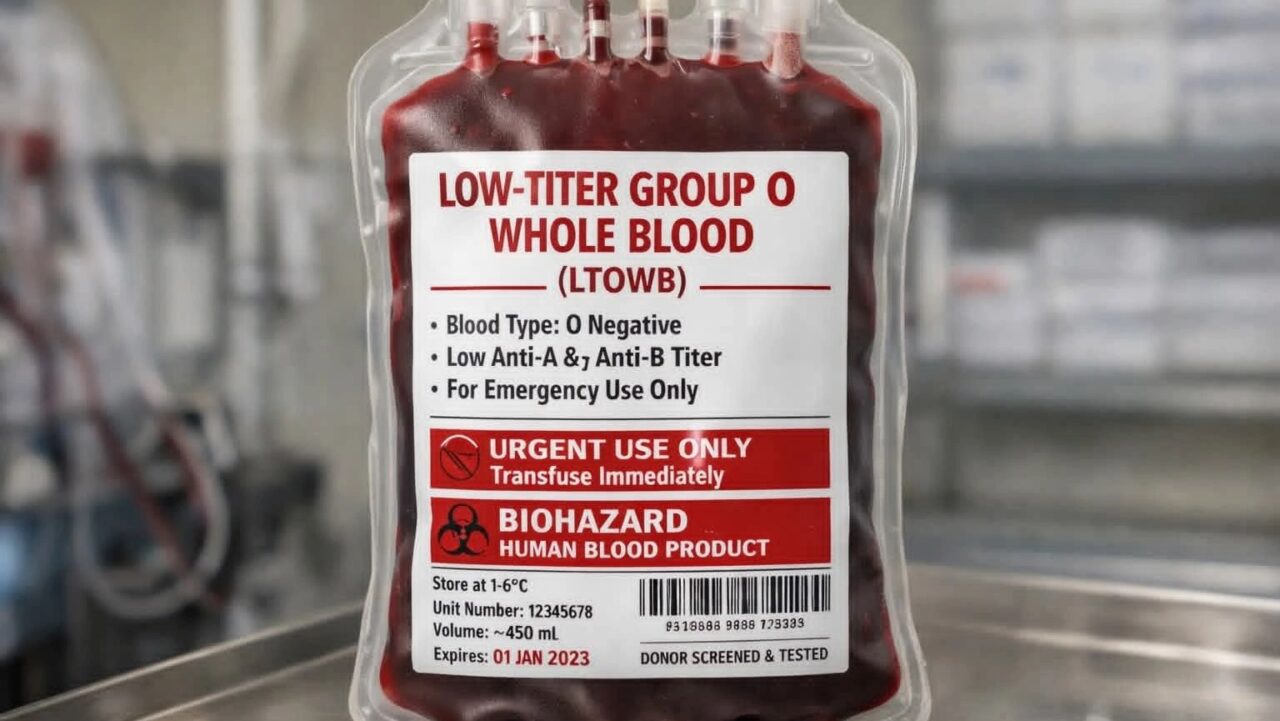
Dr. Tareq Abadl: Low-Titer Group O Whole Blood – Faster, Simpler Resuscitation for Severe Hemorrhage
Tareq Abadl, Medical Laboratory Specialist and Director of the Blood Bank at Dr. Abdelkader Al-Mutawakkil Hospital, shared a post on LinkedIn:
“Low-Titer Group O Whole Blood (LTOWB)
Faster, simpler resuscitation for severe hemorrhage
What it is
Whole blood from low-titer group O donors, containing RBCs + plasma + platelets in a single unit. Can be issued immediately when patient blood type is unknown—critical in massive bleeding.
Why it matters in trauma care?
- Speed: One product, rapid release → shorter time to first transfusion
- Physiology: Delivers balanced hemostatic resuscitation from the start
Evidence: Observational studies and cohort analyses link earlier LTOWB with lower early mortality and faster resuscitation vs component therapy
- Operational advantages
- Simplified logistics: Replace multiple components with one unit
- Prehospital-ready: Suits EMS, aeromedical, and austere settings
- Inventory efficiency: Streamlined storage and deployment pathways
Safety and evidence status
Reassuring safety signals in civilian use so far
Ongoing RCTs clarifying superiority vs equivalence to components
- Key policy decisions:
Anti-A/B titer thresholds
Leukoreduction strategy
Hemovigilance and outcome tracking
Supply balance to avoid shortages
- Practical implementation notes
- Define indications: Major hemorrhage, prehospital trauma, MTP entry
- Specify product: Titer limits, leukoreduction (if used), storage conditions
- Train teams: Ordering, handling, documentation (ED, OR, EMS)
- Coordinate early: Transfusion committee + regional blood services
Bottom line
LTOWB is a pragmatic, evidence-informed tool that shortens time to transfusion and simplifies hemorrhage resuscitation. It complements—not replaces—component therapy. Adoption should be guided by local epidemiology, supply logistics, and formal policy.
Read more from Dr. Tareq Abadl on Hemostasis Today.
-
Oct 7, 2026, 16:44Amor Salah: 2026 NCS/SCCM Guidelines for Managing Antithrombotic-Associated ICH
-
Oct 7, 2026, 16:04NETs in Thrombosis: From Mechanism to Therapeutic Target
-
Oct 7, 2026, 15:28Amir Samimi: Prognostic Value of Platelet Count in Resected HNSCC
-
Oct 7, 2026, 15:21Eloïse Laouenan: Bridging Immunity and Thrombosis in MVTE
-
Oct 7, 2026, 15:10Uthra Sundaram: Honouring Donors During International Plasma Awareness Week
-
Oct 7, 2026, 15:04Daniel Victor Ortigoza: Should Frail Older Patients With AF Switch From VKA to DOACs?
-
Oct 7, 2026, 14:53Susan Noone: Donor Turned Recipient Shares Lifesaving Transfusion Story
-
Oct 7, 2026, 14:49Aimee Burtenshaw: The Impact of the Infected Blood Inquiry on Hospital Transfusion Laboratories
-
Oct 7, 2026, 14:41Vikash Jaiswal: Does Timing Matter for Calcium in Pre-Eclampsia Prevention?