


Tushar Pandey on Managing Thrombotic Thrombocytopenic Purpura
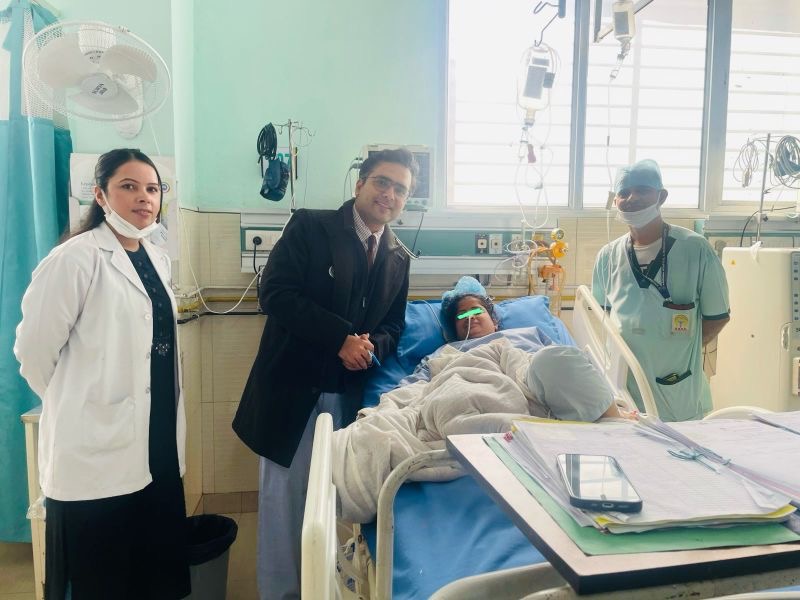
Tushar Pandey, Editorial Board Member at Journal of Cancer Chemotherapy, shared on LinkedIn:
”Managing Thrombotic Thrombocytopenic Purpura (TTP):
Where Speed, Systems, and Specialized Expertise Save Lives
The patient presented in a critically ill state with:
- Altered sensorium
- Generalized seizures
- Jaundice
Recognizing the severity, a rapid and comprehensive clinical, radiological, and laboratory evaluation was initiated within hours of presentation.
This enabled prompt diagnosis of Thrombotic Thrombocytopenic Purpura (TTP), a life-threatening hematological emergency.
What made the difference
- Immediate initiation of therapeutic plasma exchange (PLEX)
- High-dose immunosuppression
- Early integration of immunotherapy
- Continuous neurological and biochemical monitoring
- ICU-based, hematology-led decision-making
This was not reactive medicine.
This was planned, systematic execution by a world-class hematology team.
Multidisciplinary Excellence
Successful TTP management is never a single-department effort. I acknowledge the outstanding active participation of:
- Nephrology
- Neurology
- Critical Care and Transfusion teams, providing round-the-clock support
All teams worked in perfect synchrony from the first hour.
Outcome
Despite a high-risk and stormy course, the patient improved steadily. Platelet counts recovered, hemolysis resolved, neurological status stabilized, and she was discharged home safely.
What this case represents
World-class hematology emergency care
Expertise in ICU-level hematological crises
Early diagnosis plus early treatment equals survival
International-standard Hematology, Hemato-Oncology, and BMT care in Haldwani
As Head of Hematology, Hemato-Oncology, and BMT at Raghav Institute of Hematology, Hemato-Oncology and BMT, Haldwani, I can confidently say this case reinforces one truth:
When expertise leads early, lives are saved.”
Stay updated with Hemostasis Today.
-
Sep 30, 2026, 11:36Basit Ali: A Closer Look at CT Venography
-
Sep 30, 2026, 11:16Christina Pohlman: Could aPL Levels Help Predict Stroke Recurrence?
-
Sep 30, 2026, 10:55Rana Al Hrout: Diagnostic Approach to Hypochromic Microcytic Anemia
-
Sep 30, 2026, 01:52Javed Anees: DADA2 – When a Young Stroke Is More Than a Stroke
-
Sep 30, 2026, 01:51How a Venous Thrombus Becomes Revascularized – ISTH
-
Sep 29, 2026, 22:45Victor Agunyego: Paracetamol – The Most Common Drug We Underestimate
-
Sep 29, 2026, 22:42Nova Sinclair: Advancing the Future of Hematology – Meet Our 2027 Organizing Committee
-
Sep 29, 2026, 22:41Lorenz Räber: Intracoronary Imaging in PCI – Why, When, How, and Which Modality?
-
Sep 29, 2026, 22:31Selma Turkovic: Pleased to Deliver the Opening Presentation at Kingston Hospital