

Ahmad G. Alzahrani: AF and Vascular Risk Factors – Should We Add Antiplatelet Therapy?
Ahmad G. Alzahrani, Consultant in Internal Medicine, shared a post on LinkedIn:
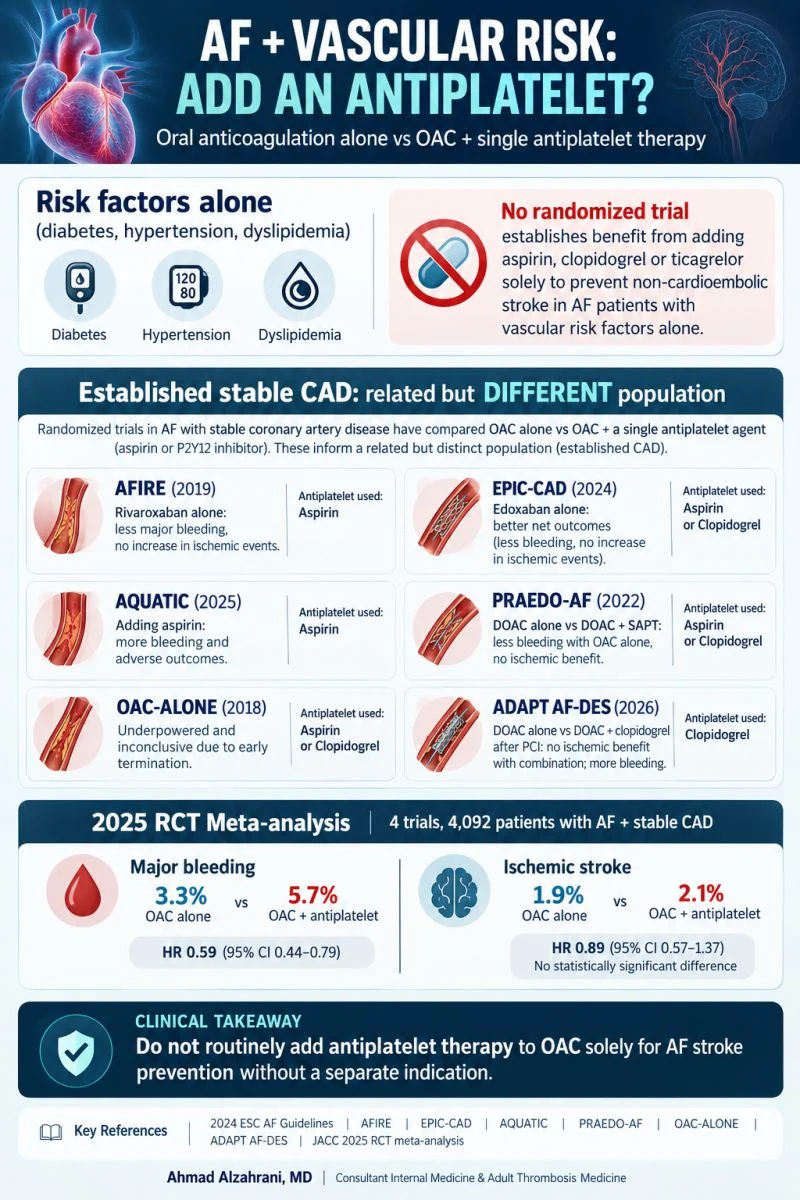
“Atrial Fibrillation and Vascular Risk Factors: Should We Add Antiplatelet Therapy?
“In patients with AF receiving therapeutic anticoagulation, does adding aspirin, clopidogrel, or another antiplatelet reduce the risk of non-cardioembolic ischemic stroke?
The evidence says: Not routinely.
What do randomized trials show?
Most evidence comes from AF patients with established stable coronary artery disease (CAD), rather than vascular risk factors alone.
- AFIRE (2019): Rivaroxaban alone was noninferior for composite efficacy outcomes and reduced major bleeding.
- EPIC-CAD (2024): Edoxaban monotherapy improved net clinical outcomes, primarily by reducing bleeding.
- AQUATIC (2025): Adding aspirin to anticoagulation increased bleeding and adverse outcomes.
- OAC-ALONE, PRAEDO-AF and ADAPT AF-DES: Additional randomized evidence, with varying designs and limitations.
Pooled evidence (2025 Meta-analysis, 4 RCTs; n equals 4,092)
- Major bleeding: 3.3% vs 5.7% (HR 0.59), favoring OAC alone.
- Ischemic stroke: 1.9% vs 2.1% (HR 0.89), with no statistically significant difference.
2024 ESC AF Guidelines
- Adding antiplatelet therapy to oral anticoagulation solely to prevent ischemic stroke or thromboembolism is not recommended (Class III, Level B).
Clinical Takeaway
In AF patients with hypertension, diabetes, or dyslipidemia, optimize anticoagulation and vascular risk factors rather than routinely adding antiplatelet therapy.
If ischemic stroke occurs despite anticoagulation, investigate the mechanism-including large-artery atherosclerosis, small-vessel disease, adherence, and DOAC dosing-before changing treatment.
A stroke on anticoagulation is not automatically anticoagulation failure.
More antithrombotic therapy does not necessarily mean better stroke prevention.
Even if imaging suggests a lacunar or large-artery infarction, the stroke mechanism may not be definitively established by imaging alone. Vascular imaging, infarct distribution, cardiac evaluation, and clinical context remain important.
The 2021 AHA/ASA secondary stroke prevention guideline states that combining antiplatelet and anticoagulation therapy is generally not indicated for secondary stroke prevention, with limited exceptions. The 2024 ESC AF guideline similarly discourages adding antiplatelet treatment solely to prevent thromboembolism.”
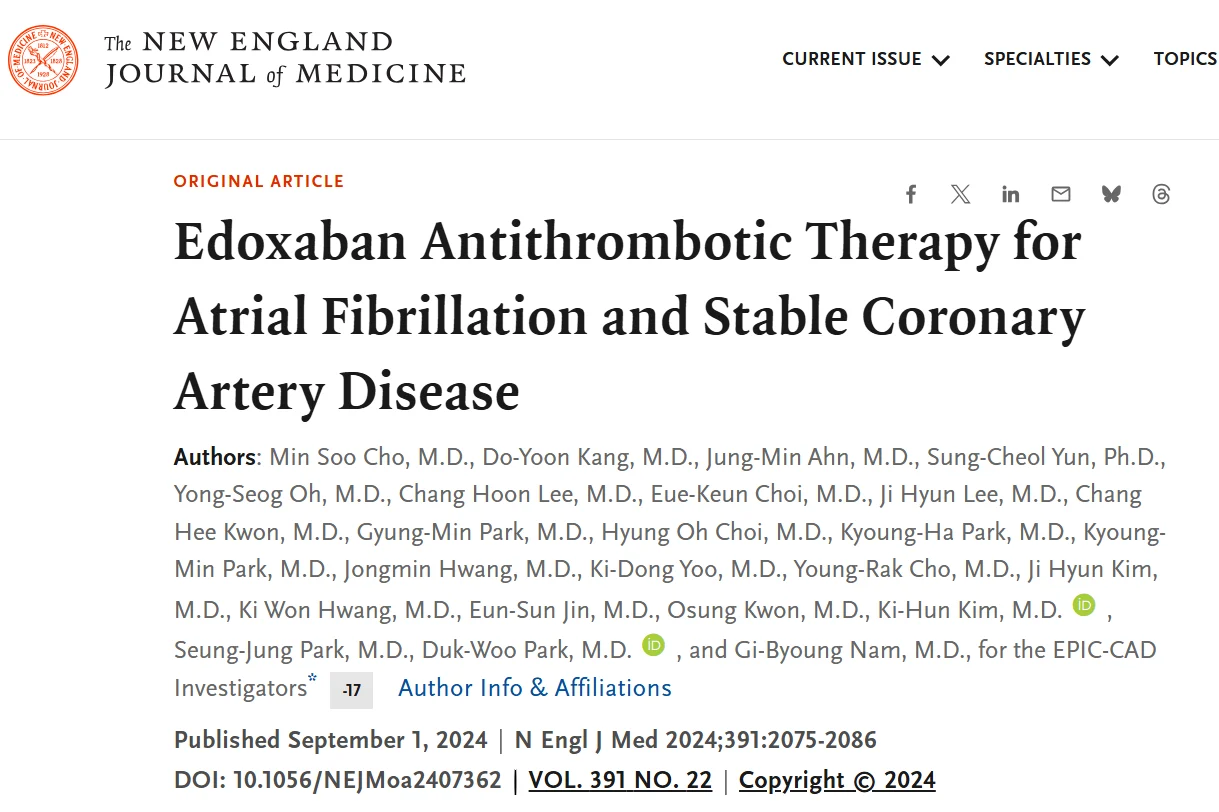
Title: Edoxaban Antithrombotic Therapy for Atrial Fibrillation and Stable Coronary Artery Disease
Authors: Min Soo Cho, Do-Yoon Kang, Jung-Min Ahn, Sung-Cheol Yun, Yong-Seog Oh, Chang Hoon Lee, Eue-Keun Choi, Ji Hyun Lee, Chang Hee Kwon, Gyung-Min Park, Hyung Oh Choi, Kyoung-Ha Park, Kyoung-Min Park, Jongmin Hwang, Ki-Dong Yoo, Young-Rak Cho, Ji Hyun Kim, Ki Won Hwang, Eun-Sun Jin, Osung Kwon, Ki-Hun Kim, Seung-Jung Park, Duk-Woo Park, Gi-Byoung Nam
Read the Full Article on NEJM
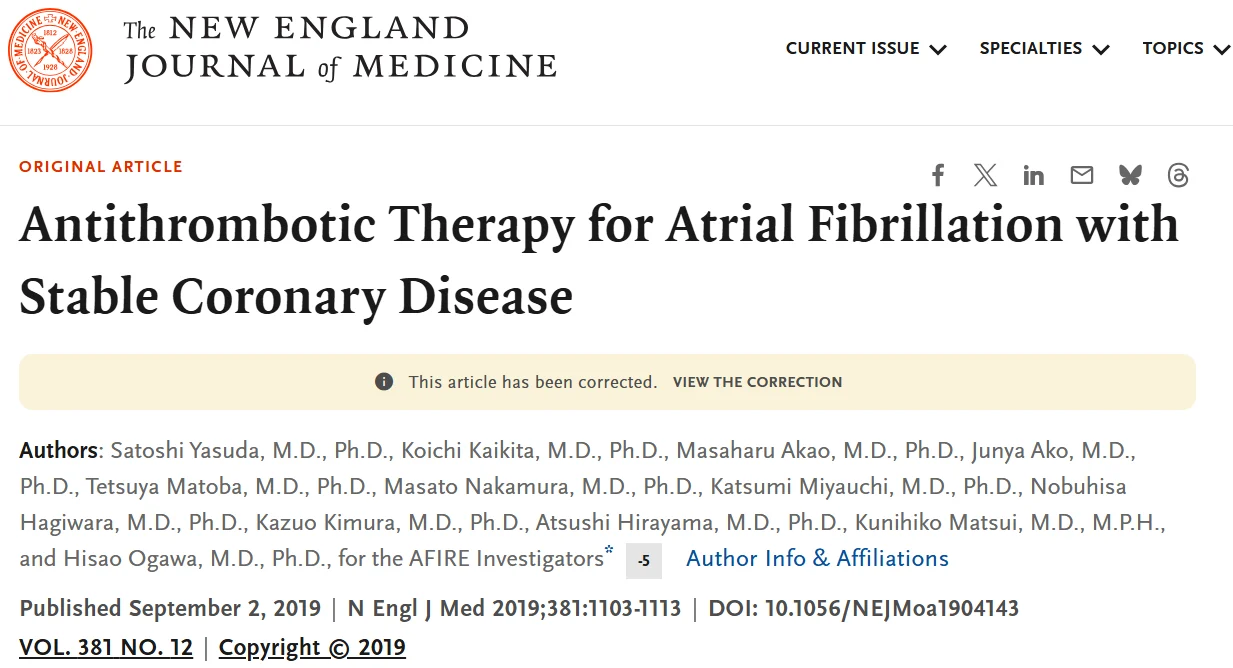
Title: Antithrombotic Therapy for Atrial Fibrillation with Stable Coronary Disease
Authors: Melissa Barlow, Liz Down, Luke T A Mounce, Samuel W D Merriel, Jessica Watson, Tanimola Martins, Sarah E R Bailey
Read the Full Article on NEJM
Stay updated with Hemostatis Today.
-
Oct 27, 2026, 16:02Iron Deficiency and Thrombocytosis: How Iron Availability Shapes Hematopoietic Lineage Decisions
-
Oct 27, 2026, 15:46Christiane Berger-Schaffitzel: New PhD Project Explores Snake Venom and Haemostasis
-
Oct 27, 2026, 13:51Muhammed Hajmusa: ESMO 2026 Highlights the Challenge of Anticoagulation in ROS1-Positive Lung Cancer
-
Oct 27, 2026, 13:39Luca Galassi: Retrieved Venous Thrombi as a Tool for Predicting Post-Thrombotic Syndrome
-
Oct 27, 2026, 11:43Tareq Abadl: Hidden Interferences Behind Unexpected Laboratory Results
-
Oct 27, 2026, 11:42Cece Calhoun: ASH Promotes Clinical Research Training and Mentorship for Emerging Hematologists
-
Oct 27, 2026, 11:41Ifeanyichukwu Ifechidere: The Laboratory Challenges of Measuring Direct Factor Xa Inhibitors
-
Oct 27, 2026, 11:39Gene Therapy Offers New Possibilities for Patients with Thalassaemia in the UAE – Thalassaemia International Federation
-
Oct 27, 2026, 11:35Alan Nurden: rFVIIa Prophylaxis May Reduce Bleeding-Related Healthcare Burden in Glanzmann Thrombasthenia