


David McIntosh: Immunoglobulin Stewardship in the Face of Rising Demand
David McIntosh, Founder and Chair of United Plasma Action, shared Umair Majid’s post on LinkedIn:
“This interesting post comes to us from a national Healthcare system that achieves levels of Immunoglobulin availability second to none and hugely more ample than the global average.
(Over 300gms per yr per thousand population, compared with less than 20gms.)
It seems particularly significant therefore that even with this comparatively very high availability, Canadian clinicians still regard Immunoglobulin as a scarce resource, to be husbanded with great care.
For the guidance of decision-makers in other lands, it will be interesting to see what conclusions emerge from analyses and comparisons of this kind.
Some tens of millions of patients’ lives may depend upon the outcome…”
Umair Majid, Benita M. Warmbold Research Fellow of Health System Innovation at Women’s College Hospital, shared a post on LinkedIn about a recent article he and his colleagues co-authored, published in PLOS One, adding:
“New Publication: How Physicians Manage Immunoglobulin in Canada.
I’m excited to share our new qualitative study published in PLOS One, conducted as part of my previous work with Canadian Blood Services.
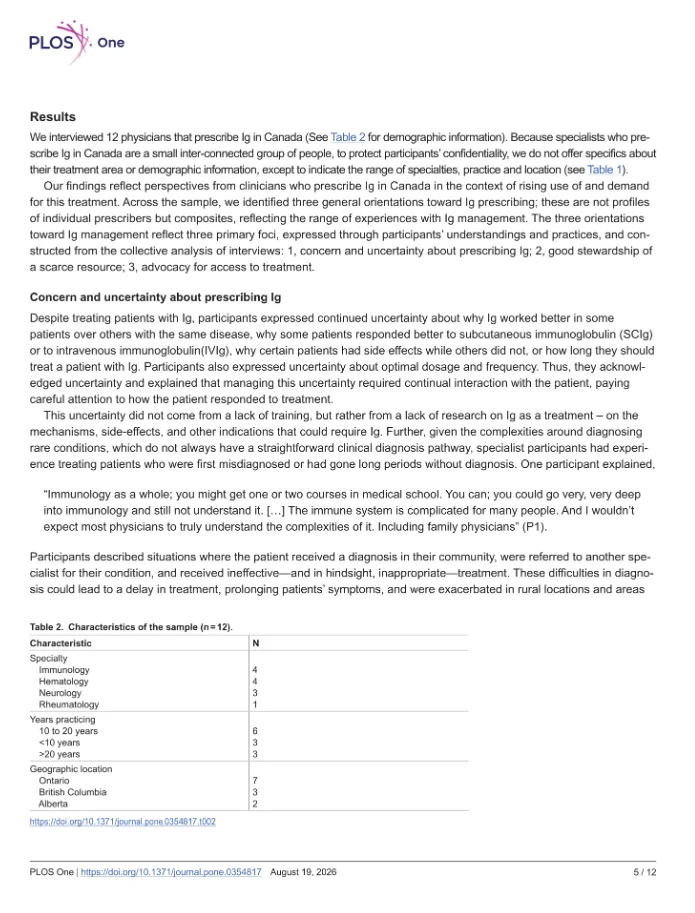
This is one of the first studies to explore how Canadian physicians navigate prescribing immunoglobulin (Ig) amid rising global demand, supply pressures, and growing costs.
1. Prescribing Ig involves real uncertainty.
Even experienced specialists face open questions about why some patients respond better than others, optimal dosing, and treatment duration.
This stems not from a lack of training but from gaps in research on this complex biologic therapy.
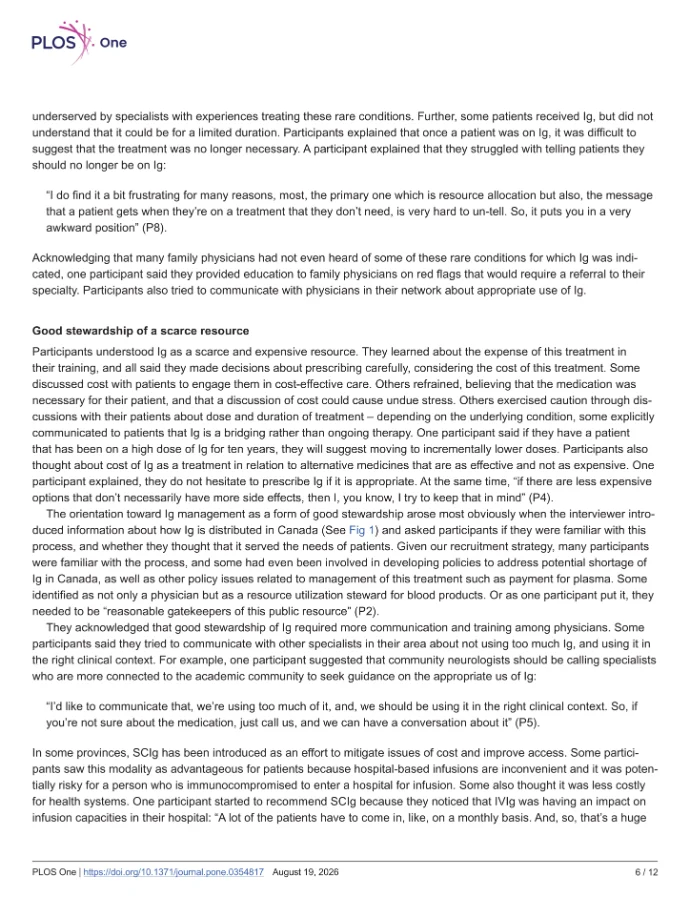
2. Physicians see themselves as stewards of a scarce public resource.
Participants described weighing cost, considering alternatives, and acting as ‘reasonable gatekeepers’ of the blood supply while still putting patient needs first.
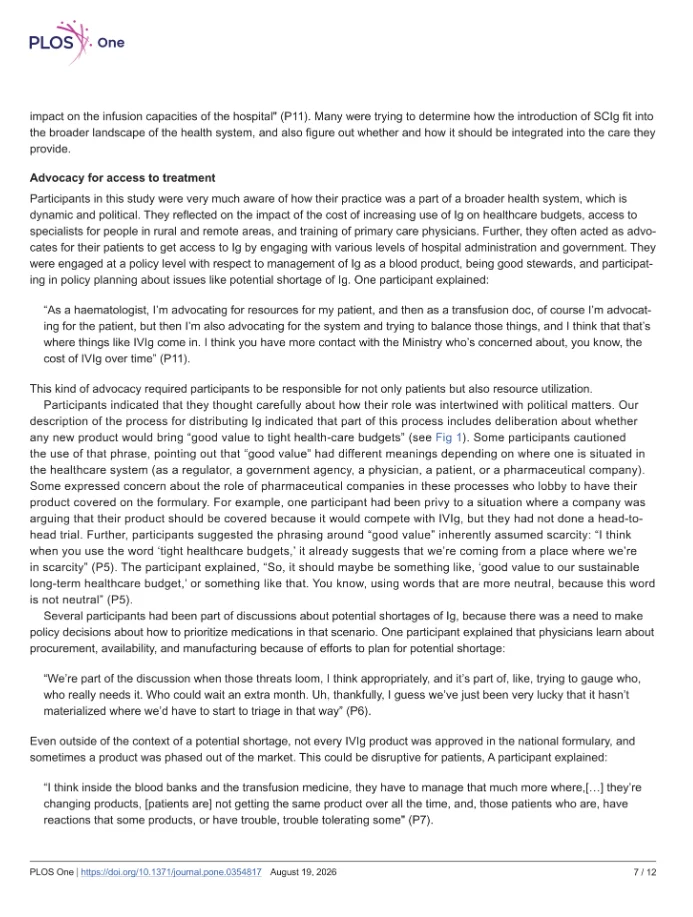
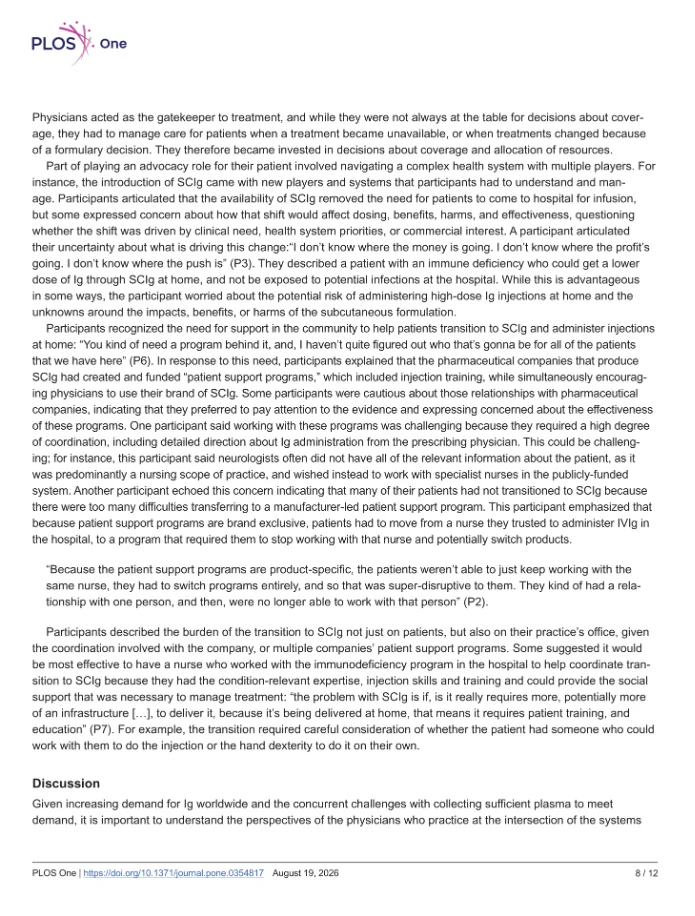
3. Advocacy is part of the job.
From engaging with hospital administration and government to navigating manufacturer-led patient support programs for subcutaneous Ig, physicians are deeply involved in the policy landscape that shapes access to treatment.
Our key message?
Rational, evidence-based prescribing matters, but a purely mechanistic approach may be inadequate.
Prescribing Ig is a socially situated practice shaped by patients, systems, and politics.
Thank you to co-authors Kelly Holloway and Quinn Grundy, and to the physicians who generously shared their time and insights.”
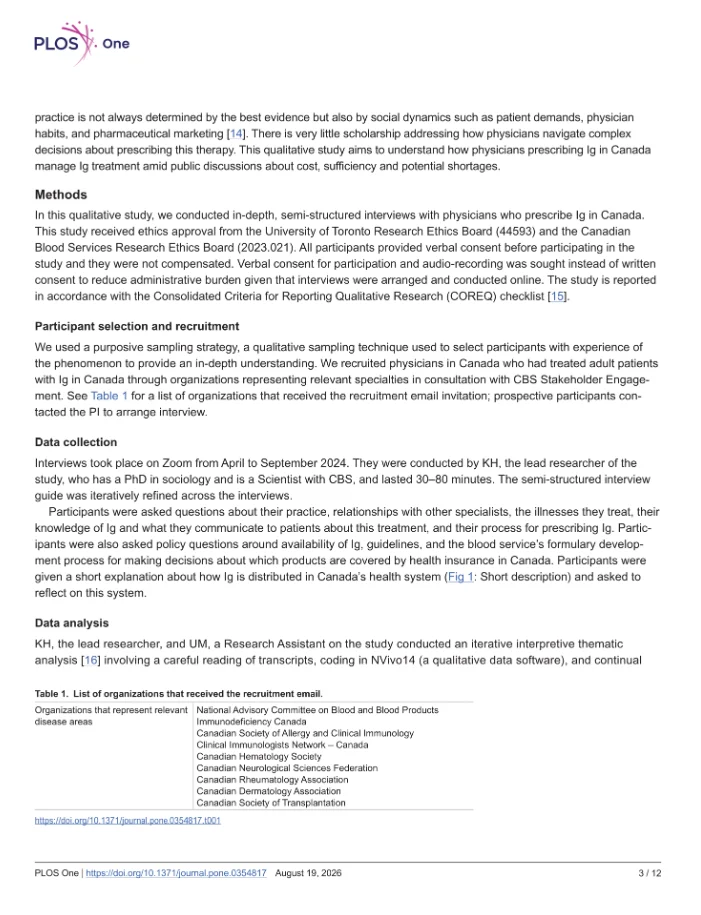
Title: Physician management of immunoglobulin in Canada: A qualitative study
Authors: Kelly Holloway, Umair Majid, Quinn Grundy

Stay updated on all scientific advances with Hemostasis Today.
-
Oct 11, 2026, 15:31Muhammad Alvi: CASPR Study Explores Treatment Response Across ESUS Phenotypes
-
Oct 11, 2026, 15:15Thalassaemia International Federation Joins ASCAT 2026 to Advance Sickle Cell and Thalassaemia Care
-
Oct 11, 2026, 15:14Challenges and Perspectives on Gene Therapy in Hemophilia A – Seminars in Thrombosis and Hemostasis
-
Oct 11, 2026, 15:07Neysa Rahardjo: Platelet Estimation Pitfalls and Discrepancy Resolution
-
Oct 11, 2026, 15:05Lance Trewhella: Reflections from the ASCLS Region V Fall Symposium
-
Oct 11, 2026, 15:04The Anti-Inflammatory Rationale for GLP-1 Agonists in Hemophilia – CRH French Reference Center for Hemophilia Lyon
-
Oct 11, 2026, 15:00Donja W.: Blood Shortages Aren’t Just Statistics
-
Oct 11, 2026, 14:54Archil Jaliashvili: NHSBT Highlights Persistent Gaps in Matched Blood for Sickle Cell Patients
-
Oct 11, 2026, 14:46Sebastien Lobet: Physiotherapy and Joint Health Across the Spectrum of Bleeding Disorders