


Heghine Khachatryan: Navigating the Complexities of Pediatric VTE
Heghine Khachatryan, Editor-in-Chief of Hemostasis Today, Head of Hemophilia and Thrombosis Center at Yeolyan Hematology and Oncology Center, shared RPTH Journal‘s post on LinkedIn:
“Pediatric venous thromboembolism remains an important and sometimes underrecognized clinical challenge.
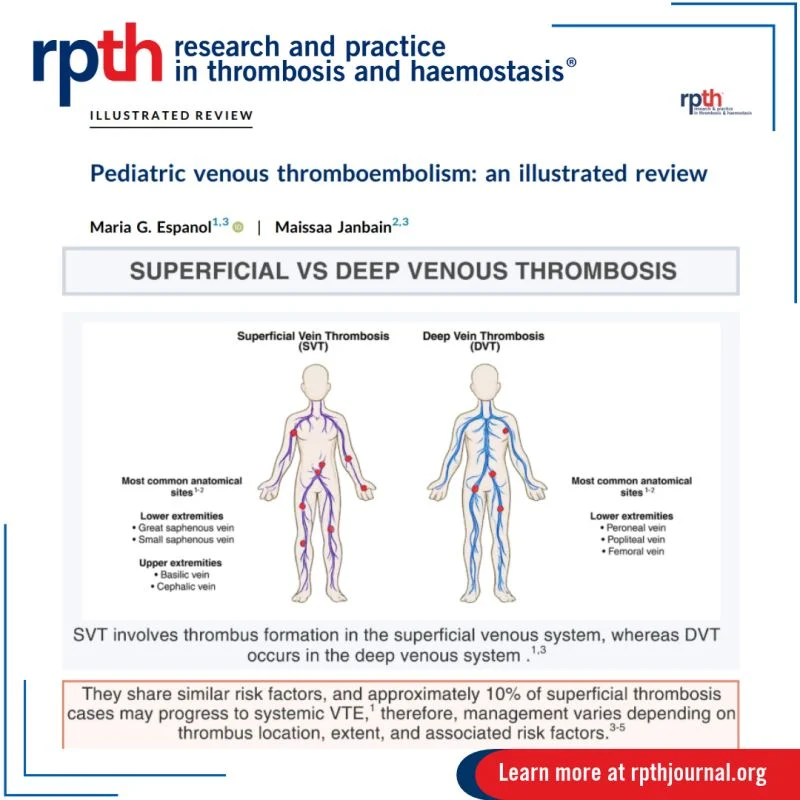
This illustrated review published in Research and Practice in Thrombosis and Haemostasis (RPTH) provides a clear and practical overview of pediatric VTE, including the differences between superficial and deep venous thrombosis, the most common anatomical sites, risk factors, and the potential for progression.
It is especially important to remember that thrombosis in children is often multifactorial and requires an individualized assessment, taking into account age, underlying conditions, the presence of central venous catheters, and other acquired or inherited risk factors.
At Hemostasis Today, we highly value the dissemination of educational resources like this, which help clinicians update their knowledge and connect current evidence with everyday clinical practice.”
RPTH Journal shared a post on LinkedIn about a recent article by Maria G. Espanol et al., adding:
“Blood clots in children: what every clinician should know in 2026
Venous thromboembolism (VTE) has long been considered a condition of adults, but its incidence in hospitalised children has risen significantly over recent decades.
Greater awareness, improved survival of children with complex medical conditions, and increasing use of central venous catheters have all contributed to this trend.
A new illustrated review in RPTH Journal by Maria Espanol and Maissaa Janbain presents and visualises the pathophysiology and current treatment options for VTE in the paediatric population.
Key highlights:
- Central venous catheters remain the most significant and common risk factor for paediatric VTE.
- Acquired conditions, infections, malignancies, cardiovascular disease, and inflammatory bowel disease, are also recognised risk factors.
- Early diagnosis is critical to prevent complications such as post-thrombotic syndrome.
- Current treatment approaches aim to improve outcomes, reduce long-term complications, and enhance treatment compliance.
Despite progress, long-term complications including post-thrombotic syndrome still occur with lasting impact on quality of life and healthcare burden.
As more children survive complex medical conditions, paediatric VTE will become an increasingly important clinical challenge. Advocating for early diagnosis and prompt treatment is essential to protect long-term outcomes in this vulnerable population.”
Title: Pediatric venous thromboembolism: an illustrated review
Authors: Maria G. Espanol, Maissaa Janbain
Other posts featuring Heghine Khachatryan and RPTH Journal on Hemostasis Today.
-
Sep 26, 2026, 06:44Emmanuel J Favaloro: A Century of von Willebrand Disease 2026 Virtual Issue
-
Sep 26, 2026, 05:12Saja Al-Zamili: Dual Antithrombotic Therapy After Ischemic Stroke in Atrial Fibrillation – A Meta-Analysis
-
Sep 26, 2026, 04:58Angelo Cascio Rizzo: Ischemic Stroke Phenotyping in ESUS – Insights from a Real-World Cohort
-
Sep 26, 2026, 03:11Alice Mihai: One Blood Donation, Three Lives Touched
-
Sep 26, 2026, 03:01Jensa Morris: Anticoagulation in Thrombocytopenia and Cancer-Associated Thrombosis
-
Sep 26, 2026, 02:37Alireza Arzhangzadeh: Antithrombotic Strategies in Coronary Artery Aneurysm, Ectasia, and Slow Flow
-
Sep 26, 2026, 02:15Sherif Mahmoud: Updated Guideline for Antithrombotic-Associated Intracranial Hemorrhage
-
Sep 25, 2026, 20:01Anand Gupta: Timing of DOAC Initiation in Newly Diagnosed Atrial Fibrillation
-
Sep 25, 2026, 19:56Steven Fein: A History of Blood Clots Doesn’t Mean a Healthy Pregnancy Is Out of Reach