

Jan Sloves Highlights New Protocol Making Transvaginal Ultrasound a Game-Changer for PeVD
Jan Sloves, President and Consultant at Vascular Imaging Professionals LLC, reposted Francine Freitas Fernandes’s post on LinkedIn:
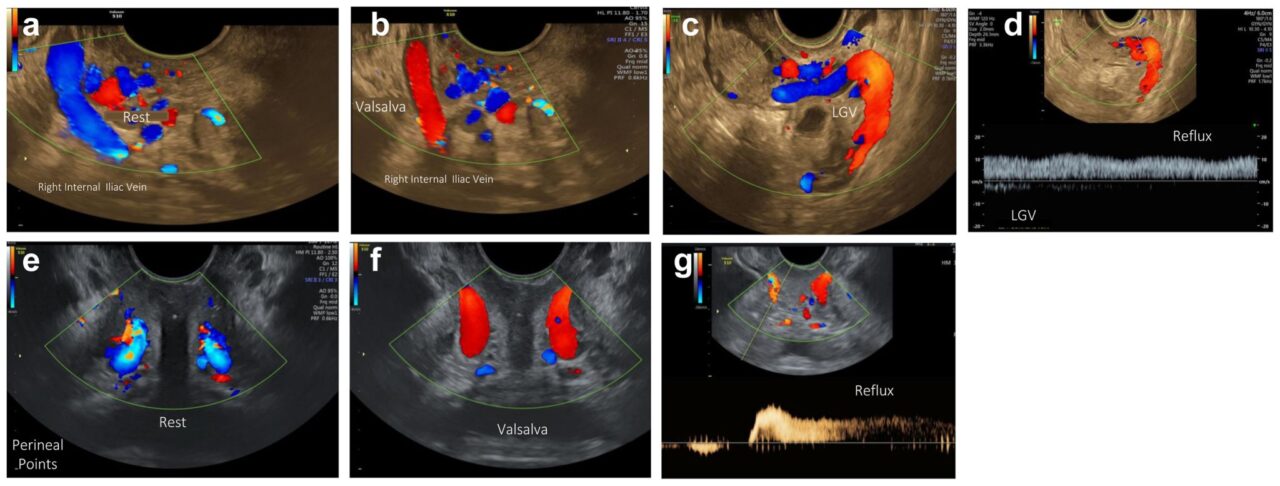
“We should all recognize the importance of precise, patient-centered imaging in the diagnosis and management of Pelvic Venous Disorders (PeVDs) and Chronic Pelvic Pain. The New JVSVL article lays out a Step-by-Step Protocol for Transvaginal Ultrasound (TVUS), offering a reproducible, practical method to assess pelvic veins and venous reflux, key contributors to pain & recurrent varicosities in women.
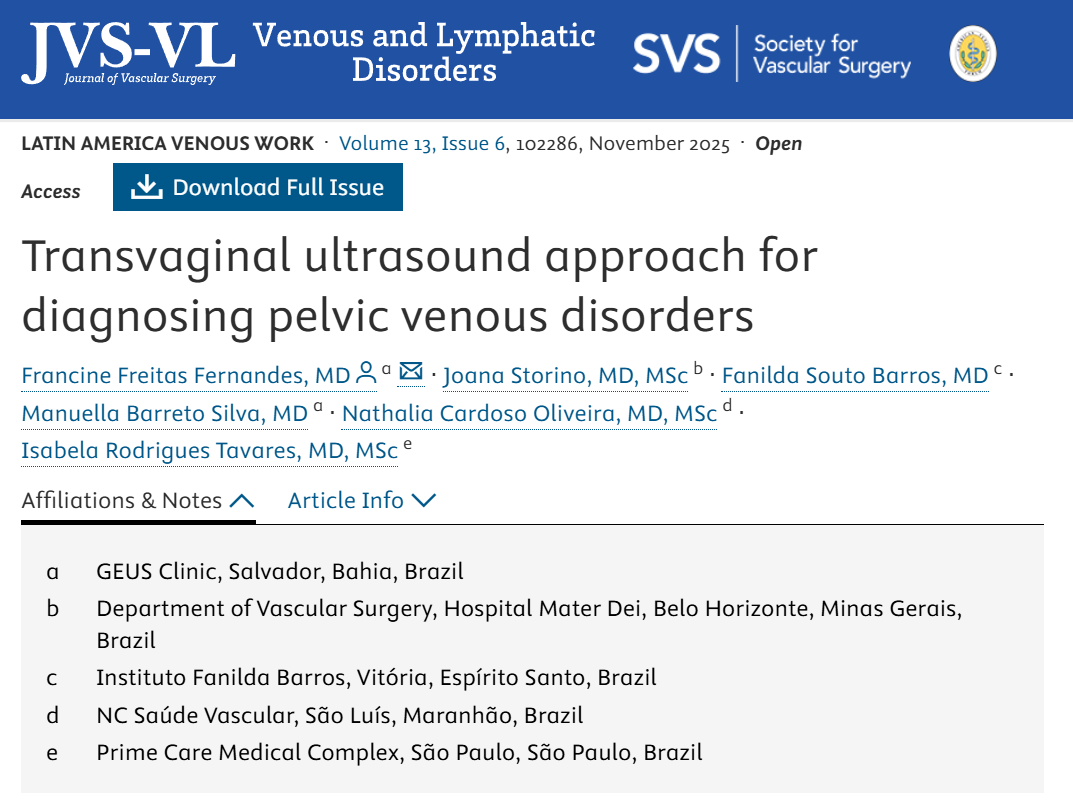
Title: Transvaginal ultrasound approach for diagnosing pelvic venous disorders
Authors: Francine Freitas Fernandes, Joana Storino, Fanilda Souto Barros, Manuella Barreto Silva, Nathalia Cardoso Oliveira, Isabela Rodrigues Tavares
Read full article here.
What Stands Out in this Work:
- TVUS enables real-time assessment of periuterine, perivaginal, gonadal, and iliac veins, with high sensitivity for reflux and post-thrombotic changes
- The protocol emphasizes provocative maneuvers (Valsalva, cough, pelvic floor contraction) to “bring out” hidden reflux that conventional imaging may miss
- This approach adds diagnostic value beyond standard transabdominal ultrasound, CT, or MR, especially for women with complex anatomy or recurrent lower limb varicosities
- TVUS’s operator-dependent challenges are offset by careful anatomical landmarking and dynamic Doppler techniques described in detail
- Crucially, PeVDs remain underdiagnosed, often presenting as pelvic pain, perineal heaviness, or even recurrent leg varicosities. Integrating TVUS into routine workups can help us close this gap and deliver targeted care
Bottom line: TVUS is a game-changer for vascular and interdisciplinary teams managing pelvic vein pathology in women. I encourage colleagues to review this protocol and consider its practical application in daily practice, particularly for complex venous patients who need more than a standard scan.
Improved imaging means improved outcomes!”
Quoting Francine Freitas Fernandes’s post:
“Excited to share our ultrasound images with the world! Journal of Vascular Surgery Venous and Lymphatic Disorders
TRANSVAGINAL ULTRASOUND is the apple of our eye when it comes to PELVIC VENOUS DISORDERS, an extremely valuable diagnostic tool!
It’s definitely worth incorporating into everyday clinical practice.”
Quoting Journal of Vascular Surgery Venous and Lymphatic Disorders’s post
“Do you treat pelvic venous disorders?! Then check out this article out of Brazil where authors present a step-by-step protocol for transvaginal US for assessing pelvic veins!
Stay updated with Hemostasis Today.
-
Oct 20, 2026, 05:20James Knowles: Exploring Plasma Manufacturing and Strengthening Industry Collaboration
-
Oct 20, 2026, 05:11Giuseppe Lippi։ Understanding Liver Test Abnormalities After AAV Gene Therapy
-
Oct 20, 2026, 05:02Sanam Loghavi: Test Your Hematology Knowledge at ASH 2026!
-
Oct 20, 2026, 04:13Ifeanyichukwu Ifechidere: DOACs Are Not the Answer to Every Anticoagulation Question
-
Oct 20, 2026, 04:04Sadia Kamal: Honored to Receive the Outstanding Abstract Award at the 20th Midwest Platelet Conference
-
Oct 20, 2026, 04:03Yu-Hsuan Chen: One Antibody, Two Diseases from FcRn Biology to Clinical Translation
-
Oct 20, 2026, 03:49Domenico Simone Castiello: Rethinking Prolonged DAPT in Multivessel PCI – Insights from the DAPT-MVD Trial
-
Oct 20, 2026, 03:37Rucha Patil: Scaling POC Diagnostics for Haemophilia A and VWD Across India
-
Oct 20, 2026, 03:31Zena Vexler: Targeting Neutrophil Elastase and NETosis to Mitigate Infection-Triggered Childhood Stroke