


Johnathan Whetstine: How Does MYC Go From 2 Copies to an Amplified Oncogene?
Johnathan Whetstine, Professor and Director Cancer Epigenetics Institute at Fox Chase Cancer Center, shared a post on LinkedIn about a recent article he and his colleagues co-authored, published in Molecular Cell, adding:
“Exciting Day!
How does MYC go from 2 copies to an amplified oncogene?
Excited to share our new publication out today in Molecular Cell investigating how epigenetic regulation controls the genesis and progression of MYC amplifications.
Our work identifies an important balance between two chromatin regulators:
- SETD2 restrains MYC copy gains.
- KDM4C promotes MYC over-replication and amplification.
- Loss of TP53/apoptotic surveillance allows these events to progress toward higher-level amplification, including ecDNA.
- Inhibiting KDM4C suppresses MYC amplifications.
Together, this work connects chromatin regulation, cell-death checkpoints, and oncogene amplification – and identifies potential opportunities for targeting MYC-amplified cancers.
A huge congratulations to the team and everyone who contributed to this study!”
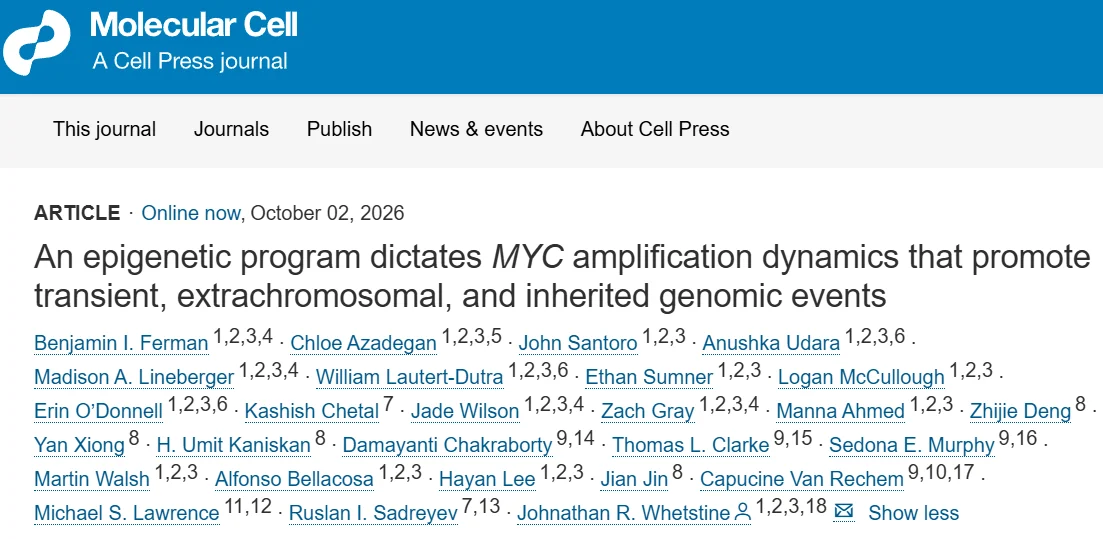
Title: An epigenetic program dictates MYC amplification dynamics that promote transient, extrachromosomal, and inherited genomic events
Authors: Benjamin I. Ferman, Chloe Azadegan, John Santoro, Anushka Udara, Madison A. Lineberger, William Lautert-Dutra, Ethan Sumner, Logan McCullough, Erin O’Donnell, Kashish Chetal, Jade Wilson, Zach Gray, Manna Ahmed, Zhijie Deng, Yan Xiong, H. Umit Kaniskan, Damayanti Chakraborty, Thomas L. Clarke, Sedona E. Murphy, Martin Walsh, Alfonso Bellacosa, Hayan Lee, Jian Jin, Capucine Van Rechem, Michael S. Lawrence, Ruslan I. Sadreyev, Johnathan R. Whetstine
Johnathan Whetstine, Professor and Director Cancer Epigenetics Institute at Fox Chase Cancer Center, shared his post on LinkedIn, adding:
“Hard to believe 1 week ago our research was published in Cell by Cell Press Molecular Cell and featured in The New York Times by Carolyn Johnson.
An absolutely amazing series of responses so thanks to all and thanks to all others highlighting our breakthrough discovery about how to amplify ecDNA MYC through direct epigenetic control.”
Title 1: Breakthrough Discovery: Controlling MYC Amplification in Cancer

Title 2: Epigenetic Switches That Drive MYC Gene Amplification in Aggressive Cancers
Authors: Juliet Wilcox

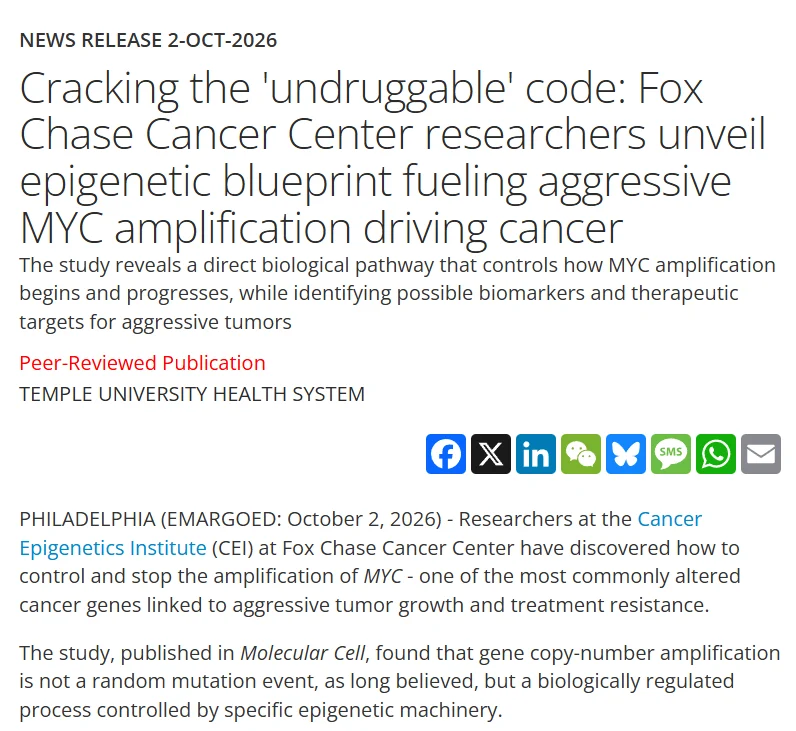
Title 3: Cracking the ‘undruggable’ code: Fox Chase Cancer Center researchers unveil epigenetic blueprint fueling aggressive MYC amplification driving cancer
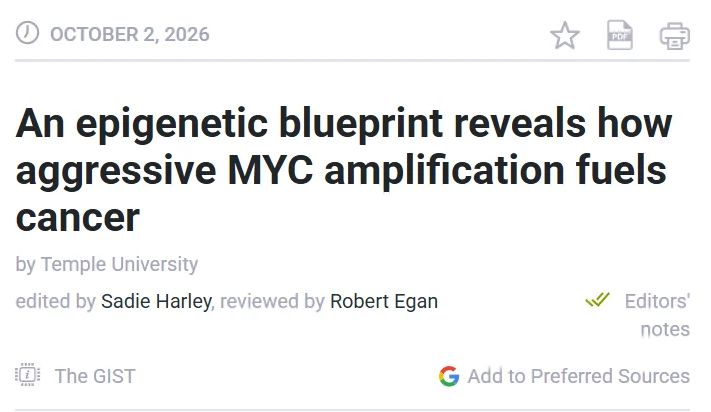
Title 4: An epigenetic blueprint reveals how aggressive MYC amplification fuels cancer
Authors: Sadie Harley, Robert Egan
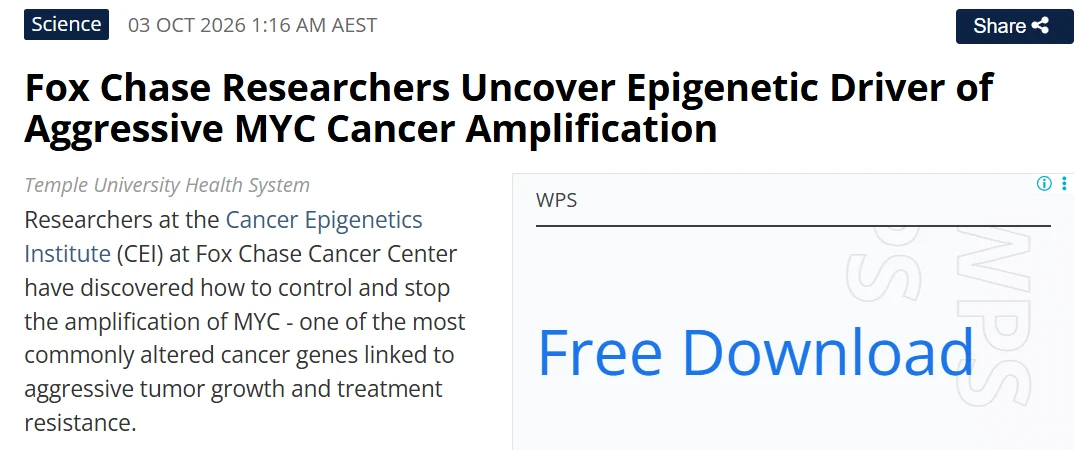
Title 5: Fox Chase Researchers Uncover Epigenetic Driver of Aggressive MYC Cancer Amplification
Stay updated with Hemostasis Today.
-
Oct 11, 2026, 16:03Parth Parmar: Practical Guidelines for Managing Venous Thromboembolism
-
Oct 11, 2026, 15:31Muhammad Alvi: CASPR Study Explores Treatment Response Across ESUS Phenotypes
-
Oct 11, 2026, 15:15Thalassaemia International Federation Joins ASCAT 2026 to Advance Sickle Cell and Thalassaemia Care
-
Oct 11, 2026, 15:14Challenges and Perspectives on Gene Therapy in Hemophilia A – Seminars in Thrombosis and Hemostasis
-
Oct 11, 2026, 15:07Neysa Rahardjo: Platelet Estimation Pitfalls and Discrepancy Resolution
-
Oct 11, 2026, 15:05Lance Trewhella: Reflections from the ASCLS Region V Fall Symposium
-
Oct 11, 2026, 15:04The Anti-Inflammatory Rationale for GLP-1 Agonists in Hemophilia – CRH French Reference Center for Hemophilia Lyon
-
Oct 11, 2026, 15:00Donja W.: Blood Shortages Aren’t Just Statistics
-
Oct 11, 2026, 14:54Archil Jaliashvili: NHSBT Highlights Persistent Gaps in Matched Blood for Sickle Cell Patients