


Leonardo Roever Shares a Study on Eligibility Criteria for Endovascular Thrombectomy
Leonardo Roever, CEO of Brazilian Evidence-Based Health Network, shared on LinkedIn:
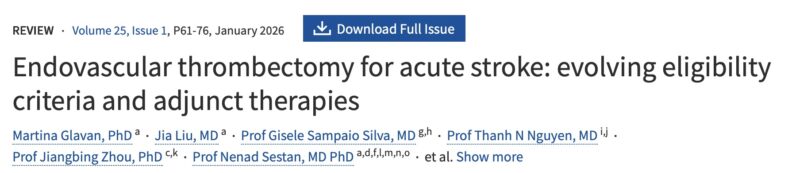
”Endovascular Thrombectomy for Acute Stroke: Evolving Eligibility Criteria and Adjuvant Therapies
In this review, the authors present recent developments, highlighting how biological targets align with the pathophysiological chronology of primary and secondary injury after an ischemic stroke.
It also discusses why some clinical trials have demonstrated success and others may not, and proposes important considerations for the planning of future trials.
This synthesis aims to inform about the evolving evidence for the treatment of acute ischemic stroke and inspire the planning of clinical trials and next-generation therapies.
See the article.
Follow me for more content on evidence, management, and innovation in healthcare!”
Read the full article here.
Article: Endovascular thrombectomy for acute stroke: evolving eligibility criteria and adjunct therapies
Authors: Martina Glavan, Jia Liu, Gisele Sampaio Silva, Thanh N Nguyen, Jiangbing Zhou, Nenad Sestan et al.
Stay updated on all scientific advances with Hemostasis Today.
-
Oct 4, 2026, 15:06Vasiliki Gkalea: Journal of Clinical Medicine Launches Special Issue on Hematologic Thrombosis and Bleeding
-
Oct 4, 2026, 14:55Quentin Brebant: What Defines a High-Quality Red Blood Cell Concentrate?
-
Oct 4, 2026, 14:47Rana Al-Hrout: Recognizing Non-Anemic Iron Deficiency – Why Iron Matters Beyond Hemoglobin
-
Oct 4, 2026, 14:41David McIntosh: International Plasma Awareness Week 2026 – Closing the Global Plasma Gap
-
Oct 4, 2026, 14:33Pete Stibbs: CleanerVac Real-World Study Presented at VIVA and The VEINS 2026
-
Oct 4, 2026, 13:56Maria Elisa Mancuso: EHC 2026 Highlights the Unmet Needs of Women with Bleeding Disorders
-
Oct 4, 2026, 13:53Nirmal Shaji George: Individualizing Anticoagulation in Complex APS and Thrombocytopenia
-
Oct 4, 2026, 13:5210 Posts Not to Miss This Week
-
Oct 4, 2026, 13:45Suswapna Singh Rawat: The Clinical Significance of Coronary Plaque Stability