

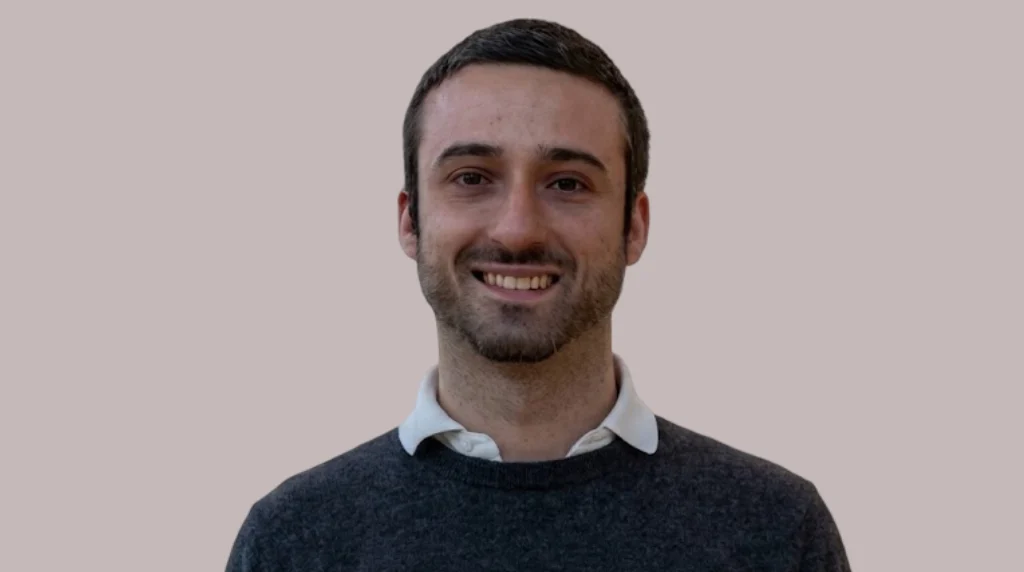
Marco De Giovanni: The Platelet – Serotonin Link Behind Severe COVID-19
Marco De Giovanni, Assistant professor of Physiology at Libera Università Vita-Salute San Raffaele, shared a post on LinkedIn about a recent article he and his colleagues co-authored, published in Science Immunology, adding:
“Excited to share the first study from our lab published in Science Immunology, led by Davide Marotta, in collaboration with the great Matteo Iannacone lab!!
We discovered that platelet-derived serotonin drives age-dependent lung damage during COVID-19.
One of the biggest unanswered questions since the beginning of the pandemic has been:
Why does aging dramatically increase the risk of severe COVID-19?
Our work points to an unexpected culprit: platelets.
Platelets contain large amounts of serotonin (yes, the same molecule best known as a neurotransmitter).
When platelets become activated, they release serotonin, which in turn makes neighboring platelets even more reactive, creating a positive feedback loop.
We found that platelets from middle-aged mice and healthy elderly humans release significantly more serotonin upon activation than platelets from young individuals. This age-associated rewiring makes platelets much more prone to forming pathological thrombi.
During SARS-CoV-2 infection, this exaggerated serotonin release drives:
- platelet hyperactivation
- fibrin deposition in the lung microvasculature
- respiratory dysfunction
Importantly, these effects occurred without major changes in viral replication or antiviral immunity.
Mechanistically, serotonin increased the procoagulant activity of platelets, boosting thrombin generation and fibrin deposition.
Blocking fibrin formation reproduced the same protective effect, identifying the serotonin–coagulation axis as a major driver of lung pathology.
One particularly exciting aspect is that this pathway is druggable.
Some of the compounds we tested—including fluoxetine (an SSRI) and ketanserin (a 5-HT2A antagonist)—significantly reduced disease severity in our experimental model.
This study was a true team effort involving many collaborators. Kudos to Davide Marotta who led the study in my lab, to our collaborators (Raffaele De Francesco, Mauro Gaya, Armando Tripodi, Gianmarco Podda, Luca Guidotti), and to everyone in both the Iannacone and De Giovanni labs who contributed to this work
Finally, a huge thank you to the Armenise Harvard Foundation, whose invaluable support made this work possible!”
Title: Platelet-derived serotonin drives age-related lung pathology in SARS-CoV-2 infection
Authors: Davide Marotta, Chiara Perucchini, Marta Grillo, Valeria Fumagalli, Pietro Di Lucia, Jordan Rixon, Micol Ravà, Leonardo Giustini, Chiara Malpighi, Giulia D’Uonnolo, Mariangela Scavone, Violette Mouro, Caitlin Abbott, Natalia Stachura-Chyla, Francesco Andreata, Erica Scalambrino, Marigrazia Clerici, Lorena Donnici, Marika Longo Minnolo, Donato Inverso, Raffaele De Francesco, Mauro Gaya, Zaverio M. Ruggeri, Armando Tripodi, Gian Marco Podda, Luca G. Guidotti, Matteo Iannacone, Marco De Giovanni.
Stay updated on all scientific advances with Hemostasis Today.
-
Oct 19, 2026, 12:46Andrew Choong: Recognizing Thrombosis Before It Becomes Life-Threatening
-
Oct 19, 2026, 11:37Beth Faiman: APSHO Fellows Celebrated for Advancing Hematology and Oncology Practice
-
Oct 19, 2026, 11:26Emanuele Pacini: Myelodysplastic Syndromes Research Featured at JSH Annual Meeting in Kyoto
-
Oct 19, 2026, 10:57Jesmond Dalli: How Erythroblasts Shape Neutrophil Development and Function
-
Oct 19, 2026, 10:41Hisham Fahmi: SCD – Should Gene Editing Begin Before Organ Damage?
-
Oct 19, 2026, 10:33Pallavi Madhiraju: YARTEMLEA Faces Another European Rejection Despite FDA Approval
-
Oct 19, 2026, 10:28Brig Tathagata Chatterjee: Acute Leukemias in AYAs at the Japanese Society of Hematology Conference
-
Oct 19, 2026, 10:27Heather M. Johnson: Join the Discussion on Optimizing the CTEPH Diagnostic Pathway
-
Oct 19, 2026, 10:18Flora Peyvandi: Unravelling the Complexity of VWF Through Genetics