


Meral Kayikcioglu: Why Do Women and Men Differ in LDL-C Management?
Meral Kayikcioglu, Professor of Cardiology at Ege University and Director of the Lipid and Prevention Clinic, shared on LinkedIn about a recent article she and her colleagues co-authored, published in Atherosclerosis Plus, adding:
“Are women truly different in LDL-C management, or are age, education, and gender-related circumstances driving much of the observed sex disparity?
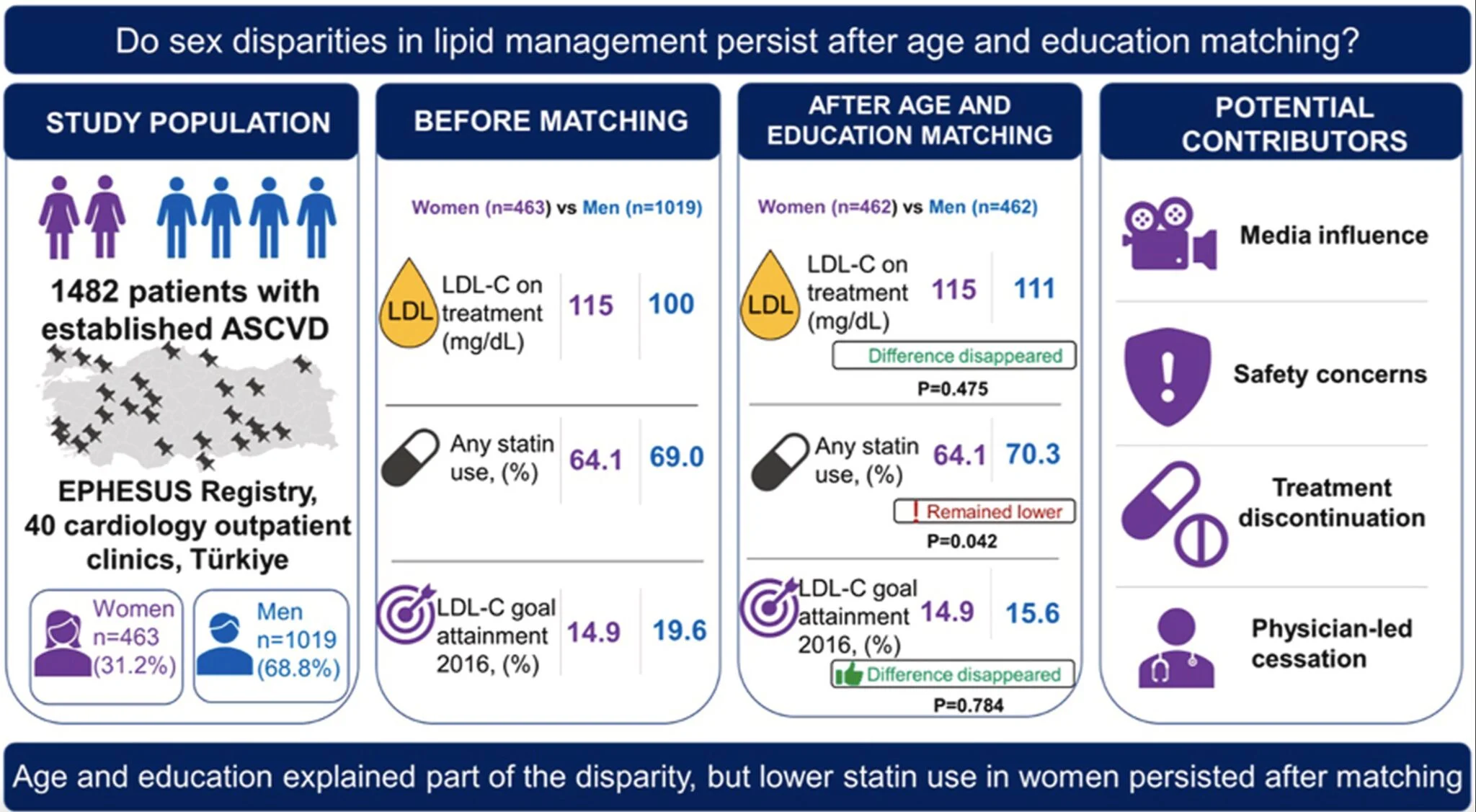
Using real-world data from 1,482 patients with established ASCVD enrolled at 40 cardiology outpatient clinics in the nationwide EPHESUS registry, we evaluated differences between women and men in lipid control, lipid-lowering therapy, and patient- and physician-reported perceptions.
Key findings:
- Women had a greater cardiometabolic risk burden, were less likely to receive statins, and had higher on-treatment LDL-C levels than men: 115 vs 100 mg/dL.
- After matching 924 patients for age and education, the differences in LDL-C and non-HDL-C were no longer apparent.
- Nevertheless, lower statin prescription in women persisted after matching.
- Among patients receiving high-intensity statins, women achieved the 2016 LDL-C target more frequently than men, supporting comparable treatment efficacy.
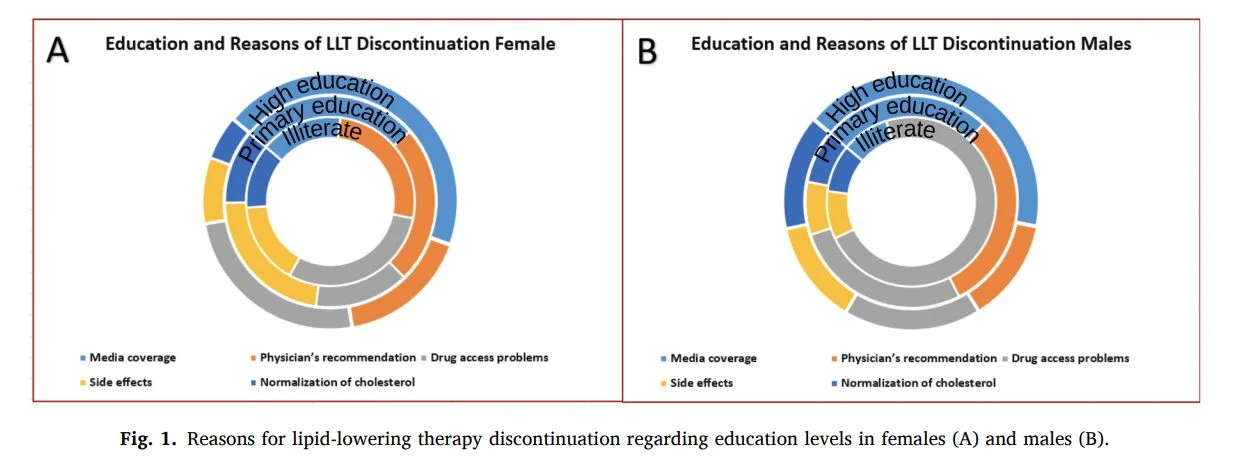
- Media influence remained the most frequently reported reason for statin discontinuation in both sexes.
The central message is that biology alone does not explain the observed differences in ASCVD care.
Age and education account for a substantial part of the apparent sex gap, while the persistent underuse of statins in women highlights the need for sex- and gender-sensitive, patient-centered lipid management.
To our knowledge, this is the largest multicenter registry analysis to date examining sex differences and gender-related factors in hyperlipidemia management in Turkey.
Its combined assessment of patient and physician perceptions, age- and education-matched analysis, and separate evaluation of patients with familial hypercholesterolemia provide a distinctive, multidimensional perspective.
My sincere thanks to my co-authors Özcan Başaran, Volkan Doğan, Oğuzhan Çelik, Kadir Uğur Mert, Gurbet Özge Yunus, Murat Biteker, and all EPHESUS Study Collaborators for their invaluable contributions.”
Title: Sex differences and gender-related factors in the management and perception of LDL-cholesterol in ASCVD: Real-Life evidence from the EPHESUS registry in cardiology practice
Authors: Meral Kayıkcioglu, Özcan Başaran, Volkan Doğan, Oğuzhan Çelik, Kadir Uğur Mert, Gurbet Özge Yunus, Murat Biteker
Stay updated with Hemostasis Today.
-
Sep 14, 2026, 15:22James Crowley: The Complex Role of CRP in Cardiovascular Risk and Atherosclerosis
-
Sep 14, 2026, 15:16Factor XIII Deficiency An Often-Missed Bleeding Disorder
-
Sep 14, 2026, 15:07Raffaele Piccolo: Heparin Against Jellyfish Venom?
-
Sep 14, 2026, 15:06Contemporary Research in Thrombosis and Hemostasis – Seminars in Thrombosis and Hemostasis
-
Sep 14, 2026, 15:00Obi Light Ogbonnia: Improving Outcomes for People Living with Sickle Cell Disease in Nigeria
-
Sep 14, 2026, 14:57Closing the Global Gap in NCD Prevention and Care – ISTH
-
Sep 14, 2026, 14:54Petter Brodin: A New Axis of Functional Variation in Human Immune Cells
-
Sep 14, 2026, 14:50Michael Meneghini: The Metabolic Picture Behind Cardiovascular Risk
-
Sep 14, 2026, 14:43William Aird: What if Your Red Blood Cells Make Alcohol?