

Mira Kassouf: Reactivating An Embryonic Gene To Treat α-Thalassemia
Mira Kassouf, Principal Investigator at University of Oxford, shared a post on LinkedIn about a recent article she and her colleagues co-authored, published in Nature Genetics, adding:
”Very excited to see our work now published in Nature Genetics!
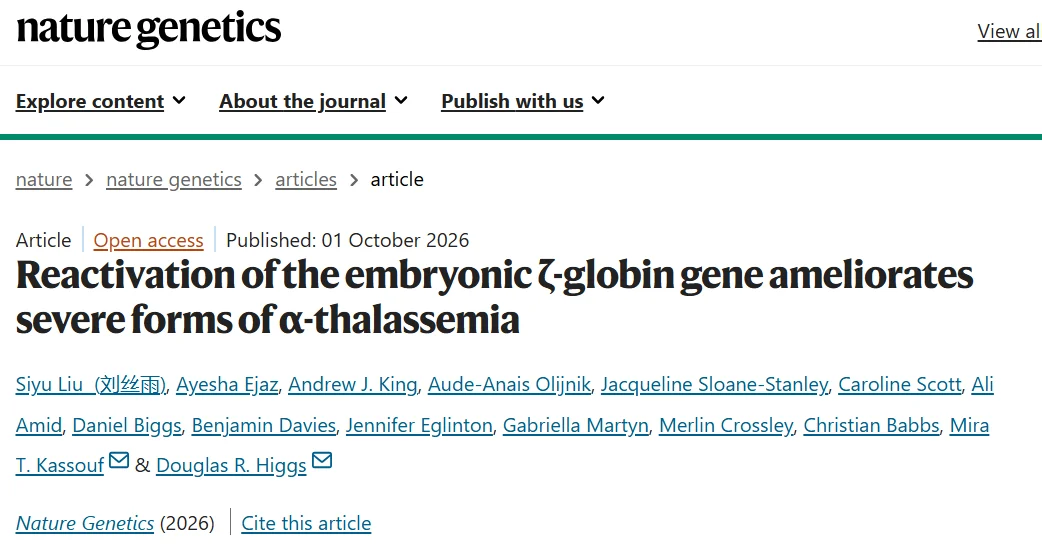
‘Reactivation of the embryonic ζ-globin gene ameliorates severe forms of α-thalassemia’
This work started with a fundamental question: how is an embryonic gene switched off during development, and could we switch it back on?
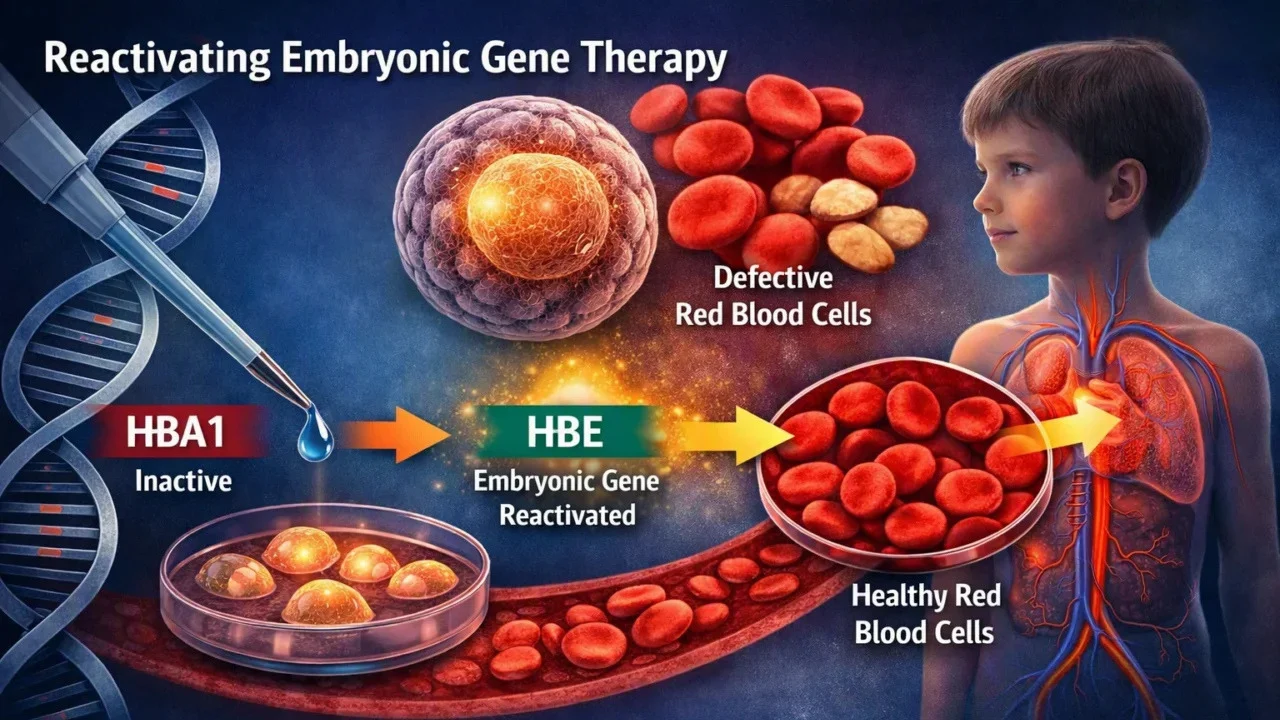
Using the α-globin locus as our model, we identified key regulatory DNA elements that silence the embryonic ζ-globin (HBZ) gene. By precisely editing these elements, we were able to reactivate ζ-globin in mouse models and, importantly, in primary erythroid cells from patients with severe α-thalassaemia.
The work provides proof-of-principle for an exciting therapeutic concept: rather than replacing a missing or defective adult gene, could we unlock a functional gene that our genome already contains but has switched off during development?
This has been a fantastic team effort, led by Siyu Liu, and made possible by the contributions of many colleagues and collaborators. I am particularly grateful to the patients and families who contributed samples to this research.
The next phase of this work will focus on advancing the approach towards a regulatory-ready stage, addressing the efficacy, safety and delivery requirements needed to support future clinical translation and, ultimately, its development as a therapy for severe α-thalassaemia.
A huge congratulations and thank you to everyone involved!”
Title: Reactivation of the embryonic ζ-globin gene ameliorates severe forms of α-thalassemia
Authors: Siyu Liu, Ayesha Ejaz, Andrew J. King, Aude-Anais Olijnik, Jacqueline Sloane-Stanley, Caroline Scott, Ali Amid, Daniel Biggs, Benjamin Davies, Jennifer Eglinton, Gabriella Martyn, Merlin Crossley, Christian Babbs, Mira T. Kassouf, Douglas R. Higgs
Stay updated on all scientific advances with Hemostasis Today.
-
Oct 3, 2026, 15:49Behnood Bikdeli: COATED_AIR Trial Design Published as Enrollment Reaches 3,000 Patients
-
Oct 3, 2026, 15:25Vanrose Panashe Nyamangodo: A Multi-Task Deep Learning Model For Malaria And Anemia
-
Oct 3, 2026, 14:52Benny Sorensen: Glanzmann’s Thrombasthenia Finally Assigned Dedicated ICD-10 Code
-
Oct 3, 2026, 14:52The Real-World Burden Of DVT In Traumatic Fractures – ISTH
-
Oct 3, 2026, 14:41How Much Do We Really Know About The Global Burden Of Venous Thromboembolism? – World Thrombosis Day
-
Oct 3, 2026, 14:35Nnadozie Gabriel C.: Understanding Hemophilia – Modern Breakthroughs and the Gap in Global Access
-
Oct 3, 2026, 14:26Björn Mulder: Differentiating PRP Formulations and Cell Counts in Knee and Ankle OA
-
Oct 3, 2026, 14:25Jorge Enrique: Personalised Strategies for Thrombosis Management in Cancer-Associated Cases
-
Oct 3, 2026, 14:20James Fildes: A New Way To Study Device Thrombogenicity