

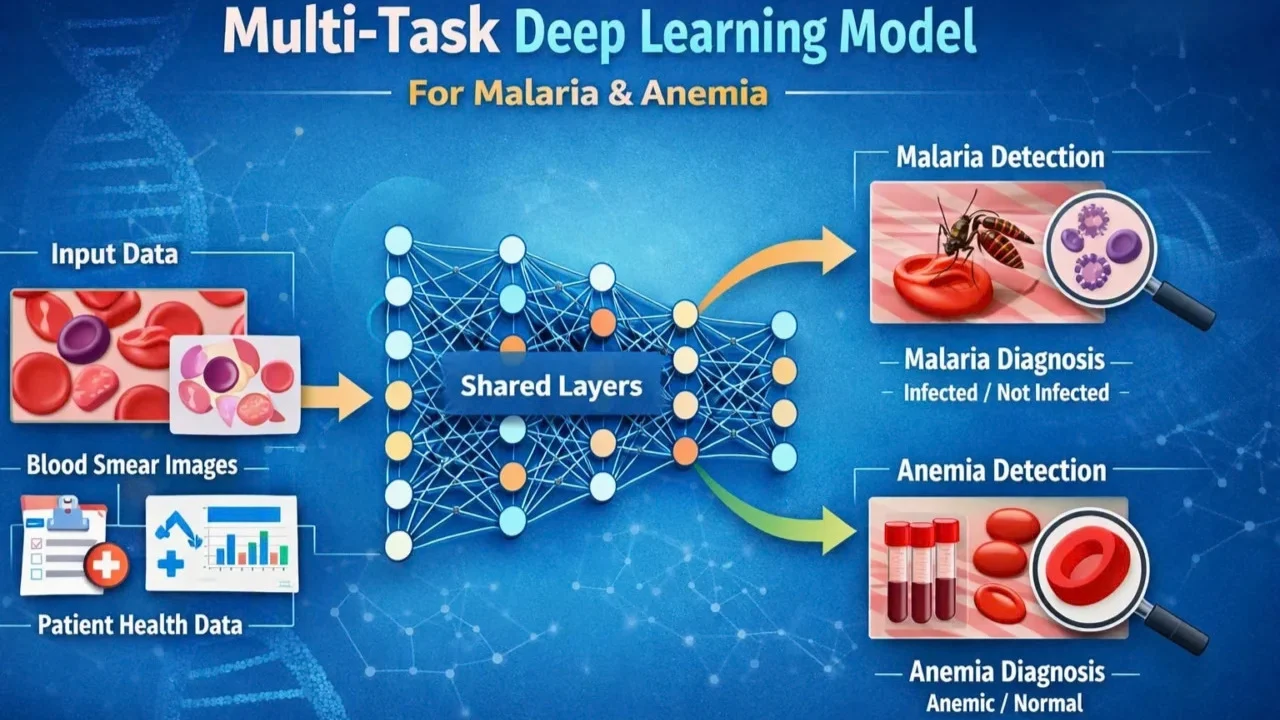
Vanrose Panashe Nyamangodo: A Multi-Task Deep Learning Model For Malaria And Anemia
Vanrose Panashe Nyamangodo, Data Science GT at Bindura University of Science Education Official, shared a post on LinkedIn about a recent article she and her colleagues co-authored, published in Computer Science and Information Technologies (CSIT), adding:
”I’m thrilled to share that my paper has been published in Computer Science and Information Technologies (CSIT)!
Malaria caused an estimated 597,000 deaths in 2023, with 95 percent in the WHO African Region. Malaria-induced anemia is especially dangerous for children under five and pregnant women.
Yet the parasite and the anemia are usually diagnosed separately, using different equipment and referral chains.
For patients in resource-constrained areas, that fragmentation can mean follow-ups that never happen. In hematological profiling of malaria-induced anemia using deep learning, we asked, what if one model could assess both at once?
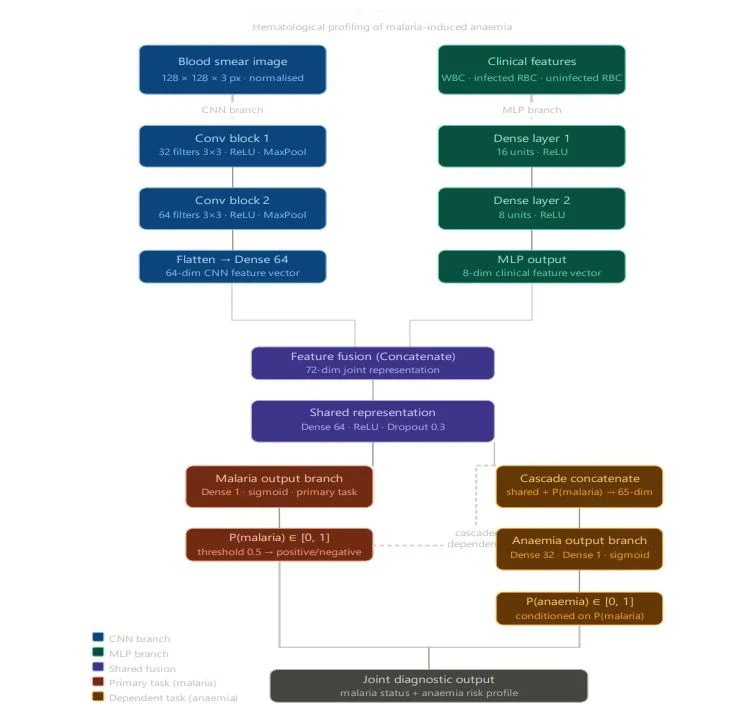
What we built: A cascaded multi-task network that fuses a CNN (blood smear images) with an MLP (WBC, infected RBC, and uninfected RBC counts)
A design that builds in the biology: the anemia prediction is explicitly conditioned on the malaria prediction, since the parasite destroys red blood cells.
A lightweight model, trained on a CPU with 16 GB RAM What we found (independent test set):
- 96.1 percent recall for malaria detection
- 93.2 percent accuracy for anemia classification
- 94.2 percent macro F1-score across both tasks
A note on scope: this was built on 193 patients from the NIH malaria image repository, so it’s a proof of concept.
The next step is the one I care most about: multi-site data collection across Zimbabwe and neighboring endemic countries (target: 1,000+ patients), federated learning to protect patient privacy, and external clinical validation with the Ministry of Health.
This work was carried out during my MTech studies at Harare Institute of Technology.
I’m deeply grateful to my supervisors and co-authors, Wellington Makondo and Simbai Zindove, for their guidance, and to my family and friends for their constant support.”
Title: Hematological profiling of malaria-induced anemia using deep learning
Authors: Vanrose Panashe Nyamangodo, Wellington Makondo, Simbai Zindove
Stay updated on all scientific advances with Hemostasis Today.
-
Oct 3, 2026, 16:18Mira Kassouf: Reactivating An Embryonic Gene To Treat α-Thalassemia
-
Oct 3, 2026, 15:49Behnood Bikdeli: COATED_AIR Trial Design Published as Enrollment Reaches 3,000 Patients
-
Oct 3, 2026, 14:52Benny Sorensen: Glanzmann’s Thrombasthenia Finally Assigned Dedicated ICD-10 Code
-
Oct 3, 2026, 14:52The Real-World Burden Of DVT In Traumatic Fractures – ISTH
-
Oct 3, 2026, 14:41How Much Do We Really Know About The Global Burden Of Venous Thromboembolism? – World Thrombosis Day
-
Oct 3, 2026, 14:35Nnadozie Gabriel C.: Understanding Hemophilia – Modern Breakthroughs and the Gap in Global Access
-
Oct 3, 2026, 14:26Björn Mulder: Differentiating PRP Formulations and Cell Counts in Knee and Ankle OA
-
Oct 3, 2026, 14:25Jorge Enrique: Personalised Strategies for Thrombosis Management in Cancer-Associated Cases
-
Oct 3, 2026, 14:20James Fildes: A New Way To Study Device Thrombogenicity